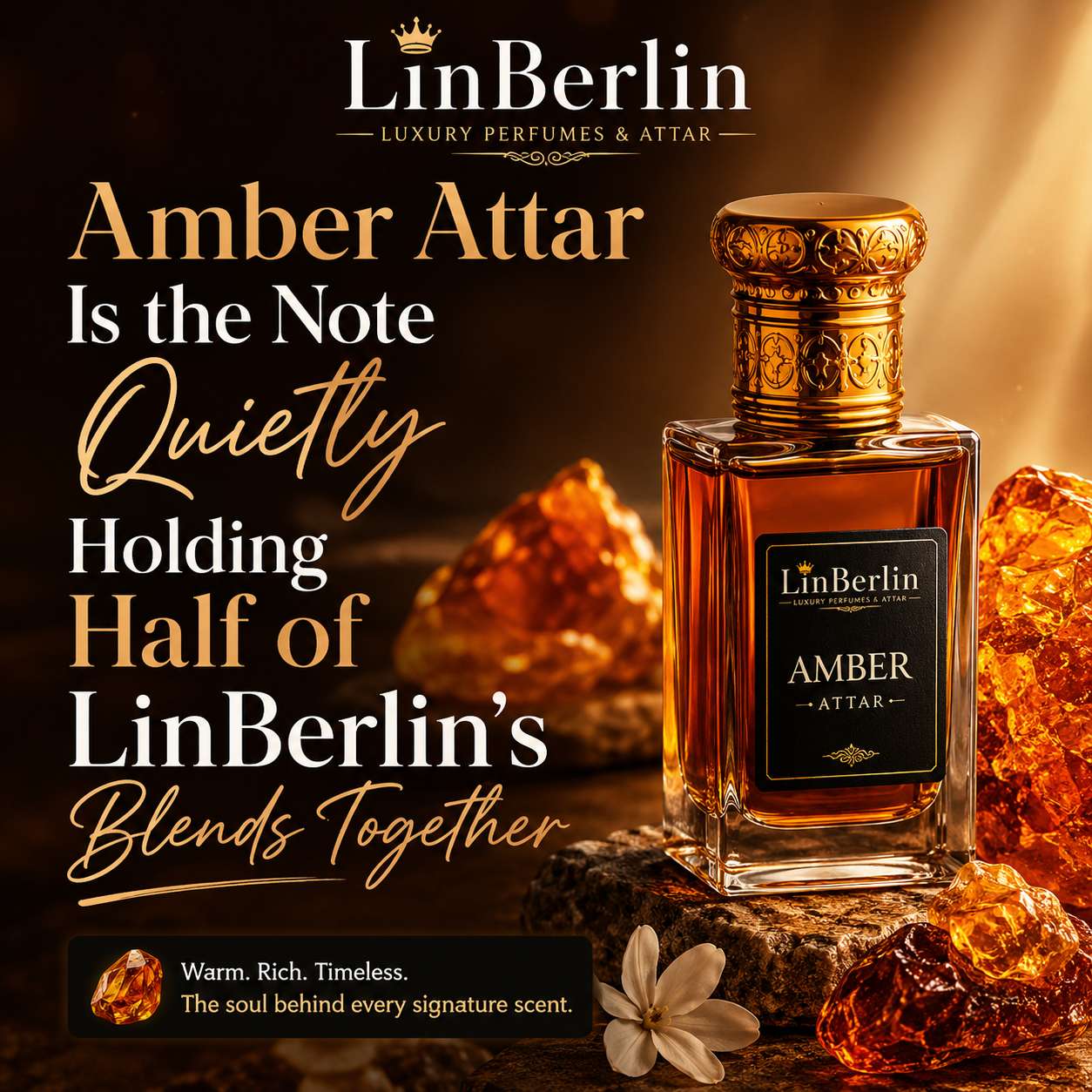
There's a specific moment in perfume testing that most brands never talk about — the moment a blend stops smelling like separate notes and starts smelling like one decision. Amber does that. Not loudly, not as the note you'd name first if someone asked what you were wearing, but as the thing underneath everything else that keeps the composition from falling apart by hour three. Ask any perfumer who's spent real time behind a blotter and they'll admit it: amber is the note doing the unglamorous work while florals and ouds get the credit.
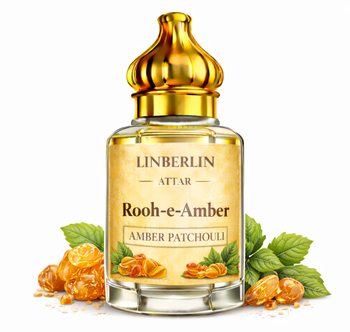
At LinBerlin, that's more or less the honest story behind amber attar (Rooh e Amber). It shows up, quietly, in more finished blends than most customers realize.
Why Amber Behaves Differently From Every Other Note in the Bottle
Amber isn't a single raw material the way rose or sandalwood are. It's a resinous, warm accord — built historically from labdanum, benzoin, and sometimes vanilla or musk undertones — and that composite nature is exactly why it blends so well. Florals sit on top of it without clashing. Woods deepen instead of drying out. Oud, which can turn sharp or medicinal on its own, gets rounded off. So when people describe amber attar as "warm" or "cozy," they're not wrong, but they're only getting half the picture. The real function is structural, not just olfactory. And here's where it gets interesting for anyone actually wearing it rather than just smelling it off a strip: amber reads completely differently depending on the skin underneath it.
Skin Type Changes What You're Actually Smelling
Dry skin and amber attar don't get along particularly well on their own. Dry skin lacks the natural lipid layer that traps and slowly releases oil-based fragrance, so amber can burn off faster — sometimes within two to three hours — leaving behind a thin, almost powdery ghost of the original scent. Oily skin does the opposite. It holds onto resinous notes like amber for longer, sometimes six hours or more, but it can also intensify the sweetness to the point where the wearer stops noticing it (the classic case of nose fatigue) while everyone around them still smells it strongly. Combination skin sits in between, unpredictably. Someone with an oily T-zone but dry cheeks might find amber projects unevenly depending on where they apply it. Realistically, this is the part most buying guides skip entirely, because it complicates a clean sales pitch. But it's the difference between someone loving a fragrance and returning it three weeks later confused about why it "doesn't last."
What Actually Happens When You Layer Amber Over Skincare
This is where things go wrong more often than people expect. Layering attar directly over freshly applied retinol, vitamin C serum, or exfoliating acids isn't just a fragrance-longevity issue — it can genuinely irritate skin that's already in a compromised state. Retinol thins the outer skin barrier temporarily. Add an oil-based fragrance with resinous compounds on top, and some people notice mild redness or a warm, tingling sensation that has nothing to do with an allergy and everything to do with timing. The fix is almost embarrassingly simple: let active skincare fully absorb — fifteen to twenty minutes is usually enough — before applying attar. Moisturized skin, on the other hand, is amber's best friend. A well-hydrated skin barrier holds fragrance oils longer and releases them more evenly, which is part of why perfumers have always recommended applying scent to skin that's just been moisturized rather than bare, freshly washed skin. It's not a myth. It's chemistry, and it's one of the few pieces of fragrance advice that actually holds up under scrutiny.
Application Technique: Where Amber Actually Performs Best
Pulse points get recommended so often that people stop thinking about why. Wrists, the base of the throat, behind the ears — these areas run slightly warmer, and amber's resinous compounds need that ambient heat to open up properly. Apply it to cold skin, like the back of a hand in an air-conditioned room, and it can sit flat for the first twenty minutes. A trick that works surprisingly well with amber specifically: apply a small amount to the inner elbow crease. It's an unusual spot, sure, but the skin there stays warm and slightly covered by clothing, which slows evaporation and gives the amber time to develop its full sweetness instead of flashing off in the first hour.
Who Should Be Careful With Amber Attar
Not everyone should apply this liberally, and any brand that tells you otherwise isn't being fully honest with you. Benzoin, one of amber's common building blocks, is a known sensitizer for a small percentage of people — those with a history of fragrance allergies or contact dermatitis should patch test on the inner forearm and wait 24 hours before applying anywhere else. Pregnant women are often advised by their doctors to reduce exposure to concentrated resinous fragrances during the first trimester, not because amber attar is inherently dangerous, but because heightened smell sensitivity during pregnancy can turn even a favorite scent into a source of nausea. People using strong skincare actives — prescription retinoids, chemical peels, or anything post-procedure like microneedling — should hold off on fragrance application near the treated area entirely until skin has fully healed. This one's non-negotiable, honestly.
What to Look for When Buying Amber Attar
A genuine amber attar shouldn't smell like vanilla cake or generic "warm spice." Or if it does, that's usually a sign it's been cut heavily with synthetic sweeteners rather than built on real resinous material. What you want is complexity — a scent that opens slightly sharp and resinous, softens into warmth within the first ten minutes, and settles into something closer to skin-warmed honey and soft woods by the two-hour mark. Color matters too, though it's an imperfect signal. Natural amber attars tend toward deep amber-gold to reddish-brown, not the pale, almost clear liquid you sometimes see in mass-market versions. And texture should feel slightly viscous, not thin and watery like an alcohol-based spray decanted into a roller bottle. One honest caveat worth naming here: no amber attar, including LinBerlin's, will smell identical on two different people, or even on the same person two days in a row if their skincare routine, hydration, or diet has shifted. That's not inconsistency in the product — it's just how oil-based natural perfumery actually works, and any brand claiming perfect predictability is oversimplifying something genuinely variable.
The Takeaway
Amber attar rewards people who pay attention to their own skin rather than following generic application advice. Moisturize first, apply to warm pulse points, avoid layering over freshly applied actives, and patch test if there's any history of sensitivity. Do that, and Rooh e Amber tends to become one of those fragrances people reach for without quite being able to explain why it works so well on them specifically. That's usually the sign of a good amber blend — not that it's loud, but that it's quietly doing its job.