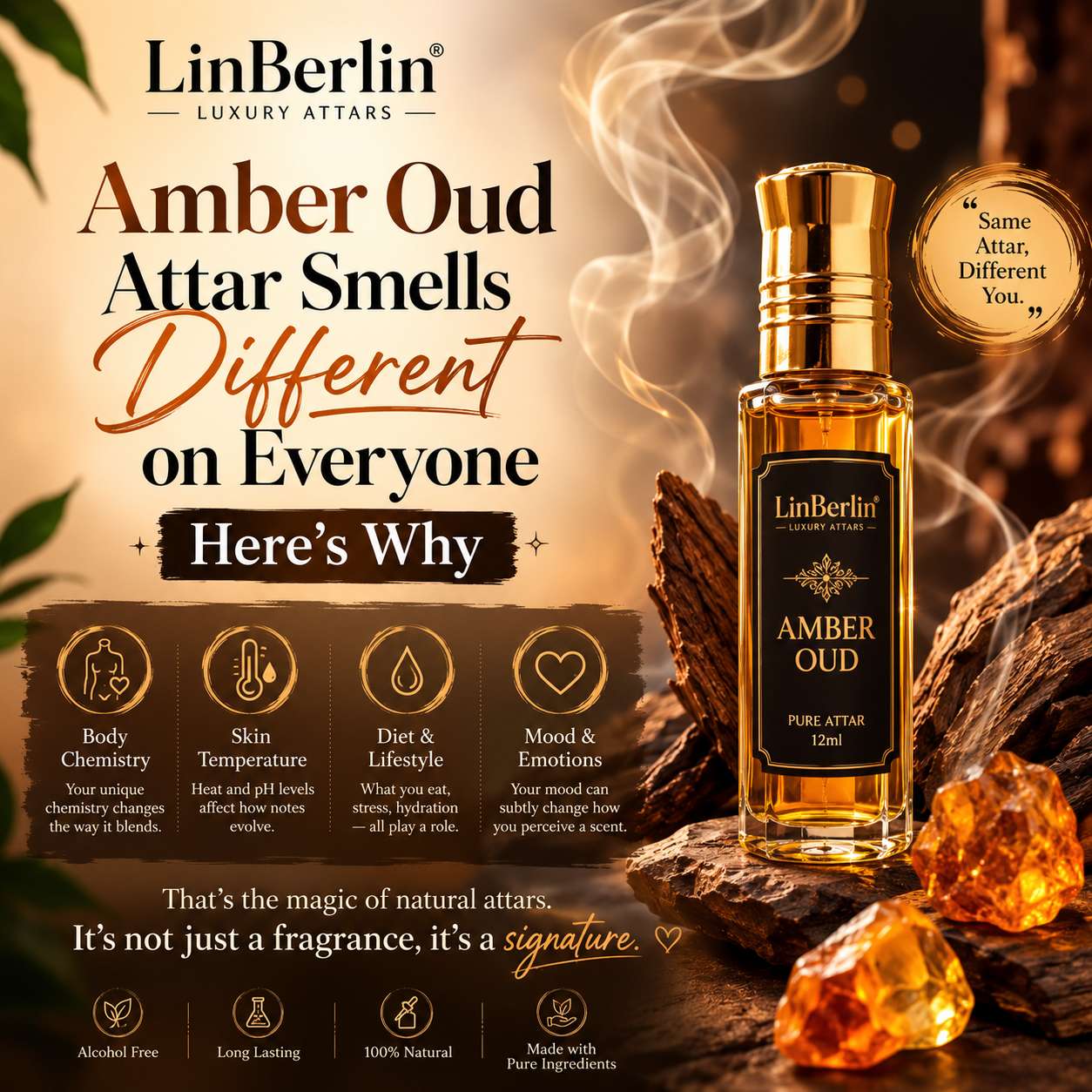
Two sisters, same household, same bottle of attar passed between them for years — and it never smelled the same on either of them. One got warm resin and something almost like leather by afternoon. The other got a sweeter, softer amber that barely changed from morning to evening. Same oil. Same skin type, technically, since they were related. Different results anyway. That's the first thing to understand before buying any oud amber, and it's the reason so many people write off a fragrance as "wrong" for them when really it was just wrong for their skin chemistry, not their taste.
Why Attar Reads Your Skin Before It Reads Your Nose
Attar is oil. That single fact changes everything about how it behaves compared to alcohol-based perfume. Alcohol evaporates fast, carrying the top notes off within minutes and leaving you smelling roughly the same fragrance you sprayed. Oil doesn't do that — it sits, it warms, and it slowly releases scent molecules as your skin's own oils and temperature interact with it. So the same attar can smell noticeably different depending on how much natural sebum your skin produces, your body temperature, even what you ate that day (garlic and strong spices really do show up in your sweat and skin chemistry, and yes, it affects projection).
This is why a fragrance house can't promise you'll smell exactly like the sample. Realistically, no honest attar seller can make that promise, and if one does, that's worth being a little skeptical of.
What's Actually Inside Amber e Khaas
Amber oud blends are built on a foundation of resinous ambergris-style notes — labdanum, benzoin, sometimes a touch of vanilla — layered over oud's smoky depth. Amber oud attar Amber e Khaas was built around this exact tension: warmth against smoke, sweetness against something darker underneath. On paper it's balanced. On skin, that balance tips one way or another depending entirely on the wearer.
Dry skin tends to pull the amber notes forward faster and burn through them quicker too, because there's less oil on the surface to slow the evaporation. Oily or well-moisturised skin holds onto molecules longer — this is basic skin science, not marketing — and it lets the oud's deeper, muskier facets develop properly instead of rushing straight to the sweet top layer. If you've ever had someone tell you an amber attar "smelled too sweet" while yours read as smoky and rich, this is very likely why.
The Moisture Connection Nobody Talks About Enough
Here's the thing — most people apply attar to bare, dry skin and wonder why it fades by lunchtime. Moisturised skin holds fragrance longer, full stop. A thin layer of an unscented or lightly scented lotion on pulse points before applying attar creates a base the oil can bind to, rather than sinking straight into dry skin and disappearing. Estheticians have known this for decades with regular perfume; it applies even more to oil-based fragrance because attar is already trying to do what a moisturiser does — sit on and slightly penetrate the skin barrier.
But there's a catch. And it's one people get wrong constantly.
Layering attar over an active-heavy skincare routine — retinoids, strong exfoliating acids, benzoyl peroxide — can genuinely irritate skin that's already compromised. Fragrance oils, even natural ones, contain aromatic compounds that can sting or redden skin with a weakened barrier. If you've just done a glycolic peel or you're mid-retinisation, apply attar to clothing or hair instead of directly to skin until your barrier has settled. This isn't attar being unsafe — it's just basic skin logic that gets ignored because nobody thinks of fragrance as something that interacts with a skincare routine at all.
Skin Types and What Each One Actually Experiences
Dry skin: faster evaporation, brighter top notes, shorter overall wear time. Amber and vanilla facets tend to dominate early and fade rather than settle into the deeper oud base — so reapplication through the day is normal, not a sign of a weak attar.
Oily or combination skin holds oil-based fragrance remarkably well, sometimes too well for some wearers' taste, since projection can feel stronger and the smoky, musky base notes tend to linger into the next day on clothing and hair even after the skin scent has faded.
Mature skin, which usually produces less natural oil than it did in earlier decades, often behaves more like dry skin in this context — meaning the moisturising-first approach becomes less optional and more necessary for anyone noticing their fragrance doesn't last the way it used to.
Where Caution Genuinely Matters
A few situations deserve real attention rather than general "always patch test" advice. Sensitive or eczema-prone skin can react to concentrated natural oils, and oud in particular contains complex aromatic compounds that occasionally cause contact irritation in people with fragrance sensitivities generally, not just synthetic ones. Pregnancy is another one — some practitioners advise caution with strong resinous or musky fragrances during certain trimesters, and while the evidence here isn't conclusive either way, it's a conversation worth having with a doctor rather than guessing. And anyone on strong topical actives should give their skin a rest day before applying fragrance directly. None of this means avoid attar. It means apply it thoughtfully — a small test on the inner wrist, worn for a full day, before committing it to pulse points you'll wear daily.
How To Apply It So It Actually Performs
Pulse points still work best — wrists, inner elbows, behind the ears, base of the throat — because these are warmer areas where blood vessels sit close to the skin, and warmth is what activates oil-based fragrance. A tiny amount goes further than people expect; attar is concentrated, and over-application doesn't make it last longer, it just makes it heavier and less pleasant by midday.
Apply after moisturising, never rub the wrists together afterward (it breaks down the molecular structure and dulls the scent — an old habit that actually works against you), and give it a minute to settle into skin before dressing. On days you know you'll be layering with skincare actives, dab a little onto a scarf or the inside of a jacket collar instead. So the scent still travels with you without sitting directly on skin that's already working through a treatment.
A Fair Caveat
None of this guarantees a fragrance will smell identical to how it smelled on a friend, a reviewer, or even how our amber oud attar smelled in a store sample tested on a paper strip. Skin chemistry is genuinely unpredictable, and no amount of good skincare prep removes that variable entirely — it just gives the fragrance a fairer chance to develop the way it's meant to.
The Takeaway
Buy attar expecting it to become something slightly your own, not a fixed formula. Moisturise first, apply sparingly to pulse points, give sensitive or treated skin a rest day when needed, and let the oil do what oil does — develop slowly, differently, honestly, on the skin it's actually touching.