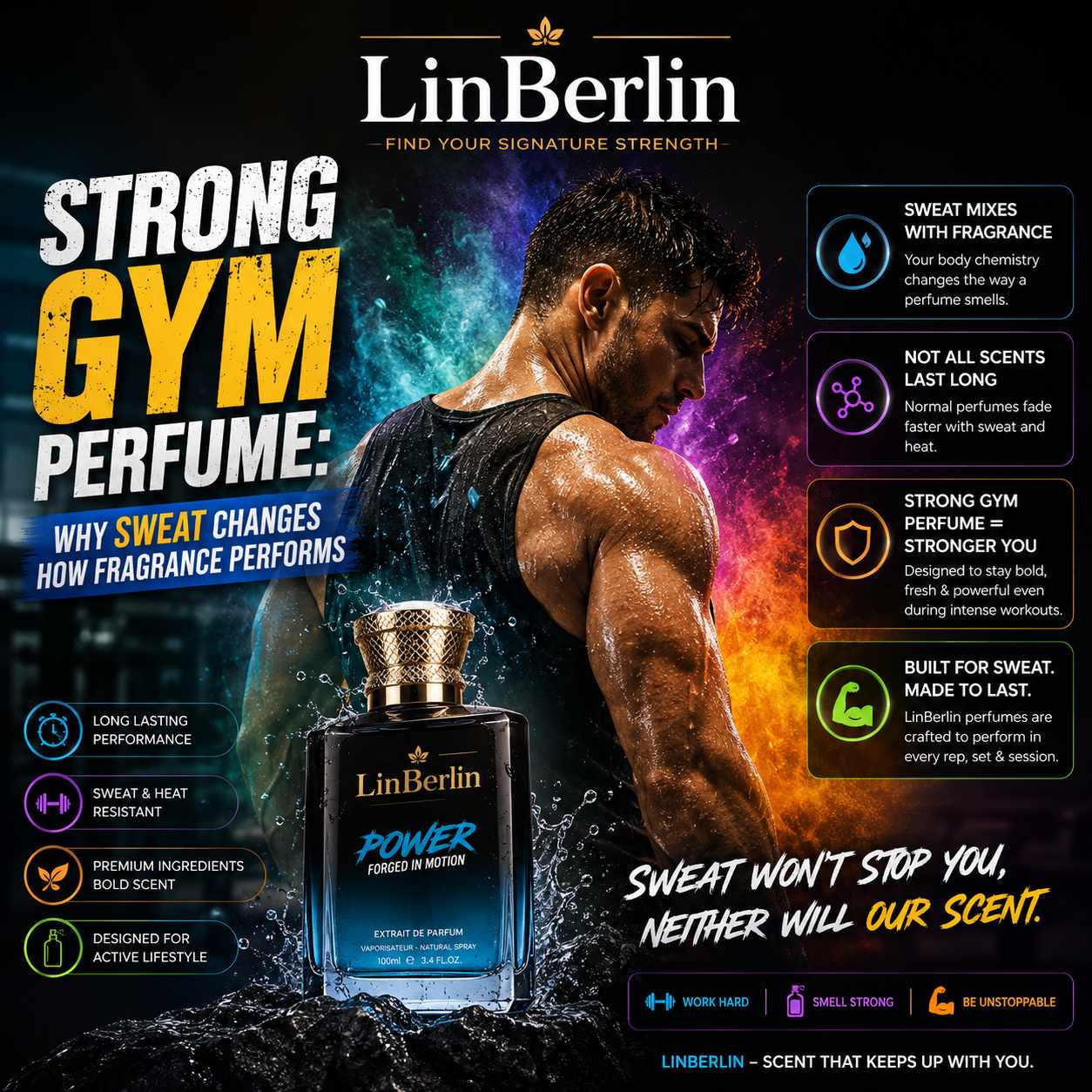
Nobody warns you about this part. You spend months finding a scent that feels like you, the one that gets a second glance from a stranger at a coffee shop, and then you wear it to the gym and it just... falls apart. Not metaphorically. Chemically. Sweat, heat, and friction rewrite the rules of how fragrance behaves on skin, and most men never get told why.
Here's the thing worth sitting with before we get into product advice: sweat itself doesn't smell bad. It's odorless when it first hits the skin. What you're actually smelling twenty minutes into a workout is bacteria breaking that sweat down, mixing with sebum, body heat, and whatever you applied that morning. Your gym perfume isn't fighting sweat directly — it's fighting a moving chemical environment that changes by the minute. And that's a very different job than smelling good at a dinner table.
Why heat changes everything about how attar performs
Attar and oil-based perfumes are built around a slow, controlled release. On calm, room-temperature skin, the oils sit in the skin's natural lipid layer and evaporate gradually, which is why a good sandalwood or oud attar can still whisper at you eight hours later. Raise the skin temperature by even two or three degrees — which happens fast on a treadmill or under a barbell — and that release speeds up dramatically. Top notes burn off almost immediately. What you're left smelling, sometimes within twenty minutes, is whatever the composition's base actually is. If the base is thin or synthetic-heavy, there's nothing left to hold onto. If it's built on real resins and woods, it tends to survive the heat and just gets louder.
This is also why so many delicate, quiet fragrances — the kind of soft floral-woody blends discussed in gentle evening pairings of vanilla and rose — simply aren't built for gym conditions. They're not lesser fragrances. They're just doing a different job, one that assumes calm skin and low body heat, not 400 calories burned in forty minutes.
So what actually holds up? Realistically, it comes down to structure. Musk, certain woods, and resinous bases have molecular weights heavy enough that they don't flash off the skin the second things heat up. That's part of why deep musk compositions — the type covered in our piece on musk attars that carry a deeper, longer presence — tend to survive a workout far better than citrus or light floral openers do.
What we built Viking Strong to actually do
We didn't design Viking Strong as a lighter version of an everyday attar. That would have been the easy move — and it would have failed the first time someone wore it to leg day. Instead we built the composition around ingredients that respond to heat rather than collapse under it: a sharper opening that cuts through the initial sweat surge, then a base heavy enough to keep working once your body temperature climbs. It's still an oil, still alcohol-free, still meant to sit in skin rather than sit on top of it. It just has a different job description than the rest of the LinBerlin line.
People sometimes assume our gym perfume is just Viking Strong diluted or made "sportier." It isn't. The blend was reformulated from the ground up with sweat chemistry in mind — which sounds clinical, but honestly it's the only way to make something that survives a real training session rather than one photographed for a bottle shot.
How to apply it so it actually works
Application matters more with gym fragrance than almost any other category, and most men get it backwards.
First — apply before you sweat, not after. Attar needs a few minutes to bind with skin oils before it starts its evaporation curve. Spraying or dabbing mid-workout, onto already-damp skin, gives the oil nothing stable to grip onto, so it just sits on the surface and washes off with the next round of sweat.
Second, apply to pulse points that stay relatively dry even under exertion — inside the wrists, behind the ears, the base of the throat — rather than the chest or underarms, which are the first areas to flood with moisture. Or, if you tend to sweat heavily through the torso, consider applying to clothing fabric near the collar instead of skin directly; fabric holds oil-based scent differently and can actually outlast skin application in high-sweat scenarios.
Third, and this one gets skipped constantly: moisturized skin holds fragrance dramatically longer than dry skin. Dry skin is porous and thirsty — it absorbs oil fast, which sounds good but actually means the fragrance sinks in and fades faster, sometimes within the hour. A light, fragrance-free moisturizer applied five to ten minutes before your attar creates a slightly sealed surface. The oil sits on top of that barrier instead of vanishing into dry skin, and you genuinely notice the difference by the second half of a workout.
A caution worth taking seriously
Not every skin type should treat gym fragrance the same way. If you have sensitive or reactive skin, sweating combined with fragrance oils and gym-bag friction (think gym clothing rubbing against applied areas) can occasionally trigger irritation that wouldn't show up in normal daily wear. This is genuinely one of the more common issues we hear about, and it's not something to brush past.
- If you use retinoids, exfoliating acids, or benzoyl peroxide on your skin, apply fragrance well away from those areas — the combination of active ingredients, sweat, and fragrance oil can compromise the skin barrier faster than either alone would.
- People with eczema-prone or highly reactive skin should patch test any new gym fragrance on the inner forearm for 24 hours before applying it broadly, since heat and friction can amplify a reaction that wouldn't otherwise appear.
- If you're pregnant, it's worth checking with your doctor before introducing a new concentrated fragrance oil into a daily routine, gym-related or not — this isn't LinBerlin-specific caution, it's just sound practice with any concentrated botanical oil.
None of this means gym fragrance is risky for most men. It isn't. But skin under exertion behaves differently than skin at rest, and pretending otherwise isn't honest advice — it's just marketing dressed up as a tip.
Matching intensity to the room, not just the workout
One thing we notice men get wrong: they treat "gym scent" as a single category, when really it depends on where you're training. A quiet home gym session calls for something closer to what you'd wear to the kind of composed, everyday scent worn to the office — subtle, controlled, not built to project. A packed commercial gym with recycled air and forty other people's body heat is a different environment entirely, and that's where a purpose-built our gym perfume earns its place — something with enough structural weight to still register an hour into training, without needing to be reapplied every time you towel off.
We should also say plainly: no fragrance, ours included, is completely sweat-proof. That's not how oil chemistry works, and any brand claiming otherwise is overselling. What a well-built gym attar does is extend the window and change what survives — the base notes outlast the top notes, the structure holds longer than a light floral would, but a two-hour heavy session in a hot room will still test any fragrance's limits. Reapplication after a shower, rather than mid-workout, tends to be the more effective habit than trying to fight the sweat directly.
The takeaway
Gym fragrance isn't about finding something stronger. It's about understanding that heat, moisture, and skin chemistry rewrite a scent's entire performance curve, and choosing a composition — and an application method — built around that reality rather than around how something smells in a cool, still store aisle. Moisturize first. Apply before you sweat, not after. And pick a base built with heat in mind, not just fragrance notes that sound appealing on a label.