A woman walked into a conversation with us not asking about notes or longevity, but about her retinol. She'd just switched from an oil-based attar to an alcohol-based oud perfume, and her skin was reacting in a way it never had before. That's usually where this conversation should start — not with top notes and dry-down, but with what's actually touching your skin, and why it behaves so differently once you move from oil to spray.
 Buy on Amazon
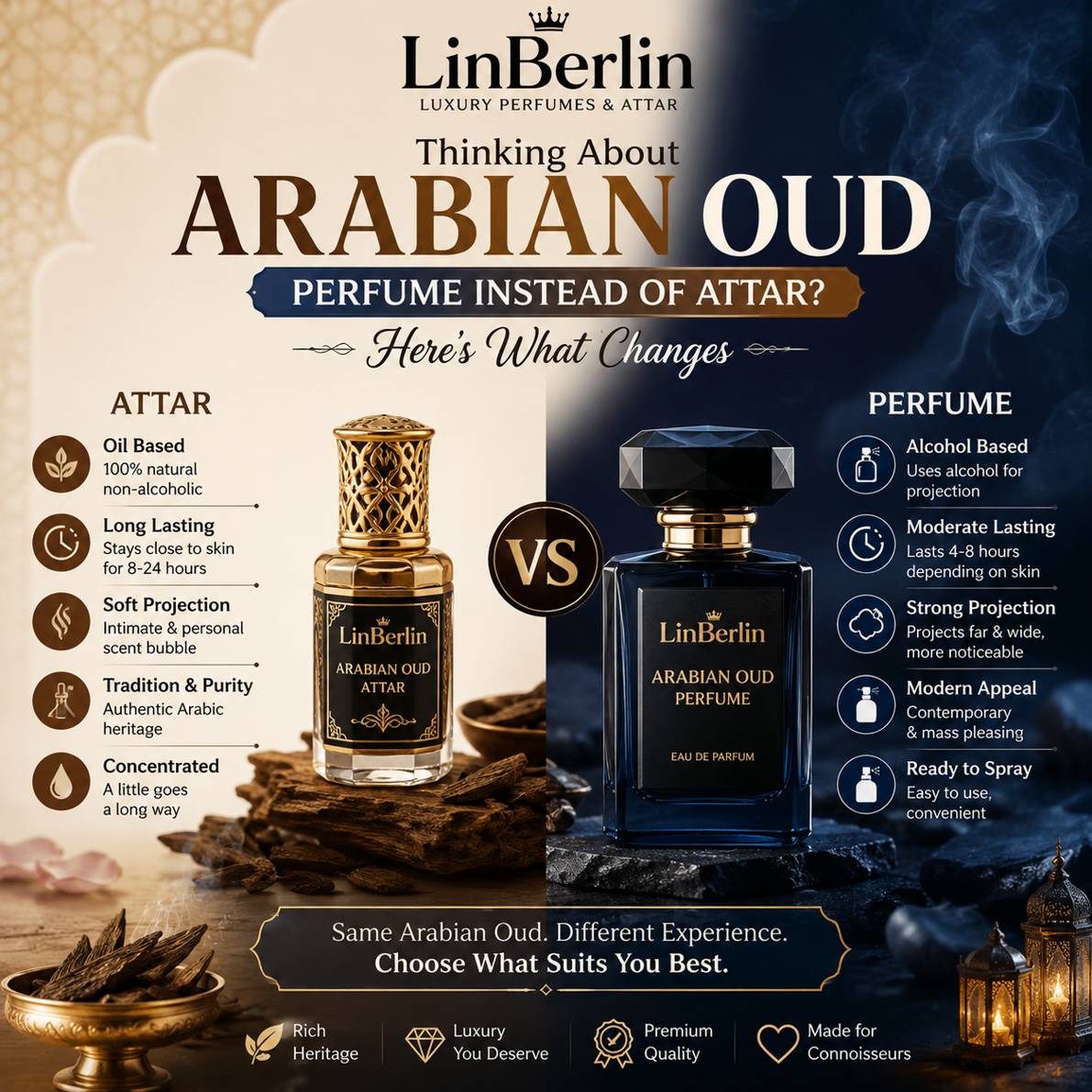
Attar and Arabian oud perfume aren't just two formats of the same idea. The carrier changes. The concentration changes. And so does the way your skin — and your skincare routine — responds to it.
The carrier is doing more work than you think
Attar is built on a natural oil base, usually sandalwood or a similar carrier oil, sometimes with a touch of DPG in modern formulations. Oud perfume, on the other hand, typically runs on perfumer's alcohol. That single difference changes almost everything downstream — how fast it opens, how it sits on skin, and how it interacts with whatever moisturiser, serum, or sunscreen you applied that morning.
Oil-based attars sink into skin slowly. They blend with your natural sebum and, over the course of the day, shift subtly — which is part of why attar wearers talk about scent "developing" rather than just fading. Alcohol-based perfumes evaporate faster on top, throwing scent outward in the first twenty minutes before settling. Neither is better on its own. But they demand different handling, and this is where a lot of people — even experienced attar users — get caught off guard.
What actually happens when you layer it wrong
Here's the thing we see most often: someone applies a heavy night cream with active ingredients, then sprays an oud perfume directly over it without waiting. The alcohol in the perfume interacts with certain actives — retinoids, AHAs, vitamin C serums in particular — and skin that was already slightly compromised from exfoliation reacts with redness, a mild sting, sometimes visible irritation along the jaw or wrists where perfume is commonly applied.
With attar, this reaction is rarer, though not impossible. The oil base is gentler, but it's not neutral — sandalwood oil and certain resinous ouds can still cause contact irritation on skin that's freshly exfoliated or under a strong retinol cycle. So the rule isn't "attar is always safe, perfume is always risky." It's more that alcohol-based formats have a lower threshold for tolerating compromised skin barriers, and that matters if you're someone who runs a heavy actives routine.
Skin type changes the entire experience
Dry skin holds oud perfume differently than oily skin does — and not in the way most buying guides describe it. Dry skin lacks the surface lipids that alcohol-based fragrances rely on to slow their evaporation, so top notes burn off fast and the perfume can feel thinner, quieter, less generous through the middle hours. Attar behaves almost the opposite way here: because it's oil-based, it sits comfortably on dry skin and actually performs better, since there's no moisture competing with it or accelerating evaporation.
Oily skin is the reverse story. Sebum holds fragrance molecules longer, which means oud perfume — spray format — often lasts noticeably longer on oily-to-combination skin than on dry skin. But it also means attar can occasionally feel "heavier" or more concentrated by afternoon, since the oils blend with existing sebum rather than being absorbed.
Realistically, if your skin runs dry, you may get more consistent performance from attar. If it runs oily, oud perfume might actually reward you with longer wear — which runs counter to what a lot of marketing suggests, where perfume is treated as universally longer-lasting.
Where The Falcon fits into this
This is exactly the kind of nuance we thought about while formulating The Falcon, our Arabian oud perfume. It's built for people who already know attar, who want the spray format for convenience — office wear, travel, layering under clothing without the residue an oil can sometimes leave on fabric — but who still expect the depth of a proper oud composition underneath. It doesn't try to imitate an attar experience; it's a different animal, formulated with that in mind from the start rather than diluted from an oil version.
What we'd tell someone considering it: apply it after your skincare has settled, not immediately on top of it. Give actives ten to fifteen minutes to absorb before spraying, especially if you're using anything with retinol or glycolic acid that evening.
Sensitive skin, pregnancy, and other situations that need caution
If you have a history of fragrance sensitivity, patch-test on the inner forearm before wearing any oud perfume or attar on pulse points — wait 24 hours. Alcohol-based perfumes are more likely to sting on broken or recently shaved skin, so avoid spraying directly onto freshly shaved underarms or legs.
During pregnancy, many dermatologists suggest caution with concentrated fragrance oils and high-alcohol perfumes alike, not because oud itself is inherently unsafe, but because pregnancy can shift scent sensitivity and skin reactivity unpredictably. If you're pregnant or breastfeeding, it's worth checking with your doctor before introducing a new concentrated fragrance into your routine — this isn't LinBerlin being overly cautious, it's just honest advice.
And if you're on prescription topical treatments — certain acne medications, for example — talk to your dermatologist before layering fragrance directly over treated areas. It's a small thing people skip, and it's usually fine, but not always.
Application technique — where most people go wrong
Attar is dabbed: a small amount on pulse points, warmed briefly between fingertips, then applied to wrists, neck, behind the ears. Rubbing wrists together afterward is a habit worth breaking, though — it can bruise the top notes and mute the opening of an oud composition.
Oud perfume is sprayed from four to six inches away, usually two to three sprays for a moderate presence. Spraying directly onto clothing extends longevity but can occasionally stain lighter fabrics, particularly with deeper amber or oud accords, so testing on an inconspicuous patch first isn't a bad idea.
One thing we won't pretend is perfectly solved: fragrance strength is genuinely subjective, and no guide — including this one — can tell you exactly how many sprays will feel right on your skin specifically. That part still comes down to trial, patience, and paying attention to how your own chemistry responds over a few wears.
So which one should you actually choose
If your day involves formal settings, air-conditioned offices, or situations where a strong presence isn't welcome, oud perfume gives you more control — you can calibrate intensity spray by spray. But if you're someone who wants scent to feel personal, close to skin, developing over hours rather than announcing itself immediately, attar remains the more intimate format. Neither replaces the other, and honestly, most serious oud enthusiasts end up keeping both in rotation for different moods and occasions.
The switch from attar to oud perfume isn't really about upgrading or downgrading. It's about understanding that you're changing the relationship between fragrance and your skin, not just the bottle it comes in. Pay attention to what's underneath before you spray, patch-test when in doubt, and let your own skin — not a bottle's marketing — tell you which format actually works for you.