My grandmother kept two glass bottles on her dressing table — not out of luxury, but out of habit born from necessity. One held something rounder and warmer for winter mornings; the other, something greener and lighter, for the months when the afternoons in Meerut turned punishing. She never called it a fragrance wardrobe. But that's exactly what she'd built, one bottle at a time, decades before the idea had a name.
That instinct — matching what you wear on your skin to what the season is doing to your skin — is something a lot of buying advice skips entirely. Most guides talk about notes. Floral, woody, musky, and so on. Few talk about why the same bottle can smell almost unrecognisable on you in April compared to December. The truth is, that shift has less to do with the oil in the bottle and more to do with your skin, and what the weather is quietly doing to it while you're not paying attention.
Why Your Skin Writes the First Draft of the Scent
Skin isn't a neutral surface. It has its own oil production, its own moisture levels, its own microclimate — and all three change with the season, sometimes week to week. Natural attar, being oil-based rather than alcohol-based, behaves very differently depending on what it lands on. Dry or dehydrated skin has fewer lipids to bind the fragrance oil to, so the scent tends to sit closer to the surface and fade faster. Well-moisturised skin, on the other hand, holds onto oil-based fragrance far longer, because there's more of a lipid layer for the attar molecules to anchor into.
So the honest answer to "why doesn't my attar last as long in winter" is usually not about the attar at all. It's about dry, undernourished skin evaporating everything faster than it should. And the fix isn't a stronger attar — it's a properly moisturised base.
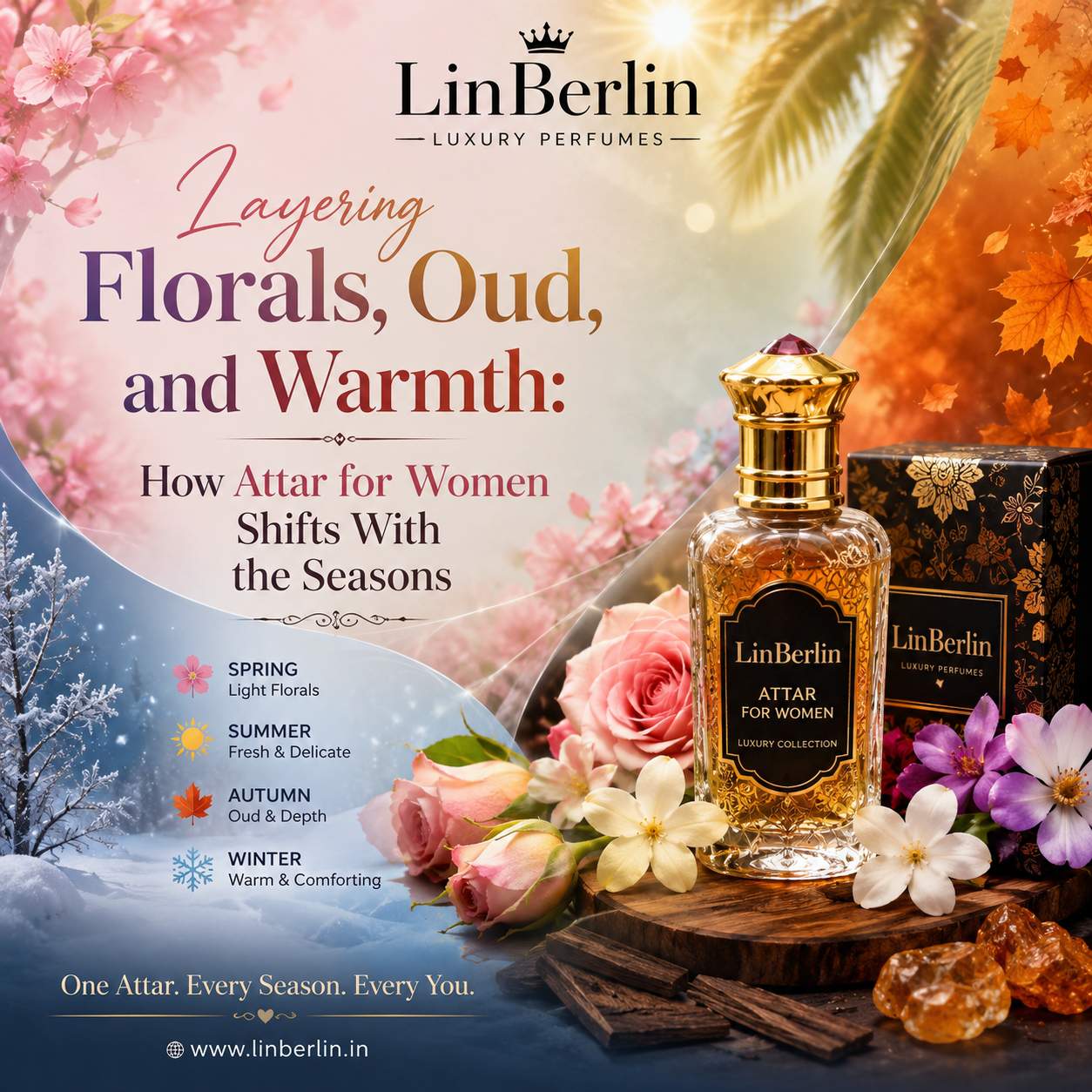
Winter: Where Oud, Amber, and Deep Musk Earn Their Keep
Cold weather tightens pores and slows skin's natural oil production, which sounds like bad news for longevity but actually works in favour of heavier attars. Deep oud, warm amber, and rich musk blends have larger, heavier molecules that need a bit of moisture and warmth to unfurl properly (this is part of why they can smell almost muted straight out of the bottle in a cold room, then bloom the moment they touch warm skin). Applying a light, unscented oil or a ceramide-based moisturiser before your attar in winter isn't fussy — it's practically a requirement if you want the fragrance to develop the way it's meant to.
Realistically, this is where a lot of women misjudge attar for women shopping altogether. They assume a heavier scent means a heavier hand, when the opposite is usually true — a single drop on moisturised pulse points in winter can outperform three drops on dry, unprepared skin.
Spring and the Case for Florals That Don't Overwhelm
As the weather turns, skin's oil balance starts shifting back toward normal, and this is really the season where lighter florals get their moment. Rose, jasmine, and mogra attars have smaller, more volatile molecules than oud or amber, which means they read as fresher and less heady — but they also fade faster if skin is even slightly under-moisturised. A thin layer of aloe-based gel before application helps these notes hold their shape without turning cloying.
Or you could skip the floral entirely and go for something semi-warm — a rose-oud blend, say — if you want spring mornings that still carry a bit of last winter's depth. There's no rule that says the calendar has to dictate the mood every single day.
Summer Layering Rules (and the Mistakes That Undo Them)
Heat changes everything, and not always in the fragrance's favour. Higher skin temperature speeds up how fast oil-based attars project and fade — you get a stronger initial burst, then a quicker drop-off. Sweat is the real complication, though. It's not that sweat destroys attar exactly; it's — well, it's more that sweat mixes with fragrance oils and can shift the scent's character within an hour, sometimes turning a clean citrus-floral into something muskier and less pleasant than intended.
A few practical fixes: apply attar to clean, dry skin rather than over sunscreen or sweat. Keep the application light — pulse points only, not a full-body dousing. And choose citrus-forward or green florals over anything dense with resins, since resinous notes tend to intensify uncomfortably in heat rather than mellow out.
Monsoon: The Season Everyone Forgets to Plan For
Humidity is its own animal. It doesn't dry fragrance out the way winter does, but it doesn't let it project cleanly either — moisture in the air seems to trap scent closer to the skin, which some people read as the fragrance "not working" when actually it's just behaving differently. Lighter, greener attars generally cope better here than dense ambers, which can feel almost suffocating in a humid room.
Skin during monsoon is also more prone to minor irritation and breakouts from trapped moisture and sweat, so this is a season to be a little more careful about where attar goes — avoiding broken skin, active breakouts, or areas already irritated from humidity-related rashes.
Layering Attar With Skincare Without Causing Irritation
Here's the thing nobody tells you when you first start experimenting with attar: what you put on your skin before the fragrance matters as much as the fragrance itself. Actives like retinol, glycolic acid, and benzoyl peroxide thin and sensitise the skin barrier, and layering a concentrated fragrance oil on top — especially anywhere near freshly treated skin — can cause stinging, redness, or a slow-building irritation that people often mistake for an allergy to the attar when it's really a reaction to the combination.
A simple rule that works well in practice: let active skincare fully absorb and settle (usually 15 to 20 minutes) before applying attar, and never apply directly onto skin still warm or tender from exfoliation. Pulse points — wrists, behind the ears, base of the throat — are safer zones than cheeks or anywhere near recently treated areas.
A Word on Sensitive Skin, Allergies, and Pregnancy
Not every skin type welcomes concentrated fragrance oil equally, and this part deserves honesty rather than reassurance. People with eczema, rosacea, or generally reactive skin should patch test any new attar on the inner forearm and wait 24 hours before applying it anywhere near the face or neck. Certain natural isolates — oud, in particular, given how many compounds it contains — can trigger contact sensitivity in a small number of people even when the ingredient is entirely natural and unadulterated.
Pregnancy is its own conversation, and not one this article can fully settle. Some women find their sense of smell becomes far more sensitive during pregnancy, and notes they once loved can suddenly feel overwhelming or nauseating. If you're pregnant or nursing, it's worth checking with a doctor before introducing concentrated fragrance oils, particularly ones with strong essential oil components, rather than assuming natural automatically means risk-free.
Building a Seasonal Attar Wardrobe
None of this needs to be complicated, and it doesn't require owning a dozen bottles either. Two or three well-chosen scents — something warm for winter, something lighter for the hotter months, and one that bridges the two — cover most of the year comfortably. What matters more than variety is understanding your own skin: how it changes with humidity, how it reacts to actives, how long it actually holds fragrance once properly moisturised. Once you know that, choosing attar for women that suits each season stops being guesswork and starts feeling closer to what my grandmother was doing all along — reading her skin, reading the weather, and reaching for the bottle that matched both.
It won't always be a perfect match on the first try. That's fine. Fragrance, like skin, keeps changing — and the best you can do is keep paying attention.