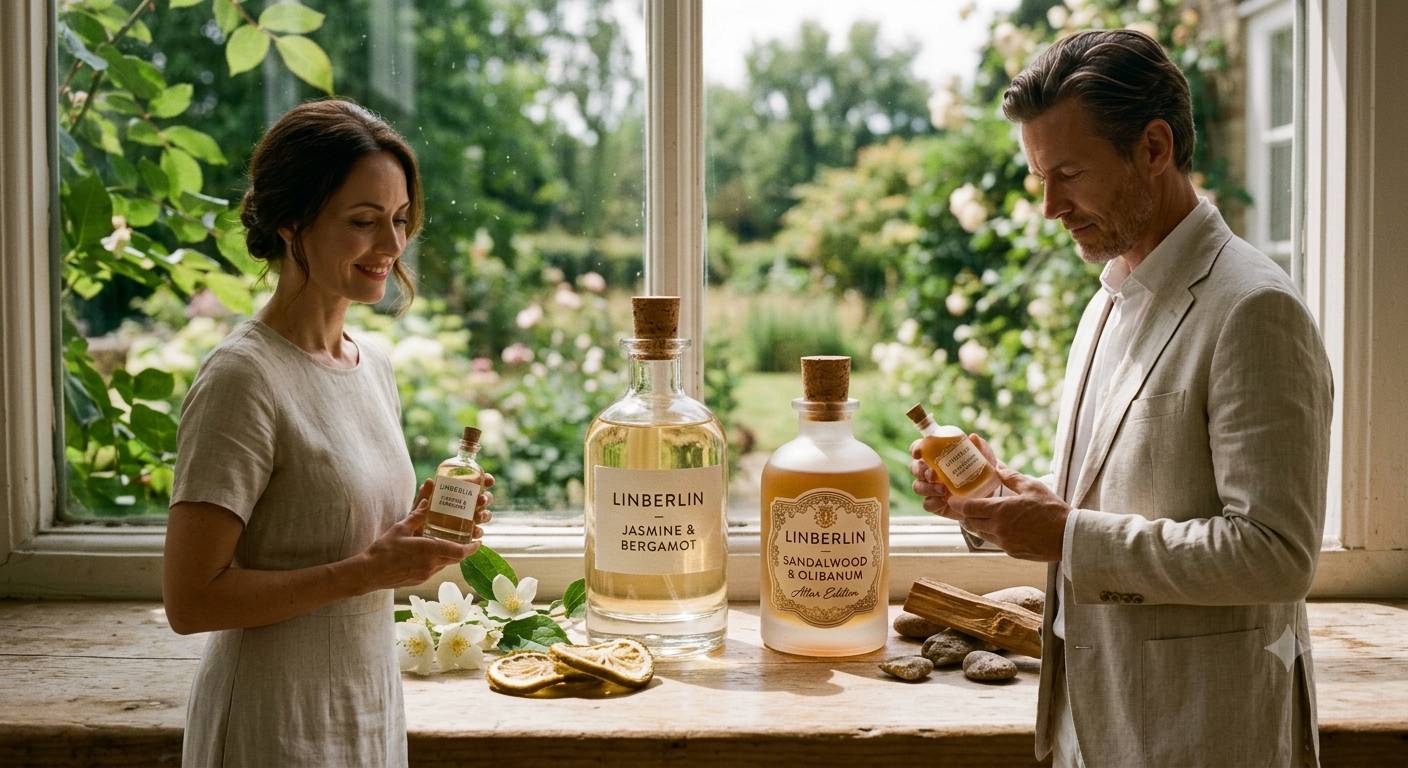
My aunt and I once wore oil from the same bottle to a wedding in Lucknow — same attar, same dab on the wrist, same evening. By the time the sangeet started, hers had turned warm and skin-like, almost buttery. Mine had gone sharper, more resinous, like it was trying to say something different than hers was. Same liquid. Two completely different stories. That's the thing nobody tells you about fragrance and gender: the bottle isn't doing half as much work as your own skin is.
So before getting into which attars suit which readers, it's worth saying plainly — the "men's" and "women's" labels on perfume shelves are mostly inherited habit, not biology. But skin chemistry, body warmth, and lifestyle genuinely do change how a scent unfolds. That distinction matters more than any label ever could.
Gender Labels Are Marketing. Skin Chemistry Is Real.
Fragrance houses have sorted scents into "masculine" and "feminine" buckets for so long that most people assume there's a scientific basis for it. There mostly isn't. Woody and spicy notes got coded male, florals got coded female, somewhere around the mid-20th century — and the industry never really moved past it. Realistically, an oud can suit a delicate wrist just as well as a floral can suit a broad-shouldered frame. What actually shifts a fragrance's behaviour is skin pH, oil production, hydration levels, and even the medications or actives someone's skin is currently dealing with.
People with naturally oilier skin tend to hold onto scent longer because oil acts as a fixative — it slows evaporation. Drier skin, on the other hand, lets top notes fly off within the hour, leaving the deeper base notes to arrive faster than they're supposed to. This is why the same attar can smell "loud" on one person and "polite" on another by lunchtime.
What LinBerlin Means By Attar For Men
When we describe a scent as leaning masculine, we're really describing a mood — grounded, a little smoky, often built around oud, leather, amber, or spice. It's less about who's allowed to wear it and more about which occasions it tends to suit: boardrooms, evening functions, colder months. LinBerlin's attar for men is built around exactly this — deep, resinous compositions that sit close to the skin rather than announcing themselves from across a room. That restraint is deliberate. A good attar shouldn't need volume to be noticed.
On drier skin types, these deeper oils actually perform beautifully because there's less oil competing for the same fixative role — the attar itself becomes the anchor. On oilier skin, a little goes further than expected, and reapplying too soon can tip warm into heavy.
What LinBerlin Means By Attar For Women
Here's where the industry usually gets predictable, and where we've tried not to. Florals, yes — but not exclusively. Attar for women at LinBerlin spans everything from delicate jasmine-forward blends to musky, almost skin-warm compositions that have nothing floral about them at all. The common thread isn't the note family — it's a lighter hand with sillage, designed to sit closer to the body through a workday rather than fill a room.
And this is where skincare interacts with fragrance in ways people underestimate. Moisturised skin holds oil-based attar noticeably longer than dry, flaky skin does — there's more surface area for the fragrance molecules to bind to, essentially. Someone who skips moisturiser and then wonders why their attar "disappeared by 2pm" is usually dealing with a hydration problem, not a fragrance problem.
For Bodies In Motion: Choosing By Lifestyle, Not Just Gender
Some fragrances are built for stillness — a dinner, a desk, a quiet room. Others need to survive heat, movement, sweat, and repeated washing. This is a lifestyle question more than a gender one, and it's exactly why we built Viking Strong, our gym perfume, for anyone whose day involves heat, movement, and sweat rather than air-conditioned stillness. It's sharper, more citrus-and-spice forward, formulated to cut through rather than blend into perspiration. Plenty of women in our own community wear it on training days precisely because it does a job the softer blends aren't built for.
Worth flagging honestly: fragrance on freshly-showered, slightly damp skin behaves very differently than fragrance applied over dried sweat. Layering attar onto unwashed, oily skin post-workout doesn't extend wear time — it usually just muddies the scent with body odour underneath, which nobody wants.
For The Floral-Leaning Reader
If you're someone who's always reached for florals — genuinely reached for them, not settled for them because that's what was on the "women's" shelf — Aurora, our floral luxury perfume for women was built with a warmer base underneath the florals so it doesn't go thin or soapy by the afternoon. That's a common complaint with floral fragrances generally — they smell gorgeous for the first thirty minutes and then just sort of vanish. Aurora was formulated specifically to resist that fade.
Layering Attar With Skincare Without Ruining Either
Or — and this bit rarely gets said out loud — sometimes the problem isn't the attar at all, it's what's underneath it. Apply oil-based attar directly over active skincare ingredients like retinol, vitamin C serums, or exfoliating acids, and you're rolling the dice on irritation. These actives already thin the skin's protective barrier slightly; adding concentrated fragrance oil on top can sting, redden, or in some cases trigger a reaction that has nothing to do with the attar's quality and everything to do with timing.
The safer sequence: moisturise first, let it absorb fully (a few minutes, not seconds), then apply attar to pulse points — wrists, behind the ears, base of the throat — rather than directly onto the face or neckline where skincare actives are usually concentrated. But if your skin is already compromised, sunburnt, freshly waxed, or broken out, it's genuinely better to skip fragrance there entirely for a day or two.
When To Be Cautious
A few situations deserve real caution rather than casual advice. Pregnant readers, especially in the first trimester, often report heightened scent sensitivity or nausea from oils they previously loved — patch testing on a small area and waiting 24 hours is sensible here. People with diagnosed fragrance allergies or eczema should always patch test a new attar on the inner forearm before applying it anywhere near the face. And if you're on a skincare routine involving prescription-strength actives, it's worth checking with a dermatologist before introducing concentrated fragrance oils into that mix, particularly if you've had reactions before.
The honest limitation here: no article can tell you exactly how a specific attar will behave on your specific skin. Skin chemistry is too individual for that. What we can promise is that the ingredients are natural, oil-based, and formulated with skin contact in mind rather than as an afterthought.
The Practical Takeaway
Choose by mood, occasion, and how your skin actually behaves — not by which shelf a bottle happened to sit on. Moisturised skin holds scent longer. Sweat and unwashed skin change everything. And the label on the box matters a lot less than the story your own chemistry tells once the attar meets your wrist.