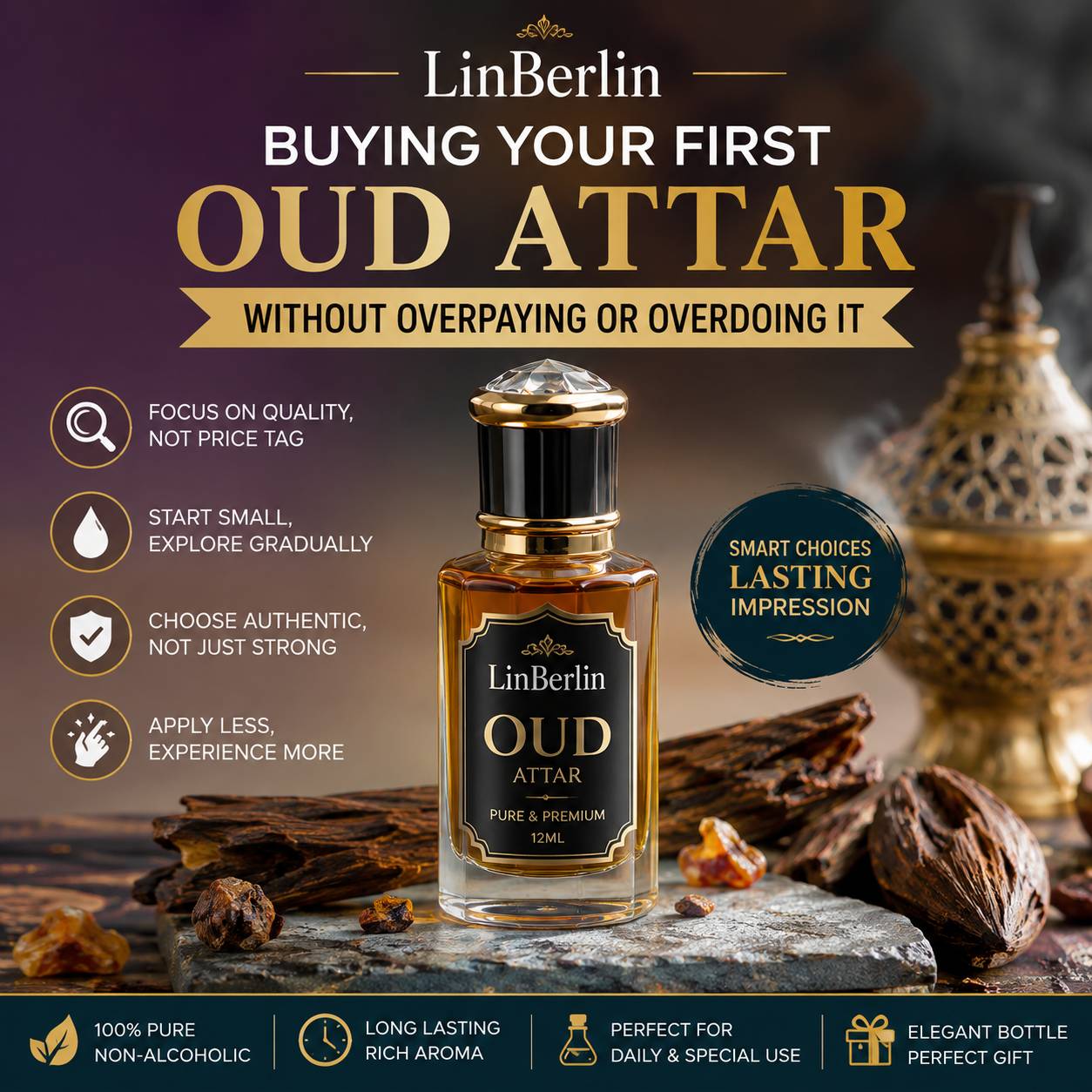
My grandmother kept her oud in a small brass box, not a bottle, and she'd dab it on her wrist only on the coldest nights of winter. That's the first thing I think about when someone tells me they're ready to buy their first bottle of real oud attar. Not the price. Not the brand. The ritual of it — how a scent this dense demands a kind of respect that lighter perfumes never ask for.
And that respect is exactly where most first-time buyers go wrong. They either overpay for a name they've seen on Instagram, or they overdo the application because they assume more oud means more luxury. Neither is true. So let's walk through this properly — the way I'd talk a friend through it over chai, not the way a sales page would.
Why Oud Confuses Even Experienced Perfume Buyers
Oud is not one smell. That surprises people. There's Cambodian oud, which tends toward something dark and almost medicinal. There's Indian oud, often deeper and more animalic. Hindi oud, Assam oud, Trat oud — each region's climate and tree species change the resin's chemistry, and therefore the final scent in your bottle. A synthetic "oud fragrance" from a mall counter and a genuine oud attar distilled from real agarwood are, realistically, two different products wearing the same name.
This is where a lot of overpaying happens. Brands slap "oud" on a bottle because the word sells, but the oil inside might be a fraction genuine agarwood extract cut heavily with synthetic oud accords or carrier oils. It's not necessarily dishonest — blending is normal in perfumery — but it does mean the price you're paying should match what percentage of real oud is actually in there. Ask. A brand that can't or won't tell you isn't one I'd trust with my first purchase.
What Your Skin Is Actually Doing With That Oud
Here's something most buying guides skip entirely: your skin is not a neutral surface. It's an active participant in how oud attar performs, and this matters more with oud than with almost any other note because oud oils are thick, resinous, and slow to evaporate.
Dry skin drinks fragrance. Literally — the lack of natural oils means the attar sits closer to the surface and can feel sharper, sometimes even slightly astringent, in the first twenty minutes. Oily skin, on the other hand, tends to hold oud beautifully because the skin's own sebum blends with the attar's oil base, extending wear but also warming the scent faster, sometimes pushing it into a muskier, heavier direction within the hour. Combination skin does a bit of both depending on where you apply it, which is honestly why testing on your wrist and testing on your neck can give you two slightly different impressions of the same bottle.
Moisturized skin holds scent longer than dry skin — this isn't folklore, it's basic dermatology. A well-hydrated stratum corneum slows the rate at which oil-based compounds evaporate off the skin surface. So if you've just come out of a hot shower and your skin is a little dehydrated from the heat, oud attar will actually fade faster than it would on skin that's been moisturized with something unscented an hour earlier. I've had readers write in confused about why their attar "disappeared" by lunch, and nine times out of ten it traces back to this.
Layering Attar Over Skincare Without Ruining Either
This is where I see the most mistakes, and it's rarely the attar's fault.
If you're using active skincare ingredients — retinoids, AHAs, BHAs, vitamin C serums, benzoyl peroxide — layering a concentrated oud attar directly over freshly applied actives can genuinely cause irritation. Not because oud is harsh by nature, but because your skin barrier is temporarily more permeable and reactive right after these treatments. What people notice, when they layer incorrectly, is a mild stinging or a patch of redness exactly where the attar was applied, sometimes hours later. It's uncomfortable, avoidable, and completely misunderstood as "an allergy to attar" when it's really a compatibility issue with what was underneath.
The fix is simple, if a little unglamorous: apply your active skincare, let it fully absorb (fifteen to twenty minutes, minimum), then apply your attar to a different spot if you can — inner elbow, behind the ear, base of the throat — rather than directly over treated areas. Pulse points work well for oud specifically because they generate a little natural warmth that helps the scent open up gradually instead of blasting all at once.
How Much Is Actually Enough
One drop. Sometimes two. That's genuinely it for pure oud attar, and I know that sounds stingy after you've just spent money on a small bottle. But oud attar is not alcohol-based perfume — there's no diluting spray mechanism doing the portion control for you. A single drop of good oud oil, rubbed gently between two pulse points, will often outlast an entire spritz of eau de parfum. Overapplying doesn't make it last longer or smell more expensive. It just makes it heavier, and heavy oud in a closed room or an office setting reads as overwhelming rather than luxurious.
Apply, then walk away from it for ten minutes before deciding whether you need more. Oud oils develop on skin — the opening note isn't the note you'll be wearing an hour later, and judging the whole scent off that first thirty seconds is one of the most common beginner mistakes I see.
When Caution Actually Matters
I'd be doing you a disservice if I didn't flag this plainly. If you have sensitive skin, eczema, or a history of contact dermatitis, patch-test any new attar — genuine oud included — on the inner forearm and wait twenty-four hours before applying it anywhere near your neck or face. Real agarwood oil is generally well-tolerated, but "natural" doesn't automatically mean risk-free, and some blended attars include botanical extracts (sandalwood, rose absolute, saffron) that carry their own sensitisation potential in a small percentage of users.
If you're pregnant, it's worth checking with your doctor before regular fragrance use of any kind, oud included — this isn't oud-specific caution, it's general good practice with concentrated aromatic oils. And if you're currently on prescription retinoids or undergoing any kind of chemical peel treatment, give your skin a few extra days of buffer before introducing a new attar into the routine. Your barrier needs the recovery time more than your wardrobe needs a new scent this week.
Where to Actually Spend Your Money
The truth is, your first bottle doesn't need to be the rarest, most expensive oud on the shelf. A smaller bottle of honestly-labelled, well-sourced oud teaches you more about your own skin chemistry than a large bottle of something flashy ever will. Think of it as a diagnostic purchase, not a final one.
If you already know you lean toward something warmer and more layered, it's worth exploring how oud pairs with deeper notes like tobacco before committing to a pure single-note bottle — some people find straight oud a little intense on first wear and prefer it softened. Others go the opposite direction entirely, drawn to how rose softens white oud into something more wearable day to day. Neither is more "authentic" than the other — it genuinely comes down to what your skin does with it and what mood you're buying for.
A Small Caveat Before You Buy
I'll say this honestly: no article, mine included, can tell you exactly how a specific oud will smell on your specific skin. Reviews, notes lists, even my own descriptions here are approximations. Oud is famously skin-reactive, and the only real test is a small application and a few hours of patience. Buy small the first time. Let your skin do the rest of the talking.
If you're buying for a big occasion rather than daily wear, the calculus shifts a little — longevity and projection matter more, and it's worth looking at options built specifically for that kind of staying power, like the wedding attars formulated to hold their character through a long ceremony. But for a first bottle, meant purely for getting to know oud as a material? Keep it simple. One good oil, one honest supplier, one patient afternoon of testing on your own skin. That's really all this comes down to.