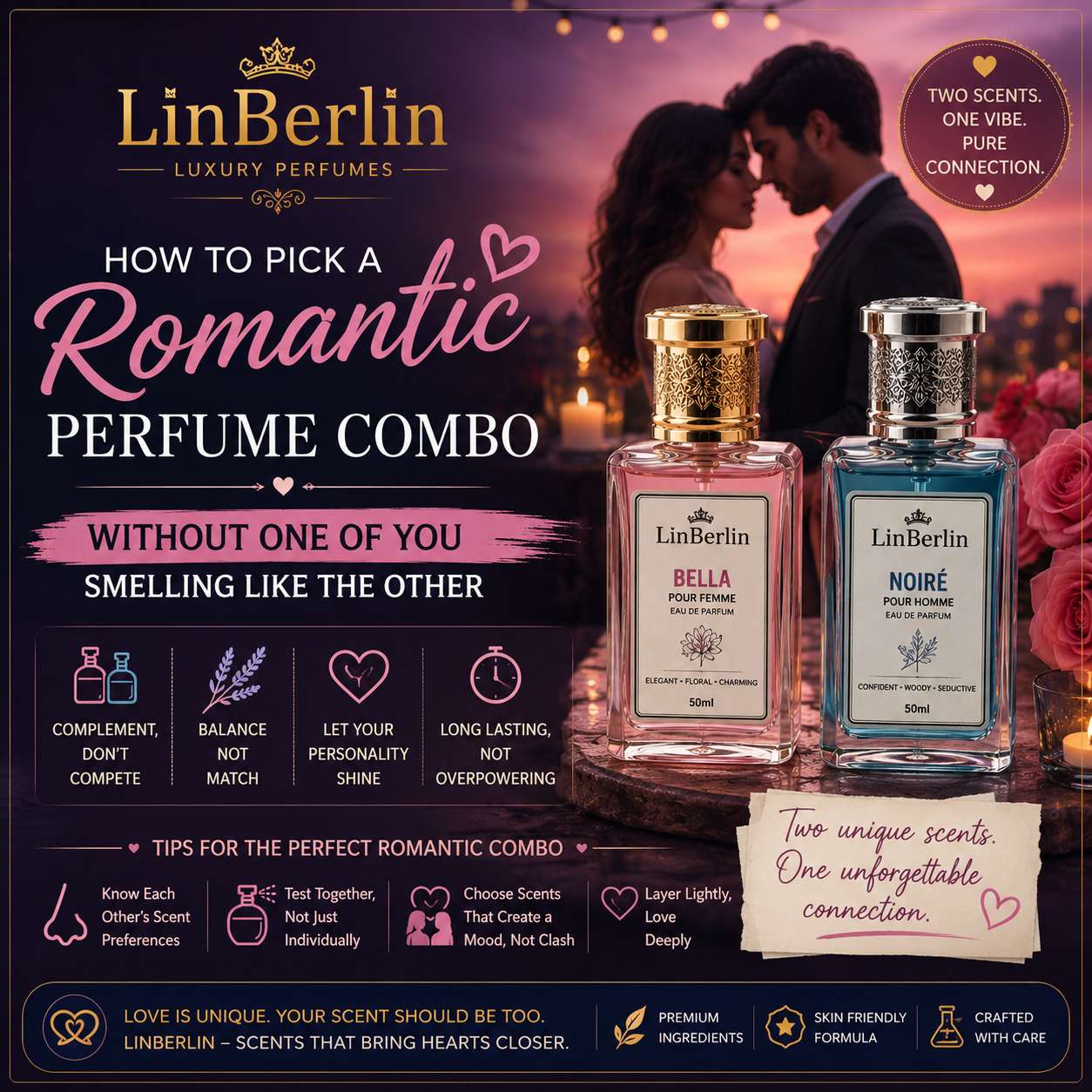
A customer once described the exact problem this article exists to solve, though she didn't have the vocabulary for it yet — she and her partner had been gifted matching perfumes for their anniversary, and within a week she'd stopped wearing hers entirely. Not because she disliked the scent. Because whenever they were in the same room, she said, it stopped feeling like two people wearing something nice and started feeling like one scent walking around in two bodies. That's a genuinely common outcome with couple perfume gifting, and almost nobody warns buyers about it before they've already bought the identical bottles.
The instinct behind matching scents is sweet — same fragrance, shared ritual, a little olfactory symbol of togetherness. But worn daily, identical perfume on two different people rarely smells identical at all, and even when it does, it can flatten something that's supposed to feel personal into something that just feels uniform. The better approach, almost always, is complementary rather than matching: two scents built to sit well beside each other without either person smelling like an echo of the other.
Why identical perfume doesn't actually stay identical
Here's the science most gifting guides skip entirely. The same fragrance smells genuinely different on two different people because skin chemistry — oil content, hydration level, even pH — changes how fragrance molecules develop and last. Dry skin tends to read fragrance thinner and shorter-lived; oily skin holds onto the same scent longer and often richer. So a couple wearing the exact same bottle can end up smelling noticeably different from each other by afternoon anyway, just unevenly rather than intentionally, which sort of defeats the point of matching in the first place. And there's a subtler issue too — when two people wear literally the same scent, standing close together tends to blur the fragrance into something muddier rather than more romantic, since neither version gets to fully express itself against the other's skin. Complementary scents, built to differ just enough, actually read more distinctly and more pleasantly in proximity than one scent doubled.
What "complementary" actually means in practice
This isn't about picking two totally unrelated fragrances and hoping for the best. Good complementary pairing usually shares a connecting thread — a shared base note, a similar mood, a season they both suit — while differing enough in top notes or overall character that each person still smells distinctly like themselves. Ruby & Shadow, our romantic perfume combo, was built with exactly this logic — two attars designed to share a warm, romantic undertone without collapsing into sameness, so each partner keeps their own identity in the scent while still feeling like part of the same story. That's really the standard worth holding any couple combo to, whether you're buying from LinBerlin or elsewhere: does it let both people smell like themselves, or does it just double one idea?
Reading skin type before you buy, not after
If you know your partner's skin fairly well, use that information — it genuinely changes which combo makes sense. Dry skin tends to hold richer, oil-heavier attars longer and more faithfully than lighter compositions, which fade faster without enough natural oil to anchor them. Oily or combination skin, by contrast, can handle brighter, lighter blends beautifully, since the skin's own richness extends wear time on its own. So if one partner runs dry and the other runs oily, that's actually useful information for choosing a combo rather than a complication — it often means one half of the pairing should lean slightly heavier and the other slightly lighter, purely to land at similar longevity and intensity by the end of the day despite different starting points.
What happens when fragrance meets an existing skincare routine
Moisturised skin holds fragrance longer, across the board, which matters for gifting because you might not know exactly how diligent your partner is about their routine day to day. If they're someone who moisturises religiously, richer oil-based attars will perform beautifully. If they tend to skip it, a slightly more concentrated formula compensates somewhat, though there's a limit to how much a fragrance alone can make up for dry, unmoisturised skin. Layering matters too, and this is worth flagging honestly: if your partner uses retinol, glycolic acid, or other strong actives as part of their skincare, applying concentrated fragrance oil directly over freshly treated skin can occasionally cause mild stinging or redness, simply because those actives leave the skin barrier more permeable for a window of time. It's not dangerous, just uncomfortable — and a small gift note suggesting they apply their new scent on non-active days, or wait twenty to thirty minutes after their routine, turns a nice gift into a genuinely thoughtful one.
Sensitivity, allergies, and buying for someone else's skin
Buying fragrance as a gift always carries a bit of a blind spot — you don't fully control what happens once it's on someone else's skin, and that's worth being honest about rather than glossing over. If your partner has any history of fragrance sensitivity, or reactive skin generally, it's worth choosing a combo that leans toward gentler, less citrus-forward or floral-absolute-heavy compositions, since those categories carry a slightly higher irritation risk on already reactive skin than deeper woods or musks do. Pregnancy is worth a mention too if it applies — certain concentrated essential oils are generally advised against or used more cautiously during pregnancy, particularly in the first trimester, so if that's part of your partner's situation, checking specific notes before gifting (or choosing something simple and testing lightly first) is a sensible precaution rather than an overreaction.
Why a real combo beats a bundled one
The truth is, a lot of what's marketed as a "couple perfume combo" is really just two unrelated bottles boxed together because pairing sells better than single bottles do — no real thought given to how the two scents actually relate to each other, worn separately or side by side. That's not really a combo. It's two purchases with a shared box. There's a good breakdown of exactly this distinction in why some perfume combos are actually worth buying and others aren't, worth a read before comparing options across different brands. If you want the fuller picture on what makes attar and perfume combos work as gifts generally, beyond just the couple's category specifically, there's a solid overview in the complete guide to perfume and attar combos as gifts, useful context if this is your first time buying a combo rather than a single bottle.
Matched sets versus two distinct bottles
There's also a format question worth thinking through — some couples prefer a genuinely matched pair, built as one cohesive product from the start, while others do better with two distinct scents that simply share a theme or occasion. If you're leaning toward the matched-pair format specifically, this look at the best couple perfume set and gift set options walks through that particular structure in more depth than a general combo guide can. And for buyers who want something that feels genuinely personal rather than generically "romantic" — tailored to the specific couple rather than a one-size-fits-all gift category — this guide to couple perfume gifts that feel personal is worth reading before you commit to any specific combo.
The short version
Skip the instinct to match exactly, and look instead for a combo built around a shared thread rather than a shared bottle — same warmth, same season, same occasion, but different enough that each of you still smells distinctly like yourself standing next to the other. That's really what makes a romantic combo feel considered rather than just convenient, and it's worth the extra five minutes of thought before checkout.