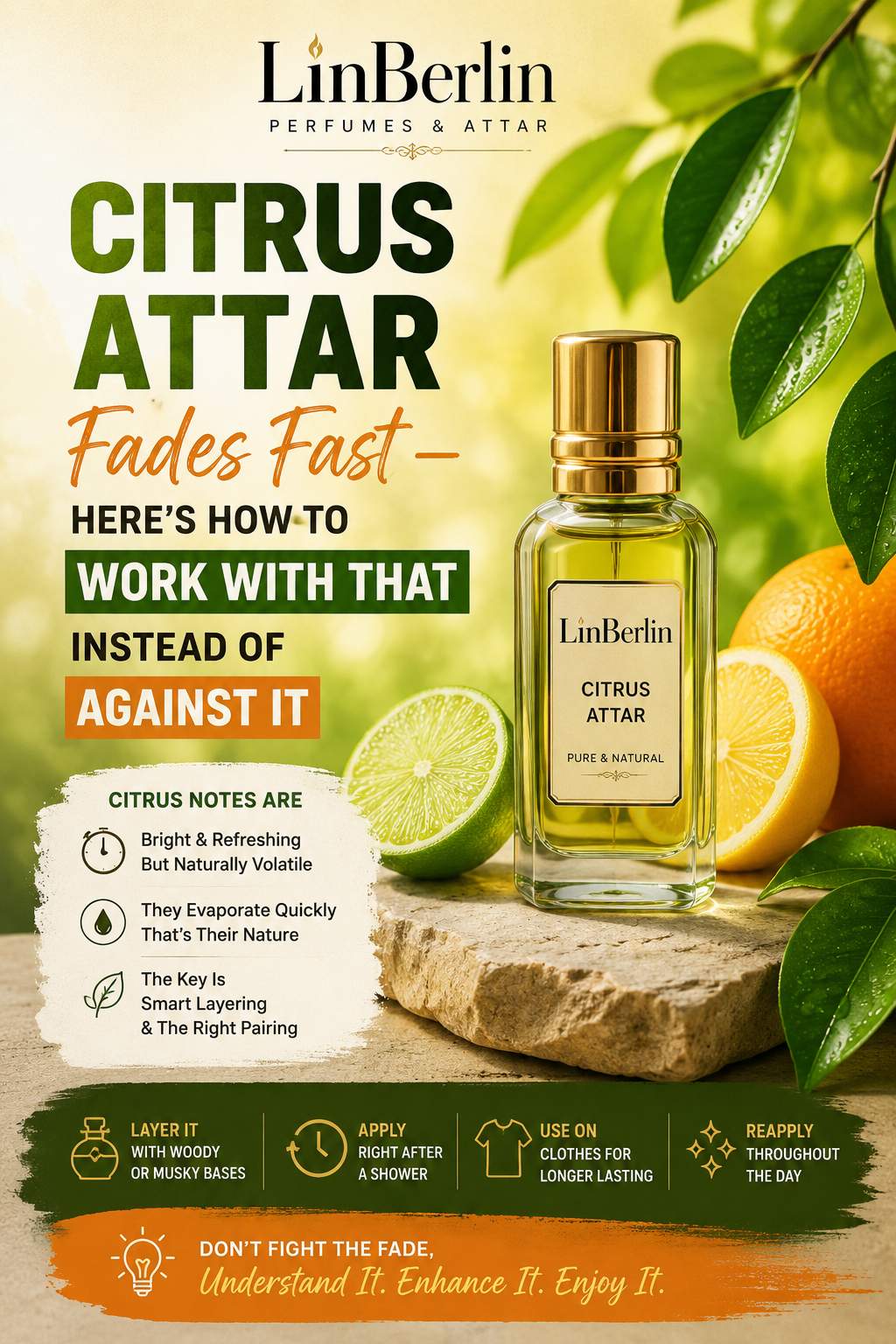
I once had a customer write to me at 4 PM asking why the citrus attar she'd applied that morning had "just left her." Not faded, not softened — left. She wasn't wrong to notice. But she was asking the wrong question. The question isn't why citrus attar disappears fast. It's what you're supposed to do about it, because fighting that nature gets you nowhere.
 Buy on Amazon
Citrus notes are volatile by design. That's not a flaw in formulation, it's chemistry — the same lightness that makes bergamot, mandarin, and sweet lime smell so alive on first spray is exactly what makes them evaporate quickest. So instead of chasing longevity that citrus was never built to give, the smarter move is learning to work with its rhythm. That's really what this guide is about.
What's Actually Happening to the Oil on Your Skin
Attar oils sit on skin differently than alcohol-based perfumes. There's no evaporating carrier rushing the fragrance away in the first ten minutes, which is one reason attars generally last longer than sprays. Citrus attar is the exception that proves the rule. Its top-heavy composition — light citrus terpenes with a smaller base of grounding notes — means the parts you smell first are also the parts that leave first.
And here's the piece most buying guides skip: your skin's own oil production is doing half the work of holding (or losing) that scent. Dry skin has less natural sebum to trap fragrance molecules, so citrus attar can feel like it's gone within two or three hours. Oilier skin holds onto it noticeably longer, sometimes doubling the wear time, because the oil itself acts as a slow-release surface. Same bottle, same attar, completely different experience depending on who's wearing it.
Skin Type Changes Everything Here
Dry or dehydrated skin needs a moisture layer underneath the attar — not because it's a nice-to-have, but because unmoisturised skin is porous in a way that lets fragrance molecules escape faster than they should. A light, fragrance-free moisturiser applied a few minutes before the attar gives the scent something to hold onto.
Oily and combination skin has the opposite problem, or — well, it's more of an advantage than a problem, honestly. Excess sebum acts like a natural fixative. But it can also shift how the citrus reads over time, sometimes pulling it slightly sweeter or muskier as body heat and oil interact with the attar's base notes.
Normal skin sits somewhere in between and generally gives the truest read of how the attar was designed to smell. Sensitive or reactive skin is its own category entirely, and we'll come back to that shortly, because it deserves more than a passing mention.
Where Itr e Fawakih Fits Into This Picture
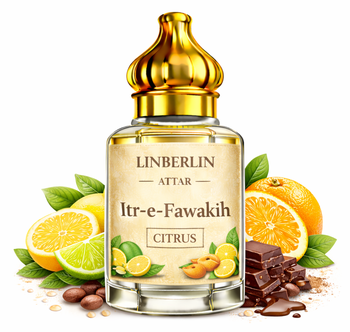
If you want to see the citrus-fade problem solved rather than just explained, our citrus attar, including our Itr e Fawakih blend, is a good place to look. Itr e Fawakih translates roughly to "fragrance of fruits," and it's built with that same top-note brightness people love about citrus, but layered over a base that's meant to slow the whole thing down rather than let it evaporate in one burst.
Realistically, no attar can turn citrus into an all-day scent without changing what citrus actually is. What Itr e Fawakih does instead is stretch the middle stage — the point where most citrus fragrances go flat and disappear — so there's a longer, more pleasant transition before it fades completely. That's a meaningfully different experience than a straight citrus oil, even if neither one will still be there at bedtime.
The Skincare Layering Mistake Almost Everyone Makes
People tend to apply attar right after a heavy skincare routine, thinking more product means more staying power. It usually does the opposite. Occlusive creams, thick balms, and anything with a strong wax or petroleum base sit on top of skin and block the attar from actually absorbing into it — so the scent sits on the surface, then rubs off onto clothing within an hour.
Actives make this more complicated too. Retinol, strong AHAs, and vitamin C serums can all thin the skin barrier temporarily, and applying fragrance oil directly over freshly active-treated skin sometimes causes stinging or redness that has nothing to do with the attar itself being irritating. If you're using any of these, give your skin a buffer — apply the attar to a different area, like the inner wrist or behind the ear, rather than layering it directly over treated skin.
So what actually works? A thin, non-comedogenic moisturiser, fully absorbed, followed by the attar on pulse points. Nothing more complicated than that.
A Realistic Application Routine for Citrus Attar
Apply to pulse points — wrists, inner elbows, base of the throat — where blood flow generates warmth and helps release the scent gradually throughout the day. Skip the classic "behind the ears" spot if you wear glasses or a mask often, since friction there wears the oil off faster than anywhere else.
One drop per point is usually enough. Attar is concentrated, and citrus varieties in particular can smell almost sharp in the first fifteen minutes before settling — over-applying just intensifies that opening phase without adding real longevity later.
Reapplication is normal and not a sign you bought the wrong product. Keep a small rollerball version in your bag if you're someone who likes the scent to reappear through the afternoon rather than fade into nothing by lunch.
When to Be Careful
Citrus oils, natural or not, can be mildly photosensitising for some people — meaning skin exposed to strong sun shortly after application may react more than usual. It's not common with well-formulated attars, but if you have a history of sun sensitivity, apply to clothing or covered skin instead of bare wrists during peak daylight hours.
Pregnancy is another moment to slow down rather than assume. Fragrance sensitivity often shifts during pregnancy, and some people who've worn a scent for years suddenly find it overwhelming. Patch test first, and don't feel obligated to push through discomfort just because a fragrance used to be a favourite.
Anyone with a known allergy to citrus peel, limonene, or bergapten should check the ingredient notes before buying — most reputable attar makers list their dominant naturals, and if that information isn't available, that's worth asking about directly rather than guessing.
Buying Smart: What Size and Concentration Actually Make Sense
Citrus attar isn't the fragrance to buy in a large bottle on a first try. Or it can be, but only if you already know you love the profile — otherwise a smaller size lets you test how your specific skin chemistry handles it before committing.
Concentration matters more than most buying guides admit. A higher concentration doesn't necessarily mean longer wear with citrus notes specifically, since the volatility is baked into the raw material itself rather than the dilution ratio. What it does mean is a more intense, truer opening scent. If longevity is your main goal, look for citrus attars blended with heavier base notes — sandalwood, amber, or musk — rather than pure single-note citrus oils, which fade fastest of all.
And one honest caveat before you buy anything: no natural citrus attar, from any brand, will last twelve hours on skin. Anyone promising that isn't being straight with you. What a well-made one will give you is a beautiful, honest few hours — bright, then warm, then gone — and for a lot of people, that's exactly the kind of fragrance they want. Something that doesn't announce itself all day, just shows up, does its work, and steps back.
Buy citrus attar for what it actually is rather than what you wish it were, and it becomes one of the more rewarding categories in natural perfumery — not despite the fade, but because of it.