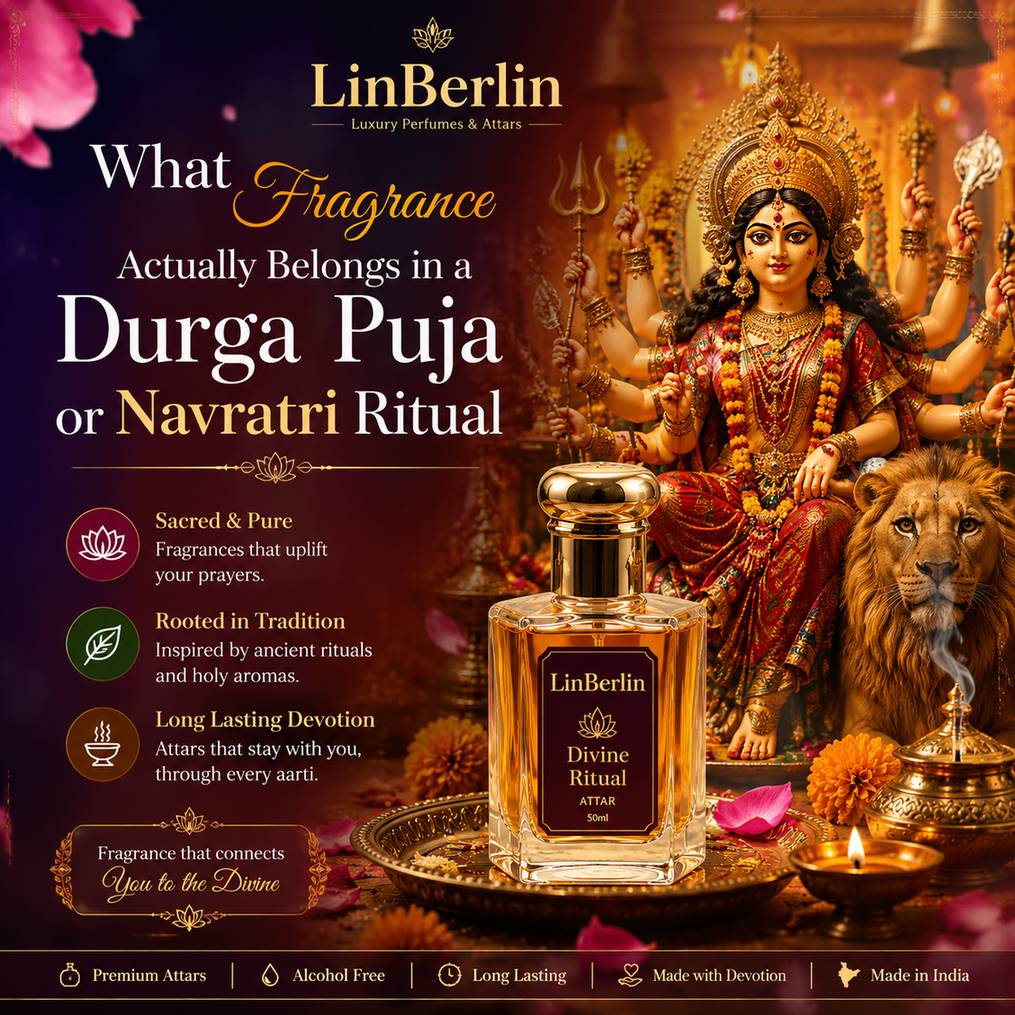
My grandmother kept a small steel box in her puja corner, and inside it was never incense — it was a tiny glass vial, half-empty, that she'd dab on her wrists before every evening aarti. I didn't understand it as a child. I understand it now. Scent was never decoration in her practice. It was participation.
That distinction matters more than most people realise when Navratri approaches and the question of "what to wear" quietly extends to what to smell like. Clothes signal the occasion. Fragrance shapes how you experience nine days of standing, chanting, fasting, and returning to the same sacred space morning after morning. And that's — well, it's a slightly different job than the one perfume usually does.
Why Ritual Fragrance Isn't the Same as Everyday Perfume
Most fragrance choices are about self-expression. Ritual fragrance is about atmosphere and offering. So the criteria shift. A scent that's loud and impressive at a party can feel wrong in a puja room, where dozens of people sit close together for hours, where incense is already layered into the air, and where the smell is meant to support devotion rather than compete with it.
Natural attars have historically filled this role in Indian households for a reason that's practical as much as spiritual. Alcohol-based perfumes evaporate fast and throw a hard, sharp opening that can clash with dhoop and camphor. Oil-based attars behave differently. They warm slowly against skin, release in layers, and settle into something soft rather than sharp — which is exactly the temperament a nine-day ritual calls for.
The Case for Durga Pushp Attar for Durga Puja
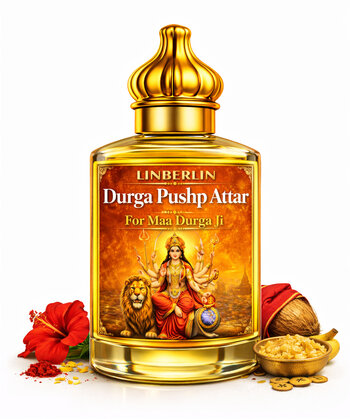
If there's one attar profile that's genuinely built for this occasion rather than adapted to it, it's a floral composition centred on the flowers traditionally offered to the Goddess — hibiscus, lotus, marigold, and jasmine notes, rendered in a way that feels devotional rather than decorative. This is where Durga Pushp attar for Durga Puja earns its place. It isn't trying to be a fashion fragrance wearing festive branding. It's built around the actual flowers used in the puja itself, which means it doesn't fight the ritual — it extends it.
Realistically, most "festive" attars sold this time of year lean heavily sweet or musky because that sells better as a general gifting fragrance. A true puja-appropriate attar has to do something harder: smell floral without turning cloying after four hours of wear, and hold up next to burning dhoop without curdling into something synthetic-smelling. That's a narrower brief than people assume.
How Skin Actually Carries Attar Through a Long Puja Day
Here's something most articles on festive fragrance skip entirely: skin condition changes how attar performs, and Navratri is brutal on skin in ways people don't connect to their fragrance choices. Fasting reduces hydration. Standing near heat sources — diyas, dhoop, sometimes open fire during havan — dries skin further. Dry skin doesn't hold scent molecules the way moisturised skin does; it lets them evaporate faster, so an attar that smelled rich at 7 am can feel thin by noon.
What actually works is applying a light, fragrance-free moisturiser to pulse points before the attar goes on — wrists, behind the ears, the base of the throat. Oil binds to oil. A slightly hydrated skin surface gives the attar something to hold onto, and you'll notice the difference in how long the scent stays honest to itself rather than turning flat.
Oily skin behaves almost the opposite way. It amplifies base notes and can make an attar feel heavier and muskier by afternoon than it did at application. If your skin runs oily, apply slightly less than you think you need, and expect the deeper notes to come forward as the day goes on — that's not the attar going wrong, that's just chemistry doing its job.
Where Caution Is Genuinely Warranted
Not every skin should meet every attar without a second thought, and it would be dishonest to pretend otherwise. Attars are concentrated — far more so than alcohol-based perfumes — so a small patch test on the inner forearm, left for a few hours before full application, isn't excessive caution, it's just sensible.
A few situations deserve extra care specifically:
Sensitive or compromised skin — anything recently exfoliated, sunburnt, or irritated — should avoid direct attar application until it's healed, since concentrated oils can sting or worsen redness on broken skin barriers. Pregnancy is another one worth mentioning honestly: some people find their scent sensitivity changes dramatically during pregnancy, and while natural attars avoid the synthetic aroma-chemicals often linked to headaches, it's still worth introducing any new fragrance in small amounts first rather than applying generously on day one of Navratri. And anyone using strong skincare actives — retinoids, high-percentage acids, recent chemical peels — should be careful layering fragrance oils directly over that skin, because the barrier is temporarily more permeable than usual, and what would normally be a mild sensation can feel sharper than expected.
Applying Attar Through Nine Days Without Overdoing It
One mistake shows up constantly during Navratri: reapplying attar every few hours the way people do with spray perfume. Attar doesn't need that, and doing it anyway is how a scent goes from devotional to overwhelming by day three. A single, well-placed application — pulse points, not clothing, since fabric holds attar longer than skin and can turn stale — usually carries through a full day of puja activity.
If you're fasting and standing for extended aartis, apply in the morning after any moisturiser has settled, not immediately on top of it. Give it a minute. Attars need a beat to bond with skin oils before they start doing their actual work, and rushing that step is a small thing that a lot of people get wrong without realising why the scent feels "off."
A Small Caveat Worth Saying Out Loud
Not every attar marketed for festive or devotional use is actually made with real flower or resin extracts — a fair amount of what's sold as "puja attar" during this season is synthetic floral compound dressed up in traditional language, and there's no way to know that from packaging alone. The honest answer is that you have to trust the source, ask what the composition actually contains, and accept that a genuinely natural attar will smell slightly different bottle to bottle, batch to batch, because it's working with agricultural material rather than a fixed synthetic formula. That inconsistency is a feature of authenticity, not a flaw to be engineered away.
What This Comes Down To
Fragrance during Durga Puja and Navratri isn't really about smelling festive. It's about choosing something that can sit quietly in a crowded room for nine days without becoming tiresome, that respects the flowers already on the altar instead of trying to outdo them, and that your skin can actually carry without irritation through fasting, heat, and long hours of standing. Get the skin preparation right, apply with restraint, and let the attar do the slow, layered work it's built for — the ritual will smell exactly as unhurried as it's meant to feel.