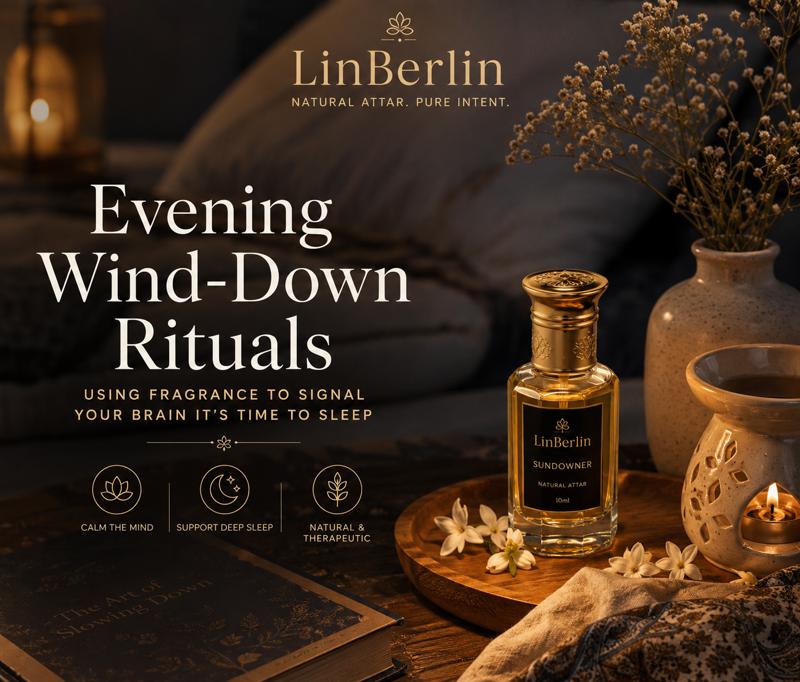
Evening wind-down rituals using fragrance can help train the brain for sleep by pairing calming scent cues with consistent nighttime habits and rest. Evening wind-down rituals using fragrance to signal your brain it's time to sleep
Steam curled slowly from a ceramic mug while rain tapped against the window, and somewhere between turning off the kitchen light and folding a blanket across the sofa, the faint scent of sandalwood started changing the pace of the room. Shoulders loosened. Thoughts stopped racing quite so hard. The body hadn't fallen asleep yet, but it had clearly received a message.
That quiet shift is part of why evening wind-down rituals using fragrance have become more than a passing wellness trend. Scent reaches the brain differently from sight or sound, slipping directly into areas connected to memory, emotion, and nervous system regulation. Most people have experienced it without really naming it: a familiar oil blend that softens tension after work, the smell of clean cotton that makes a hotel room feel calmer, or incense that signals the end of social noise for the night.
And unlike many modern sleep products, fragrance doesn't need to promise miracles to be useful. Used intentionally, certain aromas can become reliable psychological cues that help the mind separate daytime alertness from nighttime rest.
What the science actually says
The human sense of smell has unusually direct access to the limbic system, the network involved in emotional processing, stress response, memory formation, and behavioral conditioning. That's why scent can feel immediate in a way music or lighting sometimes doesn't. Molecules inhaled through the nose interact with olfactory receptors, sending signals toward areas like the amygdala and hippocampus — regions strongly tied to emotional memory and learned associations.
Research around fragrance and sleep is strongest in a few specific areas. Lavender has been studied repeatedly for its potential calming effects, particularly because compounds like linalool appear to influence parasympathetic nervous system activity. Some controlled studies suggest lavender inhalation may modestly improve perceived sleep quality or relaxation in certain groups, including people dealing with mild stress or disrupted sleep schedules. Bergamot and sweet orange have also shown potential links to reduced anxiety markers in small studies.
But there are limits to the evidence, and that's where wellness marketing often drifts away from reality. Fragrance alone won't treat chronic insomnia, clinical anxiety, trauma-related sleep problems, or neurological sleep disorders. Most scent studies are relatively small, and many rely on subjective reporting rather than large-scale biological measurements.
So why do nighttime scent rituals still help many people? Conditioning plays a major role. When the brain repeatedly encounters the same calming fragrance before sleep, it begins connecting that smell with slowing down and safety. Over time, the ritual itself becomes part of the effect. A familiar attar applied at the same hour each evening can eventually trigger anticipatory relaxation before the body fully realizes it.
Honestly, this is where traditional perfumery practices often understood something modern wellness culture tries too hard to overcomplicate. Repetition matters more than novelty.
And sensory reduction matters too. Warm, resinous, or softly woody aromas tend to feel quieter to the nervous system than bright, intensely stimulating fragrances with sharp citrus or synthetic sweetness. That doesn't make one category morally better than another; it just changes the emotional texture of the experience.
How to use fragrance intentionally for wellbeing
A useful evening scent ritual usually starts before the fragrance itself touches the skin. The nervous system responds more strongly when several signals work together: lower lighting, reduced screen exposure, slower breathing, warmer temperatures, softer sound. Fragrance becomes part of a pattern rather than a standalone trick.
One simple approach is choosing a single scent profile reserved only for nighttime use. This could be a natural sandalwood attar, a soft rose blend, a gentle oud balanced with amber, or even neroli layered lightly onto fabric. The restriction matters because exclusivity strengthens association. If you wear the same fragrance during stressful work calls and bedtime reading, the brain receives mixed messages.
But application style changes the experience more than many people realize. Dabbing oil-based fragrance onto pulse points creates warmth and intimacy, while scenting bedding or loose cotton fabric produces a slower atmospheric effect. Some people find direct skin application grounding because the aroma moves with body heat throughout the evening. Others prefer distance so the fragrance stays subtle instead of overwhelming.
You might be wondering how strong the scent should actually be. Softer than you think. Heavy projection keeps the brain engaged and alert because strong smell naturally attracts attention. For sleep rituals, the best fragrances usually hover close to the body rather than filling the room aggressively.
And timing matters more than perfection. Applying fragrance thirty to sixty minutes before sleep gives the brain space to transition gradually instead of expecting instant sedation.
Traditional attars often work beautifully for nighttime rituals because oil-based compositions unfold slowly (especially those built around woods, resins, or florals instead of loud alcohol diffusion). The scent stays close, textured, and warm against the skin. That slower development can feel emotionally steadier late in the evening.
There's also something psychologically important about tactile rituals. Rolling oil between fingertips, uncapping a small bottle carefully, or applying fragrance after washing the face adds physical repetition to the sensory cue. The truth is, the body often responds to ritual structure as much as the aroma itself.
Some readers naturally ask whether expensive fragrances work better for relaxation. Not necessarily. Ingredient quality matters because harsh synthetics or sharp alcohol blends may feel irritating before bed, but effectiveness usually depends more on emotional association and consistency than price. A modest natural oil worn nightly with intention can become deeply calming over time.
Realistically, personal history shapes scent response too. One person may find oud comforting and meditative, while another associates it with crowded formal events and stays mentally alert after smelling it. That's why experimentation matters more than blindly following trend lists.
And if you're introducing fragrance into an evening routine for the first time, start with one scent for at least two weeks before changing direction. The brain learns patterns slowly.
Common overclaims to ignore
The modern wellness market loves certainty, especially around sleep. Fragrance brands sometimes imply that a particular oil will "switch off stress hormones" or "guarantee deep sleep," but human nervous systems don't work with that level of predictability.
Natural fragrance can support relaxation, emotional grounding, and bedtime consistency. It cannot medically sedate the brain in the way prescription sleep medication does. That's an important distinction.
Some marketing also exaggerates the scientific authority behind individual ingredients — especially when tiny studies become inflated into broad claims about healing trauma, curing insomnia, or resetting hormones. The research around aromatherapy is promising in certain areas, but much of it is still developing and highly context-dependent.
Or take the idea that "natural" automatically means safer or healthier. Essential oils and attars can still irritate skin, trigger headaches, or overwhelm sensitive people if used heavily. Dilution, ventilation, and moderation matter.
Here's the thing: fragrance works best as support, not rescue. A calming scent can't fully compensate for chronic stress, severe sleep deprivation, excessive caffeine intake, or nonstop screen exposure at midnight. But combined with stable habits, it can become a remarkably effective emotional cue.
LinBerlin ingredients with genuine wellness properties
Several ingredients commonly found in LinBerlin's natural attar blends have long histories connected to evening calm and sensory grounding. Sandalwood remains especially valued because its creamy, woody aroma tends to feel emotionally steady and physically warm on skin. Some preliminary research also suggests sandalwood aroma may encourage relaxation responses during rest periods.
Rose attars can create a softer emotional atmosphere (particularly when blended gently rather than made intensely sweet). Many people describe rose as emotionally settling rather than sedating, which makes it useful for transition rituals before sleep.
And carefully balanced oud compositions often carry an almost meditative stillness when worn lightly at night. Natural oud isn't always dark or overpowering; some profiles feel dry, airy, and quietly grounding in a dim room.
Neroli, jasmine, and frankincense also appear frequently in traditional evening perfumery because their aromatic profiles tend to encourage slower breathing and calmer pacing, even if the scientific evidence behind individual effects varies in strength.
Closing thoughts
Late evenings rarely become restful by accident anymore. Phones glow beside pillows, unfinished tasks linger mentally, and the nervous system stays half-alert long after the day technically ends. Small sensory rituals help create boundaries again.
So choose one fragrance that genuinely feels calming to you, keep it reserved for nighttime, and use it consistently for a couple of weeks before judging the effect. Notice what shifts. Maybe your breathing slows earlier. Maybe your thoughts stop looping quite so intensely. Maybe the room simply feels softer.
That gentle recognition — the moment the brain understands the day is over — is often where real rest begins.