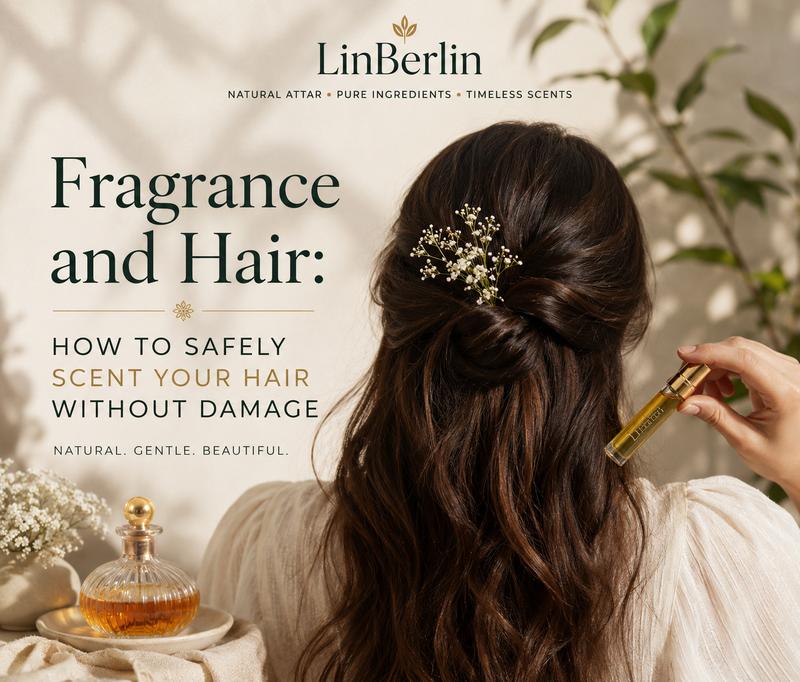
Learn how to safely scent your hair without dryness, irritation, or buildup using expert fragrance layering tips, natural attar knowledge, and gentle hair care. Fragrance and hair: how to safely scent your hair without damage
A warm trail of jasmine and sandalwood lingering in someone’s hair can feel far more intimate than perfume on the wrist. Hair moves, catches heat differently, and holds scent in a way skin sometimes can’t. But the wrong fragrance routine often leaves people dealing with brittle ends, dryness near the scalp, or a scent that turns strangely sharp after a few hours. Hair fragrance sounds simple until alcohol-heavy sprays meet freshly washed strands or heat-styled hair.
That’s why more beauty lovers have started paying closer attention to how fragrance and hair actually interact. Oil-based attar, lighter application methods, and ingredient awareness matter far more than most people realise. And if you already spend time protecting your hair with masks, serums, and gentle shampoos, it makes sense to think carefully about how scent fits into that routine too.
How skin condition affects fragrance
The way fragrance behaves on your body changes depending on hydration, oil production, skin temperature, and even seasonal weather. Dry skin tends to absorb scent quickly, which often makes perfume disappear faster while leaving certain notes harsher or flatter. Hydrated skin usually holds fragrance longer because moisture slows evaporation — especially with oil-based attar formulations.
Hair behaves differently from skin, though. Porous or chemically treated hair tends to cling to fragrance for hours, sometimes all day. That sounds ideal until overly strong perfume dries the cuticle further and leaves strands rough to the touch. Bleached hair in particular absorbs scent intensely (sometimes almost too intensely), which can distort delicate floral or citrus notes over time.
Scalp condition matters too. Someone dealing with irritation, eczema, dandruff, or sensitivity after strong exfoliating products may notice fragrance feels uncomfortable even when the perfume itself isn’t particularly harsh. So applying concentrated fragrance directly to irritated skin around the hairline rarely ends well.
And body chemistry still plays a role even when fragrance is used in the hair. Natural scalp oils interact with ingredients differently throughout the day, especially during humid weather or after exercise. That’s why the same attar can smell creamy and soft on one person but warmer and slightly smoky on someone else.
Here’s the thing: people often blame the fragrance itself when the actual issue is dryness, over-washing, or heat damage underneath. Healthy skin and healthy hair create a much better foundation for scent.
Applying attar safely and effectively with a skincare routine
Freshly blow-dried hair may smell clean, but it’s also more vulnerable to drying ingredients right after heat styling. Spraying traditional alcohol-based perfume directly onto the lengths every morning slowly strips moisture from the hair shaft, particularly around the ends where damage already accumulates. Over time, people notice frizz, dullness, or a faint rough texture they can’t quite explain.
A gentler method works better. Apply fragrance lightly to a hairbrush first, then comb through dry hair rather than saturating one section repeatedly. Oil-based attar should never be rubbed aggressively into the scalp or roots because concentrated oils can create buildup if overused. A tiny amount placed behind the ears or along the nape often scents the hair naturally as it moves.
And timing matters more than many routines suggest. Applying fragrance immediately after strong skincare acids, retinoids, or exfoliating treatments near the neck and hairline can increase irritation — especially if the fragrance contains naturally active botanicals or essential oils. Waiting until moisturiser fully settles into the skin usually feels more comfortable.
People using leave-in hair products with heavy silicone content may also notice fragrance changes character faster than expected. Certain musks and florals become muted or strangely metallic when layered over strongly scented serums. That doesn’t mean the perfume is poor quality; it’s often a layering conflict.
What about spraying perfume directly onto wet hair? Realistically, that’s rarely the best approach. Wet strands absorb ingredients unevenly, and alcohol evaporates quickly while leaving hair more vulnerable during drying. A silk scarf lightly scented with attar often gives a softer, longer-lasting effect without stressing the hair itself.
Pregnancy, eczema-prone skin, migraines triggered by scent, and active scalp conditions all deserve extra caution (even natural ingredients can occasionally trigger reactions). Patch testing near the inner arm before regular use is sensible when trying any concentrated attar for the first time.
So where should fragrance go if you want the scent trail without damage? Mid-length hair, fabric accessories, pulse points near the hairline, and the outer layers of clothing usually give the nicest balance.
Ingredients to know about in natural attar
Natural attar carries depth differently because the fragrance oils evolve gradually instead of projecting sharply for a short burst. Sandalwood oil is often valued not only for its creamy warmth but also because it feels smoother on the skin than heavily alcoholic perfume bases. Traditional rose attar tends to soften beautifully with body heat, especially during cooler evenings.
But natural doesn’t automatically mean irritation-free. Some floral oils and citrus extracts contain naturally occurring compounds that sensitive skin may react to — particularly when used in high concentrations or layered over compromised skin barriers. Citrus oils can also become more reactive in sunlight depending on formulation and processing methods.
Oud-based attars deserve special mention because they behave intensely in hair. High-quality oud develops richness slowly and usually needs only a tiny amount. Lower-quality blends sometimes rely on sharp synthetic boosters that feel overwhelming in enclosed spaces or cling too heavily to porous hair.
And jasmine absolute, while beautiful, can occasionally feel strong for people sensitive to white florals. The truth is, personal tolerance matters just as much as ingredient quality. Some people comfortably wear rich oils daily while others prefer softer musks or tea-based compositions closer to the scalp.
Carrier oils matter too. Jojoba tends to sit lightly on skin because its structure resembles natural sebum, while heavier oils may feel richer but transfer more easily onto pillowcases or clothing. That balance between longevity and comfort shapes how wearable an attar feels during daily life.
One complication many people don’t expect involves active acne treatments or exfoliating toners near the jawline and neck. Even gentle natural fragrance oils can sting slightly when the skin barrier is already stressed, so adjusting application placement sometimes makes all the difference.
LinBerlin formulations and skin compatibility
LinBerlin approaches fragrance from the perspective that scent should sit close to the body rather than overwhelm a room. Its oil-based attar formulations are designed to wear gradually on skin and fabric, which often feels gentler for people trying to avoid the dryness associated with repeated alcohol-heavy spraying.
The brand also leans toward ingredient quality over exaggerated projection — a detail fragrance enthusiasts usually notice quickly once the scent settles. Some compositions work beautifully in hair when applied lightly to scarves, pulse points, or the ends of braided styles rather than directly saturating the scalp.
And because natural materials behave differently from synthetic blends, slight variation between batches or seasonal changes in depth can happen. That’s normal in artisan perfumery and often part of what gives attar its character.
Closing
Hair holds fragrance beautifully when it’s treated with the same care people already give their skin. Small adjustments in placement, timing, and ingredient awareness can completely change how scent performs throughout the day without leaving dryness behind. A lighter touch usually creates the most memorable result anyway.
If you’re exploring attar for hair fragrance, start slowly with softer application points and pay attention to how your hair texture and skin respond over a few days. That simple habit helps you enjoy scent in a way that feels comfortable, personal, and genuinely lasting.