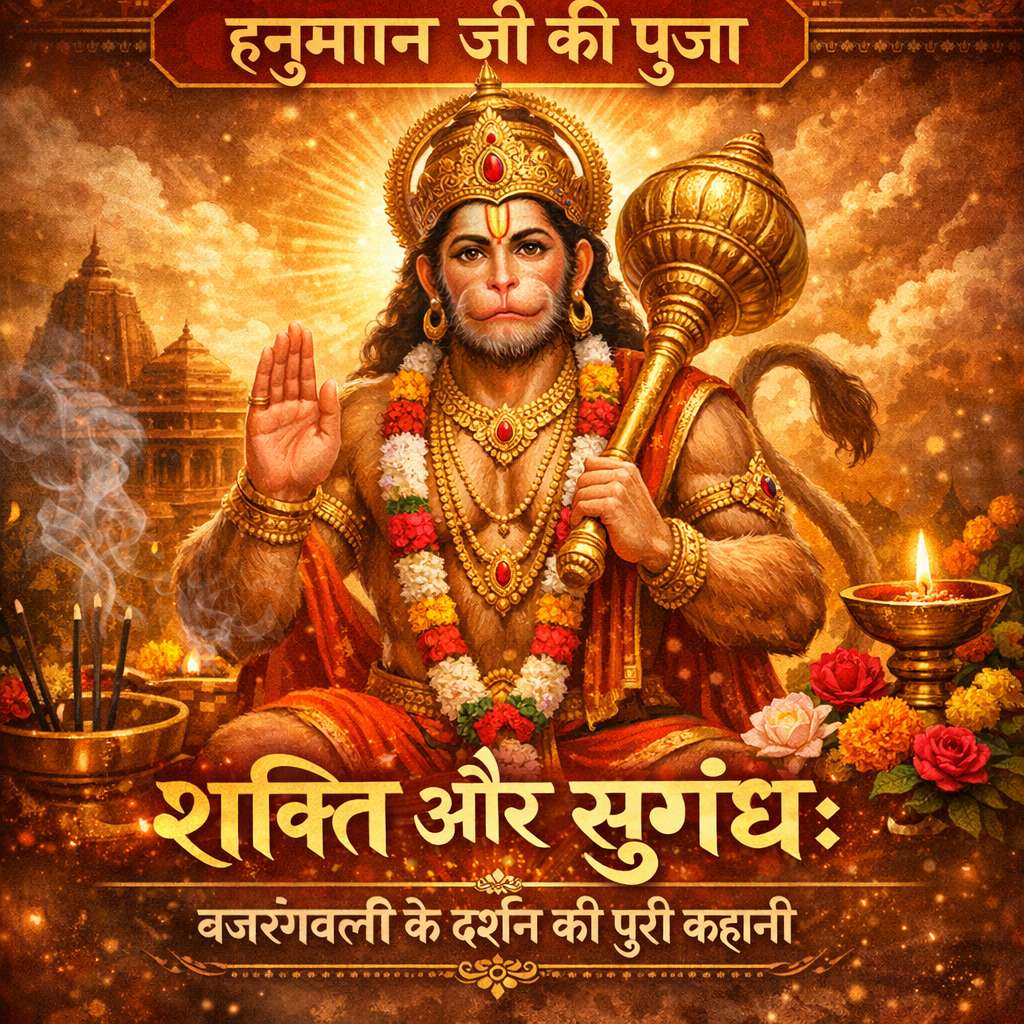
There is a particular kind of devotion in India that does not whisper. It roars.
When a Hanuman bhakt stands before Bajrangbali — when they fold their hands, close their eyes, and chant "Jai Bajrangbali" — something happens in their body that is different from any other devotional experience.
Best Attar for Hanuman Ji Puja
The spine straightens. The chest opens. The breath deepens. A feeling rises that is simultaneously deeply peaceful and tremendously energising — as though the mere presence of Hanuman Ji is charging every cell of the devotee's body with the same limitless strength that allowed him to carry an entire mountain across the sky.
Hanuman Ji is unlike any other deity in the Hindu pantheon. He is not worshipped from a safe, respectful distance. He is worshipped with the full-throated, full-bodied devotion of a soldier before his commander, a child before his protector, a student before the greatest teacher who ever lived. He is called Bajrangbali — the one with the strength of a thunderbolt. Sankat Mochan — the remover of all troubles. Pawanputra — the son of the wind. Kesari Nandan — the son of Kesari. And in every one of these names lives the essence of why his worship feels so different, so alive, so completely unlike anything else in devotional India.
In the living tradition of Hanuman Ji's worship, fragrance is not just an offering. It is an invocation. When the right attar rises in a Hanuman mandir — particularly the pure, intoxicating sweetness of Chameli, which Bajrangbali loves above all other fragrances — something shifts in the atmosphere of the space. The air becomes charged. The puja becomes alive. The distance between the devotee and their beloved Bajrangbali collapses completely.
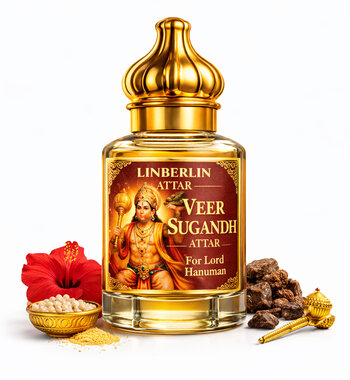
At LinBelin, we created the Veer Sugandh Attar to honour this powerful, living tradition. A 100% alcohol-free, Made in India attar crafted for fabric and clothes — carrying the strength, devotion, and divine energy of Bajrangbali's worship in every single drop.
This is the complete story of Hanuman Ji, his worship, his traditions, and the sacred role that fragrance plays in connecting devotees to the most powerful, most devoted, most beloved deity in all of Kalyuga.
Who Is Hanuman Ji — Bajrangbali, Sankat Mochan, The Greatest Devotee
To understand why Hanuman Ji's worship is so powerful — and why fragrance plays such a specific, charged role in it — you must first understand who Bajrangbali truly is. Because in his story, his character, and his divine qualities lies the reason why millions of Indians feel safer, stronger, and more capable simply by remembering his name.
Hanuman Ji was born to Anjana and Kesari, blessed by Vayu Dev — the god of wind — whose divine breath gave him extraordinary powers from the moment of his birth. As a child, he was so powerful and so mischievous that the gods themselves had to limit his powers temporarily — not out of fear, but to protect him until he was ready to use them fully. This story of Hanuman Ji's childhood already reveals something essential about his nature — he is power itself, contained by love.
His story in the Ramayana is one of the most beloved in all of Indian literature and devotional tradition. His unflinching loyalty to Lord Ram. His single-handed crossing of the ocean to Lanka. His discovery of Sita Mata. His burning of Lanka with his own tail and his casual, almost playful display of power against Ravana's forces. His carrying of the Sanjeevani mountain to save Lakshman's life. Each act more extraordinary than the last — and each act performed not out of desire for glory or reward, but out of pure, absolute, unconditional devotion to Ram.
This is the quality that makes Hanuman Ji unique in the entire Hindu pantheon — he is simultaneously the most powerful being in creation AND the most devoted servant. His strength and his humility are not in contradiction. They are expressions of the same thing — the limitless power that pure devotion generates. He teaches every devotee something that no philosophy textbook can fully convey — that the greatest strength does not come from ego, from ambition, or from desire. It comes from love. It comes from service. It comes from placing something greater than yourself at the centre of your life.
This is why Hanuman Ji's devotees feel strength in his presence. Not just the physical strength for which he is famous — but the deeper strength of clarity, of purpose, of knowing that no obstacle is too great when you are walking in the right direction with the right intention.
The Living Tradition of Hanuman Ji's Worship in India
Hanuman Ji is worshipped more widely and more consistently than perhaps any other deity in India. His mandirs are the most numerous — found in every city, every town, every village, every roadside across the country. His name is the most commonly spoken protective mantra in everyday Indian life — "Jai Bajrangbali" said before a journey, "Hanuman Ji ki kripa" said when something goes unexpectedly right, "Bajrangbali raksha karo" said in moments of fear or uncertainty.
This extraordinary universality of Hanuman Ji's worship reflects something important about his devotional tradition — he belongs to everyone. He is not the deity of a particular community, region, or tradition. He is the deity of the courageous, the struggling, the devoted, and the strong — which means he is the deity of India itself.
His worship takes many forms across different communities and regions. In North India, the recitation of the Hanuman Chalisa — the forty-verse hymn composed by Tulsidas — is the single most common devotional act performed by Hanuman bhakts, often recited every day at sunrise or before important endeavours. In South India, where Hanuman is worshipped as Anjaneya, elaborate temple rituals with specific fragrance offerings have been maintained for centuries. In Maharashtra, where he is beloved as Maruti, his temples are among the most visited in the state. In Rajasthan and Uttar Pradesh, the tradition of applying sindoor and oil to Hanuman Ji's murti — and offering Chameli attar as part of his shringar — is one of the most distinctive and devotionally powerful rituals in his worship.
At LinBelin, our pooja attar collection honours this extraordinary diversity of Hanuman Ji's worship — providing every devotee, from every region and every tradition, with the finest fragrance for their Bajrangbali puja.
Which Fragrance Does Hanuman Ji Love? The Sacred Scents of Bajrangbali's Worship
The fragrance traditions of Hanuman Ji's worship are among the most specific and most widely observed in all of Hindu devotional practice. Understanding which fragrances Bajrangbali loves — and why — transforms the act of offering attar from a routine gesture into a deeply conscious, deeply powerful act of devotion.
Chameli — The Most Sacred Fragrance of Hanuman Ji
If there is one fragrance that is inseparable from Hanuman Ji's worship across the entire country, it is Chameli — jasmine. This is not a regional preference or a recent trend. It is one of the oldest, most universally observed fragrance traditions in all of Hanuman worship.
Chameli represents the qualities that Hanuman Ji himself embodies — purity, strength, and the capacity to fill any space with power and sweetness simultaneously. The pure white of chameli flowers mirrors Hanuman Ji's spotless devotion to Ram. The extraordinary intensity of its fragrance — capable of filling an entire room from a single flower — mirrors Hanuman Ji's limitless energy and presence.
In Hanuman mandirs across North India, Chameli attar is applied to the deity's fabric garments, to the sindoor-smeared murti, and to the puja cloth of the altar as a standard part of daily worship. The fragrance that rises from a Hanuman mandir where Chameli attar has been freshly applied is something that every devotee who has experienced it carries in their memory forever — intensely sweet, powerfully devotional, alive with a quality that feels less like a smell and more like a presence.
LinBelin's Veer Sugandh Attar draws deeply from this Chameli tradition — capturing the sacred fragrance most beloved by Bajrangbali in a 100% alcohol-free, fabric-safe formulation made in India.
Chandan — The Fragrance of Pure Devotion
Sandalwood — Chandan — is universally sacred in Hindu worship, but in Hanuman Ji's tradition it carries a specific additional significance. Chandan represents the cooling of the ego — the transformation of pride and self-importance into humble, powerful service. This is exactly the spiritual quality that Hanuman Ji represents and that his worship is designed to cultivate in his devotees.
In many Hanuman temple traditions, particularly in South India where Anjaneya worship is most elaborate, sandalwood paste is applied to the deity's form as part of the daily shringar, and Chandan attar is used on his fabric garments to carry this cooling, purifying fragrance throughout the worship space.
Mogra — The Fragrance of Strength and Sweetness
Mogra — Arabian jasmine — shares with Chameli the quality of extraordinary fragrance intensity combined with purity. In many regional Hanuman worship traditions, particularly in Maharashtra and Gujarat, Mogra is used alongside Chameli as one of the primary fragrance offerings to Maruti. The combination of these two jasmine fragrances creates an atmosphere of extraordinary devotional power — sweet enough for the most tender prayer, strong enough for the most urgent petition.
Kesar — The Royal Warrior Fragrance
Kesar — saffron — is the fragrance of royalty and of warriors in Indian tradition. In Hanuman Ji's worship, Kesar attar is used on special occasions — Hanuman Jayanti, Tuesdays of special significance, and occasions when devotees are seeking Bajrangbali's blessing for courage, strength, and protection in particularly challenging circumstances. The rich, warm, golden fragrance of Kesar evokes the warrior aspect of Hanuman Ji — Bajrangbali, the strongest being in creation.
Guggul — The Ancient Sacred Resin
Guggul — the sacred resin used in Hindu ritual since Vedic times — is one of the most traditional fragrance offerings in Hanuman worship. Its deep, smoky, intensely purifying fragrance is believed to clear negative energies from the worship space, creating the kind of clean, powerful atmosphere in which Hanuman Ji's divine presence becomes most accessible.
How to Use Attar in Hanuman Ji's Puja — The Complete Devotional Guide
Using attar correctly in Hanuman Ji's worship is both a devotional act and a practical one. LinBelin's Veer Sugandh Attar is specifically formulated for fabric and clothes — making it perfect for the most meaningful applications in Bajrangbali's puja.
Applying Attar to Hanuman Ji's Fabric Dress
Hanuman Ji's murti in home mandirs is typically dressed in a fabric langot and sometimes a decorative fabric covering. Applying Veer Sugandh Attar to this fabric during the daily shringar is one of the most traditional and powerful practices in home Hanuman worship.
Apply 2 to 3 drops on a clean cotton ball and gently touch to the fabric of Hanuman Ji's garments. The fragrance rises immediately — filling the entire puja space with the sacred atmosphere of Chameli and the warrior energy of Bajrangbali's presence. Many devoted Hanuman bhakts describe this moment — when the Chameli fragrance fills the mandir space and the diya is lit — as the moment their day truly begins. The moment they feel protected. Ready. Strengthened.
Applying Attar to Your Puja Clothes Before Hanuman Chalisa
The Hanuman Chalisa is the most commonly recited devotional text in India — forty verses of extraordinary beauty and power composed by Tulsidas in Awadhi. Most devoted Hanuman bhakts recite it daily, either at sunrise, at sunset, or both.
Before sitting down to recite the Hanuman Chalisa, applying LinBelin attar to your puja clothes — your kurta, your shawl, your dupatta — creates a complete devotional atmosphere. The fragrance keeps the mind anchored in the recitation, preventing it from wandering into the distractions of daily life. Experienced Hanuman bhakts describe wearing Chameli attar during Chalisa recitation as one of the most effective practices for deepening concentration and devotional feeling.
Applying Attar on the Puja Altar Cloth
The cloth of your Hanuman puja space — the fabric covering the altar, the decorative cloth beneath his murti — can be fragranced with Veer Sugandh Attar before daily worship begins. A few drops on the altar cloth creates a sustained fragrance throughout the entire puja — from the first diya to the final aarti.
The Power of Mantra With Attar Offering
The act of offering attar to Hanuman Ji becomes a complete spiritual practice when combined with his most powerful mantras. As you apply attar to his fabric garments or your puja clothes, chant:
"Om Hanumate Namah"
Or the opening verse of the Hanuman Chalisa:
"Shri Guru Charan Saroj Raj, Nij Man Mukur Sudhar"
The combination of pure fragrance and sincere mantra creates a devotional field that experienced bhakts describe as physically palpable — a warmth, a presence, a feeling of being accompanied and protected that stays with them throughout the day.
Tuesday and Saturday — Hanuman Ji's Most Sacred Days and Their Fragrance Traditions
Hanuman Ji's worship has two most sacred days in the weekly calendar — and each carries its own specific fragrance traditions that devoted bhakts observe with extraordinary consistency.
Tuesday — Mangalvar, The Day of Bajrangbali
Tuesday is Hanuman Ji's primary sacred day across North India. On Tuesdays, Hanuman mandirs see their highest attendance — devotees come fasting, come with offerings of sindoor and Chameli, come with the Hanuman Chalisa on their lips and their most urgent prayers in their hearts.
The Tuesday tradition of offering Chameli attar to Hanuman Ji is one of the most widely observed fragrance rituals in all of Indian devotional practice. On this day, applying Chameli-based attar to Hanuman Ji's fabric garments, to your own puja clothes, and to the altar cloth creates a complete fragrant offering that honours both the day and the deity.
Many Hanuman bhakts who observe Tuesday fast also have the practice of not using any fragrance on themselves throughout the day except the attar they use for puja — making the devotional fragrance the only scent they wear, a constant reminder of Bajrangbali's presence throughout the fasting day.
Saturday — Shanivar, The Day of Protection
Saturday has a deep connection with Hanuman Ji that goes beyond his direct worship. In Vedic tradition, Shani Dev — Saturn — is believed to spare those who are devoted to Hanuman Ji. This belief has created a powerful tradition of Saturday Hanuman worship across India — particularly among devotees seeking protection from Shani's challenging planetary influences.
The fragrance offering on Saturday Hanuman puja is typically more intense than the daily worship — more attar, more flowers, longer Chalisa recitation, extended aarti. Many devotees apply LinBelin's Veer Sugandh Attar to their puja clothes before the Saturday Hanuman puja and keep the fragrance on them throughout the day as a protective shield.
Hanuman Jayanti — The Most Sacred Festival of Bajrangbali
Hanuman Jayanti — celebrated on the full moon of Chaitra month, marking Hanuman Ji's birth — is the most important festival in the Hanuman devotional calendar. On this day, Hanuman mandirs across India are decorated with extraordinary care, thousands of devotees gather for the morning aarti before sunrise, and the fragrance offerings reach their most elaborate and most beautiful expression.
On Hanuman Jayanti, the shringar of Bajrangbali's murti is performed with special care. Fresh Chameli garlands — sometimes hundreds of them — are offered. Sindoor is applied with particular devotion. And attar — pure, alcohol-free, deeply fragrant — is applied to the deity's fabric garments as the final, most loving touch of the Jayanti shringar.
For devotees who observe Hanuman Jayanti at home, applying LinBelin's Veer Sugandh Attar to Hanuman Ji's fabric garments and to their own puja clothes before the morning puja creates the same sacred atmosphere that fills the great Hanuman mandirs on this most auspicious day — bringing Bajrangbali's Jayanti celebration fully into the home worship space.
Sankat Mochan — Hanuman Ji as the Remover of Troubles
One of Hanuman Ji's most beloved names and most important roles is Sankat Mochan — the remover of troubles and difficulties. This aspect of his divine personality is at the heart of why so many people come to Hanuman worship during challenging times — when health is failing, when finances are troubled, when relationships are strained, when fear has taken hold.
The Sankat Mochan Hanuman temple in Varanasi — one of the most sacred Hanuman shrines in India — is particularly associated with this protective, problem-solving aspect of Bajrangbali's nature. Devotees come here from across the country with their most impossible problems, their most desperate prayers, their most urgent need for divine intervention. And the fragrance of this temple — the overwhelming Chameli and sindoor that fills the air — is something every visitor carries away in their memory as synonymous with Hanuman Ji's protective grace.
When a devotee applies attar to Hanuman Ji's fabric garments during a puja specifically dedicated to seeking Sankat Mochan's help — when they light the diya, fold their hands, and pray with complete surrender — the fragrance creates a devotional atmosphere that makes genuine, heartfelt prayer possible. It bypasses the anxious, problem-solving mind and reaches directly to the part of the devotee that knows, with complete certainty, that Bajrangbali is listening.
Hanuman Ji's Worship Across India — Regional Traditions and Fragrances
The breadth and diversity of Hanuman Ji's worship across India is extraordinary — each region has developed its own beautiful traditions of fragrance offering that reflect local devotional culture.
In North India — Uttar Pradesh, Bihar, Madhya Pradesh, Rajasthan — Chameli attar dominates Hanuman worship. The tradition of offering Chameli garlands and Chameli attar to Bajrangbali on Tuesdays is so universal in these states that most devotees cannot imagine Hanuman puja without jasmine fragrance. Hanuman mandirs in small North Indian towns are often identifiable from a distance by their Chameli fragrance alone.
In Maharashtra, where Hanuman is beloved as Maruti, the fragrance traditions are particularly rich. Mogra and Chameli are both used extensively. The eleven Maruti temples of Pune — each representing a different aspect of Hanuman Ji's divine nature — each have their own specific fragrance traditions that have been maintained for generations.
In South India, where Anjaneya temples are among the most architecturally magnificent in the country, the fragrance traditions of Hanuman worship are the most elaborate. Specific fragrances are assigned to specific aspects of Anjaneya worship — Chandan for his pure devotion, Chameli for his strength, Kesar for his royal warrior nature.
In Rajasthan, where Hanuman is called Balaji and the Mehandipur Balaji temple is one of the most powerful pilgrimage sites in the country, the fragrance traditions of Hanuman worship include specific attars used in the elaborate pujas performed for devotees seeking protection from negative energies.
LinBelin's complete attar collection honours all of these regional traditions — making the finest devotional fragrance accessible to every Hanuman bhakt across India.
The Bajrang Baan, Hanuman Chalisa and Attar — Fragrance as Devotional Amplifier
The devotional literature of Hanuman Ji worship — particularly the Hanuman Chalisa and the Bajrang Baan — is among the most powerful in all of Indian devotional tradition. These texts are not just prayers. They are complete spiritual technologies — precisely constructed to invoke Bajrangbali's divine presence and protection with maximum effectiveness.
Experienced Hanuman bhakts who recite the Hanuman Chalisa or Bajrang Baan daily will tell you something interesting — the quality of the recitation varies considerably depending on the conditions of the worship space. A puja space filled with the right fragrance, with a properly lit diya, with clean altar cloth, produces a recitation experience that is qualitatively different from one performed in an unprepared space.
Fragrance — specifically the sacred fragrances associated with Hanuman Ji's worship — plays a direct role in creating the conditions for deep, powerful Chalisa recitation. The Chameli fragrance rising from the altar cloth and from the devotee's own puja clothes creates an immediate shift in the quality of attention — from scattered to focused, from distracted to completely present. In this state, the forty verses of the Hanuman Chalisa move through the devotee not as words but as living energy — each verse landing with its full intended power.
This is the true gift of attar in Hanuman worship. Not just beautiful fragrance — but the conditions in which Bajrangbali's most powerful devotional practices reach their full potential.
Why Alcohol-Free Attar Is Sacred for Hanuman Ji's Worship
In Hindu worship, alcohol is universally considered ritually impure — ashudh. This principle is absolute and applies to all deity worship without exception. But in Hanuman Ji's worship specifically, the principle of purity carries an additional dimension of significance.
Hanuman Ji is the embodiment of Brahmacharya — complete discipline, complete purity of body and mind. He is worshipped as the ideal of self-control, of channelling all energy toward a single devoted purpose. Offering him anything containing alcohol — however small the amount — is, from a traditional devotional perspective, a contradiction of everything his worship stands for.
LinBelin's Veer Sugandh Attar is 100% alcohol-free — not just for ritual correctness, but because it genuinely reflects the spirit of Hanuman Ji's worship. Every element of Bajrangbali's puja should be as pure, as disciplined, and as completely devoted as Hanuman Ji himself.
Beyond the spiritual dimension, alcohol-free attar is practically superior for fabric use. Hanuman Ji's fabric garments — particularly the red or orange fabric typically used in his worship — are protected from fading and degradation when alcohol-free attar is used. The fragrance lasts longer on fabric and releases more gently and beautifully than alcohol-based alternatives.
Gifting Veer Sugandh Attar — Sharing Bajrangbali's Strength
In Indian devotional culture, gifting fragrance to fellow devotees carries deep meaning — it is a sharing of the divine presence that the fragrance invokes. For Hanuman bhakts, gifting attar is a way of saying — may Bajrangbali's protection and strength accompany you always.
LinBelin's Veer Sugandh Attar makes a deeply meaningful gift for Hanuman Jayanti celebrations, for Tuesday and Saturday worship groups, for devotees beginning a new endeavour and seeking Bajrangbali's blessings, for new home blessings where Hanuman Ji's protection is invoked for the new space, and for anyone going through a challenging time who could use the strength and protection that Sankat Mochan's fragrant presence brings.
How to Store Your Veer Sugandh Attar
Keep your LinBelin Veer Sugandh Attar in a cool, dark place away from direct sunlight and heat. Always seal the bottle tightly immediately after use. Use a fresh cotton ball for every application and avoid touching the bottle opening directly with fingers.
For Hanuman Ji's fabric garments — particularly the red or orange fabric of his langot or decorative dress — apply attar with a light touch. The fabric absorbs fragrance readily and a small amount creates a powerful, long-lasting devotional atmosphere. 2 to 3 drops on a cotton ball is the ideal amount for a complete Hanuman puja application.
Why LinBelin Veer Sugandh Attar for Hanuman Ji's Puja
LinBelin's Veer Sugandh Attar was created with a complete understanding of Hanuman Ji's devotional tradition — the Chameli offering, the Tuesday worship, the Hanuman Chalisa culture, the Sankat Mochan tradition, the warrior-devotee identity that makes Bajrangbali unlike any other deity in India.
It is 100% alcohol-free — because Hanuman Ji, the embodiment of purity and discipline, deserves only the purest offering. It is Made in India — because Hanuman Ji's worship is rooted in the Indian soil, in the Ramayana tradition, in thousands of years of unbroken devotional practice across this extraordinary country. It is specifically formulated for fabric and clothes — because the most powerful applications of attar in Hanuman worship happen on fabric: on his divine garments during shringar, on the devotee's puja clothes during Chalisa recitation, on the altar cloth of the home mandir.
The name itself — Veer Sugandh — reflects both Hanuman Ji's most celebrated quality (Veer — the brave one) and the nature of the offering (Sugandh — beautiful fragrance). A fragrance worthy of the bravest, most devoted being in all of creation.
Browse LinBelin's complete pooja attar collection and bring the strength and protection of Bajrangbali's sacred fragrance into your home puja today.
15 Most Asked Questions About Hanuman Ji Attar and Puja
Q1. Which attar is best for Hanuman Ji puja?
Chameli (jasmine) attar is the most sacred and most widely used fragrance in Hanuman Ji worship across India. LinBelin's Veer Sugandh Attar is 100% alcohol-free, Made in India, and crafted for fabric and puja clothes — bringing Bajrangbali's most beloved fragrance to your home worship.
Q2. Which fragrance does Hanuman Ji love most?
Chameli — jasmine — is Hanuman Ji's most beloved fragrance, observed universally across all regional Hanuman worship traditions. Chandan, Mogra, and Kesar are also deeply traditional in Bajrangbali's puja.
Q3. Which day is best to offer attar to Hanuman Ji?
Tuesday is Hanuman Ji's most sacred day and the primary day for attar offering. Saturday is equally important for devotees seeking Bajrangbali's protection. On Hanuman Jayanti, the fragrance offering is the most elaborate of the year.
Q4. How to use attar in Hanuman Ji puja correctly?
Apply 2-3 drops of LinBelin's Veer Sugandh Attar on a clean cotton ball and gently dab on Hanuman Ji's fabric garments during shringar, or apply to your own puja clothes before Hanuman Chalisa recitation. Designed for fabric — never for direct skin or stone idol application.
Q5. Is alcohol-free attar necessary for Hanuman Ji puja?
Yes, absolutely. Hanuman Ji embodies Brahmacharya — complete purity and discipline. Offering alcohol-based perfume in his worship contradicts the very spirit of his devotional tradition. LinBelin's Veer Sugandh Attar is 100% alcohol-free.
Q6. Can attar be applied on Hanuman Ji's fabric dress?
Yes. Applying attar to Hanuman Ji's fabric garments during daily shringar is one of the most traditional practices in home Hanuman worship. LinBelin's Veer Sugandh Attar is specifically formulated for safe, gentle application on fabric.
Q7. What mantra to chant while offering attar to Hanuman Ji?
Chanting "Om Hanumate Namah" or the opening verse of the Hanuman Chalisa while applying attar to Bajrangbali's garments creates a complete devotional act — fragrance, voice, and sincere devotion offered simultaneously to Sankat Mochan.
Q8. Which attar is used in Hanuman puja on Tuesday?
Chameli attar is the traditional Tuesday offering to Hanuman Ji across North India. Applying Chameli-based attar to his fabric garments and your own puja clothes on Tuesday honours the most sacred day of Bajrangbali's weekly worship calendar.
Q9. Can attar be worn on puja clothes during Hanuman Chalisa recitation?
Yes. Wearing attar on puja clothes during Hanuman Chalisa recitation is a powerful practice that deepens concentration and devotional feeling — the fragrance anchors the mind in the recitation and creates a complete devotional atmosphere.
Q10. What is the fragrance tradition at Hanuman temples in India?
Chameli garlands and Chameli attar are the dominant fragrance offering at Hanuman mandirs across North India. In South India, Chandan and Kesar are also prominent. The Sankat Mochan temple in Varanasi is particularly famous for its overwhelming Chameli and sindoor fragrance atmosphere.
Q11. How long does Hanuman Ji attar fragrance last on fabric?
LinBelin's Veer Sugandh Attar is formulated for fabric and releases fragrance gently over 8-12 hours on puja clothes — perfect for full-day Tuesday or Saturday worship, Hanuman Jayanti celebrations, and extended Chalisa recitation sessions.
Q12. Can Hanuman Ji attar be used during Bajrang Baan recitation?
Yes. Applying attar to your puja clothes before Bajrang Baan recitation creates the same focused, powerful devotional atmosphere that it creates during Hanuman Chalisa recitation — helping the devotee achieve the depth of concentration that this powerful text requires.
Q13. Can Veer Sugandh Attar be gifted to Hanuman bhakts?
Yes. Gifting LinBelin's Veer Sugandh Attar to Hanuman bhakts on Hanuman Jayanti, Tuesday puja gatherings, or any occasion when someone needs Bajrangbali's strength and protection is a deeply meaningful devotional gift.
Q14. Where can I buy pure Chameli attar for Hanuman Ji puja online?
LinBelin offers authentic, Made in India, 100% alcohol-free Veer Sugandh Attar for Hanuman Ji puja online. Shop at our Veer Sugandh Attar product page or explore our complete pooja attar collection.
Q15. What makes LinBelin Veer Sugandh Attar different from regular perfume?
LinBelin's Veer Sugandh Attar is 100% alcohol-free, Made in India, formulated for fabric and clothes, and crafted with genuine understanding of Hanuman Ji's devotional tradition and his most sacred fragrance — Chameli. Regular perfumes are alcohol-based and entirely inappropriate for puja.
Conclusion — Offer Bajrangbali the Fragrance He Deserves
Hanuman Ji gave everything — his strength, his intelligence, his limitless energy, his complete and unconditional self — in service of what he loved. He did not hold back. He did not calculate. He simply gave, completely, without reservation, every single time.
When we worship such a deity, our offering should carry the same quality of wholeness. Not a perfunctory gesture made out of habit — but a conscious, deliberate, complete act of devotion. A pure, alcohol-free attar applied to Bajrangbali's fabric garments with sincere intention and the chant of "Jai Bajrangbali" on the lips — this is a worthy offering to the greatest devotee who ever lived.
LinBelin's Veer Sugandh Attar was made for this offering. For your Tuesday puja. For your daily Hanuman Chalisa. For Hanuman Jayanti. For the moments when you need Sankat Mochan's strength most urgently and want your puja to carry the full power of your devotion.
Browse LinBelin's complete pooja attar collection and bring the strength of Bajrangbali's sacred fragrance into your home today.
Jai Bajrangbali! 🙏 Jai Hanuman! 💪
LinBelin — Devotional Attar, Made in India 100% Alcohol-Free | Fabric and Clothes Attar | For Pure Puja | Available Online Across India