A thin strip of paper carries a drop of scent, and suddenly everything feels complicated. The label promises depth, longevity, rare ingredients, maybe even a place you’ve never visited. But standing at a counter or scrolling online, it’s easy to feel unsure about what any of it really means.
Somewhere between “Eau de Parfum,” a list of notes, and bold origin claims, the simple act of choosing a fragrance becomes a small puzzle. You want something that lasts, suits your skin, and feels worth the price. And you don’t want to get it wrong.
By the end of this guide, you’ll be able to read a perfume label with clarity—understanding concentration, decoding notes, and spotting which origin claims actually matter (and which don’t).
What to understand before you buy
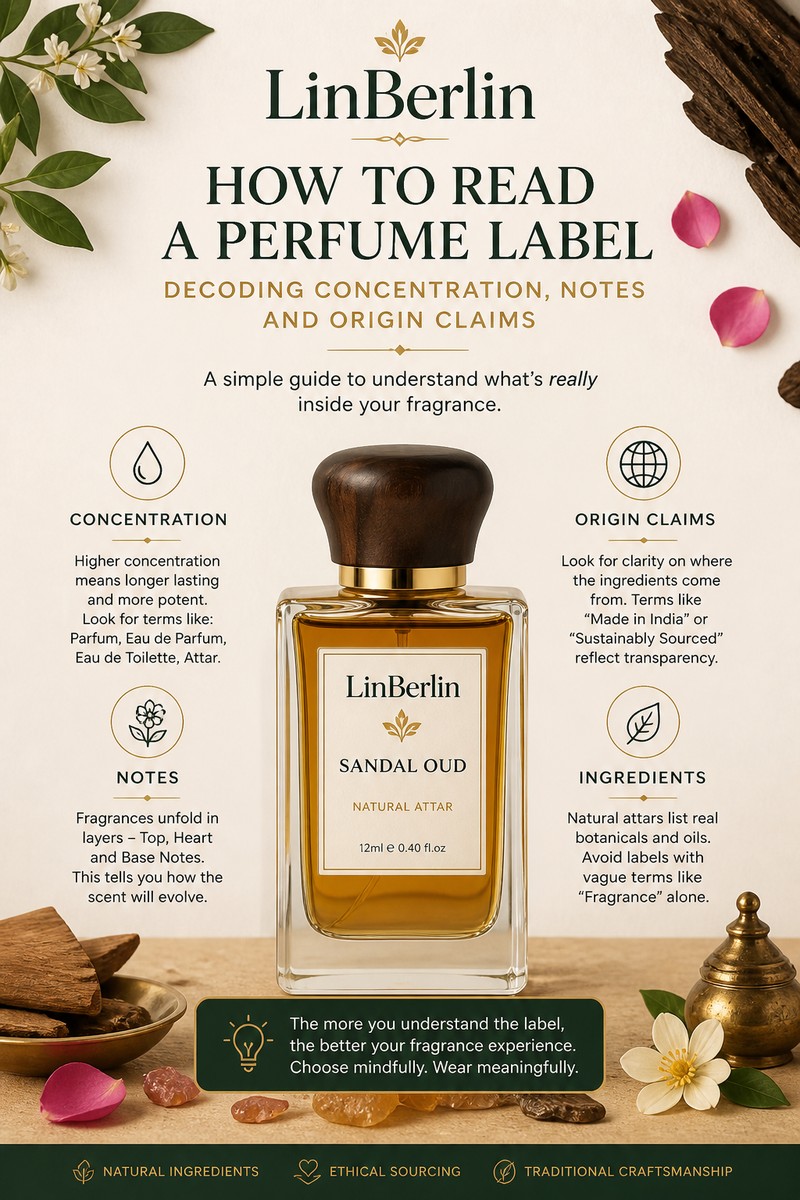
The label is trying to tell you three main things, even if it doesn’t explain them clearly: how strong the fragrance is, how it will evolve on your skin, and where its ingredients or inspiration come from.
Start with concentration—this is what largely determines how long a fragrance lasts and how intensely it projects. Terms like Eau de Toilette and Eau de Parfum aren’t just marketing words; they signal different ratios of aromatic compounds to alcohol. An Eau de Toilette tends to feel lighter and fade faster, while an Eau de Parfum sits closer to the skin but lasts longer. And pure oil-based attars behave differently altogether, often developing slowly and staying for hours without the sharp opening alcohol can create.
But longevity isn’t only about concentration. Your skin type plays a quiet but important role (drier skin tends to absorb scent faster, reducing projection). So a fragrance that lasts all day on one person might soften within a few hours on someone else.
Then come the notes. Labels often list top, heart, and base notes, giving you a rough idea of how the scent unfolds. The top notes are what you smell first, often fresh or sharp. The heart notes form the main character. And the base notes linger the longest. But here’s where expectations need adjusting—notes aren’t ingredients in a recipe; they’re more like impressions of what the scent feels like.
And finally, occasion matters. A dense oud blend might feel comforting in the evening but overwhelming in the heat. A bright citrus might feel perfect for daytime but disappear quickly at night. So reading a label isn’t just about decoding terms; it’s about imagining where and how you’ll wear it.
The options, covered honestly
Walk into any store and you’ll see familiar categories repeated across labels, each carrying its own strengths and compromises.
Eau de Toilette often appeals to those who want something light and easy. It’s usually more affordable, and it won’t overwhelm people around you. But it may need reapplication, especially in warm climates. If you’re buying for daily office wear, this category often makes sense.
Eau de Parfum tends to strike a balance—stronger, longer-lasting, and often richer in character. It suits evenings, events, or anyone who prefers a scent that stays noticeable through the day. But it can feel heavy if over-applied, particularly in enclosed spaces.
Then there are oil-based attars. These don’t rely on alcohol, so the experience is quieter but deeper. The scent develops gradually and clings closely to the skin. For people sensitive to alcohol-based perfumes, or those who prefer something more intimate, attars can feel more natural and grounded.
Now consider note families. Citrus-heavy fragrances smell clean and uplifting, but they fade quickly. Floral compositions can feel elegant or soft, depending on how they’re blended. Woody and oud-based scents tend to last longer and feel richer, though they’re not for everyone.
And then there are origin claims—words like “French,” “Arabian,” or “natural.” These can be meaningful, but they’re often used loosely. A perfume described as “French” might refer to its style rather than its ingredients. “Natural” doesn’t always mean entirely free from synthetics. So instead of taking these claims at face value, it helps to look for transparency in how the brand describes its sourcing.
Here’s the thing: the label gives clues, not guarantees. Two fragrances with similar notes can smell completely different. And a high concentration doesn’t always mean better quality—it just means stronger presence.
Matching the right choice to the right person
Choosing becomes easier when you bring the focus back to yourself rather than the label.
If you prefer subtlety and don’t want your fragrance to enter a room before you do, lighter concentrations or soft attars will suit you better. If you enjoy a scent that lingers and leaves a trace, you’ll likely prefer richer blends or higher concentrations.
Think about your daily routine. Do you spend most of your time indoors, in close proximity to others? Or do you move between spaces, where a stronger scent can hold its own?
And what about your climate? Warmer weather tends to amplify fragrances, while cooler temperatures soften them. So a scent that feels balanced in winter might feel intense in summer.
There’s also personal comfort to consider. Some people love bold oud or spicy notes, while others find them overwhelming. Some enjoy sweet gourmands, while others prefer clean, minimal compositions. Your preference matters more than trends.
What LinBerlin offers in this category
LinBerlin focuses on oil-based perfumery rooted in traditional attar craftsmanship, with an emphasis on natural ingredients and careful blending.
Instead of relying on high alcohol concentration for projection, these fragrances build slowly on the skin, creating a more personal scent experience. This makes them particularly suitable for close settings, gifting, or anyone looking for something that feels less sharp and more rounded.
The brand is transparent about its approach, leaning toward authentic materials and balanced compositions rather than exaggerated claims. And while not every scent will suit every person, the range tends to favor depth, warmth, and longevity without being overpowering.
Closing thoughts
Reading a perfume label becomes easier once you know what to look for—and what to question. The terms start to feel less intimidating, and your choices become more intentional.
Fragrance is deeply personal, and even the most carefully chosen scent may evolve differently on your skin. That’s part of the experience, not a flaw.
If you’re unsure where to begin, start by identifying how strong you want your scent to be and when you plan to wear it. Then explore within that space. Over time, your preferences will become clearer, and the labels will start to make sense.