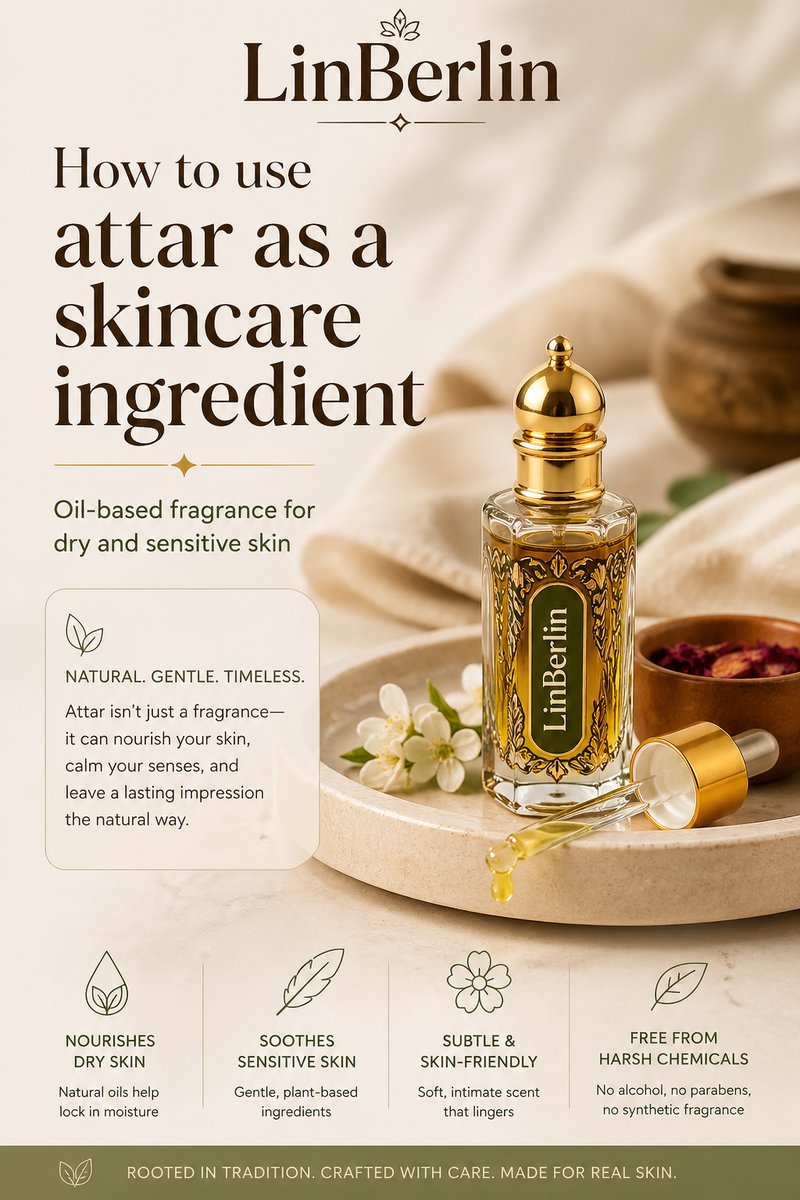
A drop of oil pressed into warm skin behaves very differently from a quick spray of perfume on the go. You notice it in the quiet way scent settles, softens, and almost melts into the body over time. That’s exactly where attar finds its place in beauty routines, especially for those dealing with dryness or sensitivity. Using attar as a skincare ingredient isn’t about replacing fragrance, it’s about rethinking how scent and skin care can work together instead of against each other.
And once you start paying attention, you realise most irritation people blame on “fragrance” often comes from how it’s applied, not just what it is.
How skin condition affects fragrance
Dry skin tends to drink in oil-based fragrance quickly, but it also loses scent faster if there’s no moisture barrier holding it in place. When skin lacks hydration, attar doesn’t have much to cling to — it fades quietly, sometimes within hours, even if the oil itself is rich.
But hydrated skin behaves differently. When you apply attar onto moisturised skin, especially after a light, non-fragranced cream, the scent anchors itself more effectively and releases slowly throughout the day (this is why fragrance longevity improves after skincare). The oil blends with your skin’s natural lipids, creating a softer, longer-lasting trail.
And pH plays a subtle role too. Slight variations in skin acidity can shift how certain notes develop, particularly florals and resins. That’s why the same attar might smell warmer on one person and sharper on another.
So what about sensitive skin? It’s less about avoiding attar entirely and more about respecting the skin barrier. Compromised or inflamed skin reacts unpredictably, even to natural ingredients. The truth is, even gentle oils can feel intense when your skin is already stressed.
Applying attar safely and effectively with a skincare routine
Layering attar with skincare isn’t complicated, but timing matters more than people think. Applying it directly after a shower, when the skin is still slightly damp, allows better absorption and smoother diffusion of scent.
1. Start with clean skin. Residue from sweat, pollution, or old product can interfere with how the oil settles.
2. Apply a simple moisturiser first. Choose something neutral without strong fragrance so it doesn’t compete with the attar.
3. Wait a minute or two. Let the moisturiser settle before adding the attar — this prevents dilution and keeps the scent profile intact.
4. Use minimal quantity. A small dab on pulse points like wrists or behind the ears is enough. More oil doesn’t mean better projection.
But here’s where people often go wrong. They mix attar directly into active skincare products like retinol or exfoliating acids, expecting a “blend.” That’s risky. Strong actives already stress the skin barrier, and adding fragrance oils into the mix can amplify irritation.
Or you might wonder, can attar replace body oil altogether? It can in some cases, but only if the formulation is balanced and your skin tolerates it well.
And another common question — should you apply it before or after sunscreen? Always after skincare but before heavy occlusive layers, so the scent isn’t blocked or altered.
Ingredients to know about in natural attar
Traditional attars are built on a base of sandalwood oil, which does more than carry fragrance. It has calming properties that can feel soothing on dry skin and helps slow evaporation of aromatic compounds.
But not every attar is identical in how it interacts with skin. Rose attar tends to feel soft and hydrating, often preferred for sensitive skin (especially when the extraction is clean and well-balanced). On the other hand, heavier ouds and resins can feel intense, particularly if your skin is already reactive.
And natural doesn’t always mean irritation-free. Ingredients like jasmine or certain spices can still trigger sensitivity depending on concentration and skin condition.
Honestly, this is where awareness matters more than labels. You’re not just applying scent, you’re applying concentrated plant extracts.
LinBerlin formulations and skin compatibility
LinBerlin approaches attar with a focus on balance rather than excess. The oils are designed to sit close to the skin, allowing gradual release instead of overwhelming projection — which naturally makes them more wearable for people with sensitive skin.
And the formulations avoid unnecessary additives, keeping the structure closer to traditional oil perfumery (which tends to be gentler when used correctly).
But even then, individual skin response can vary. Testing on a small area first is always a smart step, especially if your skin is reactive or currently under treatment.
Closing thoughts
Scent doesn’t need to sit outside your skincare routine like an afterthought. When used carefully, attar becomes part of how your skin feels, not just how it smells.
So if your skin leans dry or sensitive, start small. Apply on well-moisturised areas, observe how it behaves through the day, and adjust gradually. Over time, you’ll notice that the right attar doesn’t compete with your skin — it settles into it.
And that’s when fragrance begins to feel personal in a completely different way.