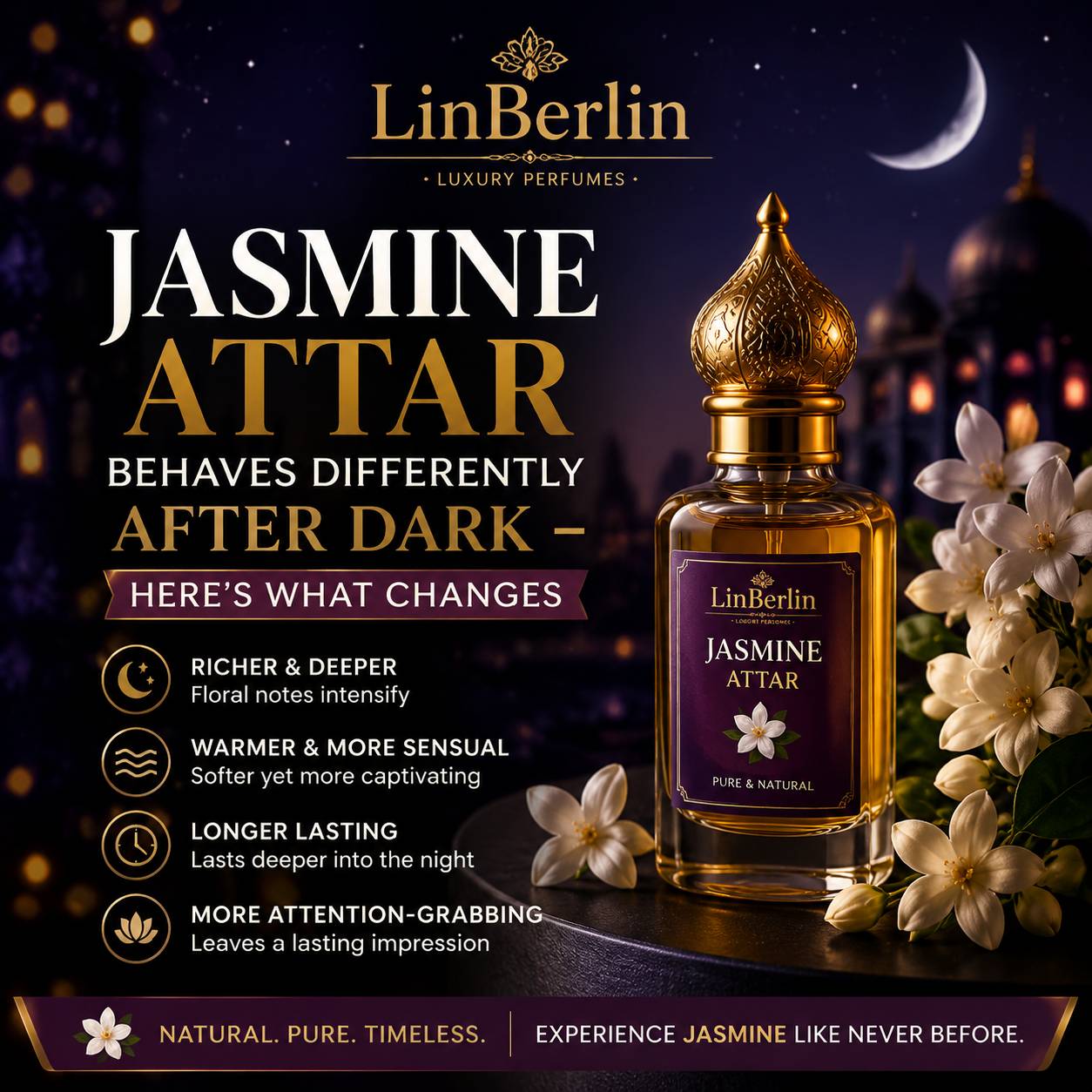
Somewhere around eight in the evening, a customer once messaged us asking if we'd swapped her bottle by mistake. She'd worn the same jasmine attar all afternoon at a wedding shoot in Lucknow, and by dinner it smelled, in her words, "like a completely different flower." We hadn't touched her order. Her skin had.
 Buy on Amazon
That's really the starting point for this whole conversation — not the flower, not the bottle, but the fact that jasmine attar isn't a fixed scent. It's a living reaction between an oil and a body, and that reaction shifts as the day cools down, humidity rises, and skin chemistry quietly changes gears. Most buying guides talk about jasmine attar as if it performs identically from 9am to midnight. It doesn't. And once you understand why, choosing and wearing it becomes a lot less guesswork and a lot more craft.
Why Jasmine Attar Reads Differently at Night
Jasmine — real jasmine, the kind hand-harvested at dawn before the heat burns off its oils — contains indole, a compound that's slightly animalic and, at high concentration, almost unpleasant on its own. In daylight, warmth and airflow scatter it quickly, so what you smell is mostly the sweet, honeyed top notes. But skin temperature drops in the evening in most climates, sweat production slows, and the air itself often carries more moisture. That combination slows evaporation. The indole doesn't disappear; it just has more time to sit on skin and blend with your natural oils instead of evaporating off immediately.
So the "different flower" effect isn't imagination. It's chemistry catching up with the clock. A jasmine attar worn at noon and worn at 9pm is releasing its molecules at different speeds, in a different order, onto skin that's behaving differently underneath it.
What's Actually Sitting in a Bottle of Itr e Jashmin
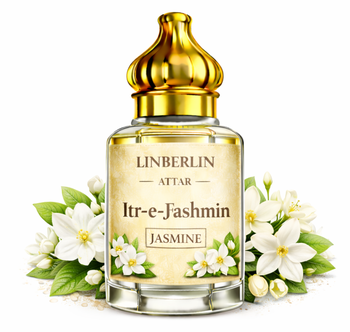
Getting a genuine Itr e Jashmin — jasmine flowers distilled traditionally into a sandalwood or mysore base rather than diluted with alcohol or synthetic carriers — matters more here than with most attars, because the depth of the base oil is what carries the jasmine through those slower, cooler hours. A thin or heavily cut base burns off fast regardless of the time of day, and you lose the entire "after dark" character the flower is known for. The sandalwood (or occasionally a resinous base) acts almost like scaffolding, holding the volatile jasmine molecules and releasing them gradually instead of all at once.
This is also where a lot of buyers get misled — some commercial "jasmine attar" is really jasmine fragrance oil in a carrier base with no actual flower distillation involved. It'll smell fine in the shop. It just won't develop the way a proper Itr e Jashmin does once your skin warms it up over several hours.
Skin Type Changes the Story Too
Oily skin holds fragrance longer, full stop — the extra sebum acts as a natural fixative, which is why people with oilier skin often report jasmine attar lasting six, seven, sometimes eight hours without reapplication. Dry skin is the opposite story. Attar molecules need some moisture and lipid content to bind to, and on dry skin, the oil tends to evaporate faster and thinner, sometimes fading within two or three hours. Combination skin behaves unevenly depending on where you apply it (your T-zone will hold scent longer than your jawline, for instance).
Mature skin is its own case. Skin becomes naturally drier with age in most people, which means attar can fade faster than it did in someone's twenties — but it can also read differently, slightly softer, because there's less natural body oil competing with the jasmine's own sweetness. None of this is better or worse. It's just different, and worth knowing before you assume a bottle "doesn't last" when really it's a skin-type mismatch.
Layering Jasmine Attar With Skincare — Where People Go Wrong
Here's the thing nobody tells you at the counter: what's underneath your attar matters as much as the attar itself. Heavy, occlusive moisturisers (thick shea or petroleum-based creams) trap fragrance close to the skin and can actually intensify the indole note past the point most people find comfortable — this is usually the "why does my jasmine smell sharp tonight" complaint. A lighter, water-based moisturiser lets the attar breathe and develop more gradually, which suits jasmine's slow-release character much better.
Skincare actives are the trickier issue. Retinol, active vitamin C serums, and AHA/BHA exfoliants all thin the outer skin barrier slightly or increase sensitivity — applying a concentrated attar directly over freshly treated skin, especially skin that's still slightly irritated or peeling, can cause stinging, redness, or an allergic-type reaction that has nothing to do with the fragrance being "bad" and everything to do with timing. If you use these actives at night, the safer approach is applying jasmine attar to clothing or hair rather than directly onto treated skin, or waiting until the active has fully absorbed (usually 20–30 minutes) before layering anything on top.
Realistically, most people don't think about this order of operations at all. They moisturise, they dab attar on the wrist, and if something feels off they blame the fragrance. But it's rarely that simple.
Applying It Safely for the Evening
Pulse points still work best — wrists, behind the ears, the base of the throat — because these areas run slightly warmer and help the oil diffuse. A single drop is usually enough for jasmine specifically; it's a stronger, more concentrated note than florals like rose or mogra, and overapplying tends to push it toward that sharper indole territory faster than intended, particularly once body heat builds up over an evening out. Or, if you'd rather keep it subtle for a dinner or an indoor event, apply it to the inside of a scarf or your hair instead of skin. It diffuses more slowly there and avoids direct contact altogether.
Fewer people know this, but timing your application 20 to 30 minutes before you actually need the scent to peak gives it room to settle into your skin's own oils rather than smelling raw and alcohol-adjacent (even though it isn't alcohol-based) for the first few minutes.
When to Be Cautious
Jasmine attar, like any concentrated natural oil, isn't automatically safe for everyone in every situation. If you have known sensitivities to florals or a history of contact dermatitis, patch-test on your inner forearm 24 hours before applying it anywhere near your face or neck. Pregnant women are often advised by their doctors to avoid concentrated jasmine specifically, since some midwives associate strong floral scents with heightened nausea in early pregnancy — this isn't universal, but it's common enough to mention, and checking with your own doctor is the safer route rather than guessing. And if you're currently on any skin actives as discussed above, easing off direct-skin application for a few days won't hurt anything.
We won't pretend every batch behaves identically either — natural jasmine is an agricultural product, and a monsoon-year harvest can smell subtly different from a dry-year one. That's part of working with something real instead of a lab-replicated formula, but it does mean the "after dark" transformation described here can vary slightly bottle to bottle. That's the honest caveat, and it's one worth knowing before you buy.
Choosing the Right Jasmine Attar for Evening Wear
If evening performance is what you're after, look for a jasmine attar, sold traditionally as Itr e Jashmin, that lists an actual sandalwood or resin base rather than a synthetic carrier, and ideally one that mentions the harvest region or distillation method somewhere on the label or product page. That transparency usually signals a maker who understands what makes the oil behave the way it does after sunset — not just how it smells in the first five minutes on a paper strip.
The Practical Takeaway
So the short version: jasmine attar isn't inconsistent, your skin and the evening air are just changing the conditions it's working under. Get the base oil right, be thoughtful about what's underneath it on your skin, apply a little less than you think you need, and it'll do exactly what good jasmine has always done after dark — deepen, warm up, and settle into something quietly more intimate than it was at noon.