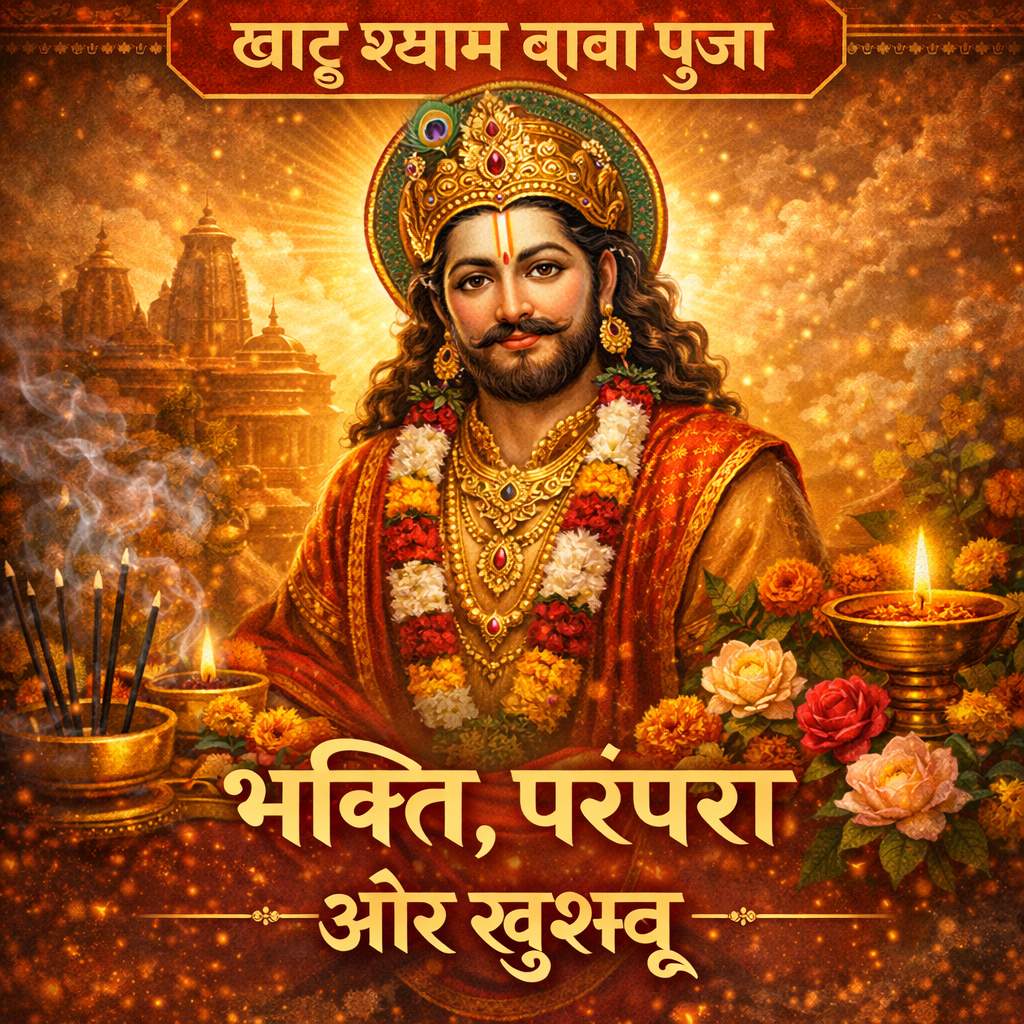
There is a kind of devotion in India that does not need explanation. It does not need justification. It does not need proof. It simply exists — raw, overwhelming, and completely real — in the hearts of millions of people who call themselves Shyam bhakts.
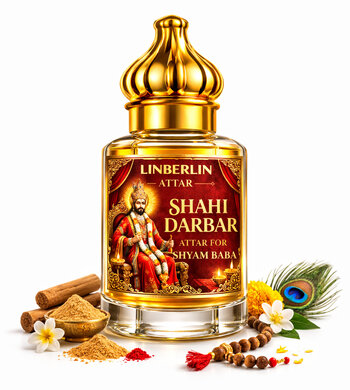
Shahi Darbar Attar for Khatu Shyam Puja
 Buy on Amazon
Ask any Shyam bhakt why they love Baba so much and they will struggle to answer. Not because the love is unclear — but because it is too big for words. They will tell you about the time Baba helped them when no one else could. About the prayer that was answered when all hope was gone. About the night they sat alone in front of Baba's murti, crying without knowing why, and felt something — a warmth, a stillness, a presence — that told them everything would be alright.
Khatu Shyam Baba is called Haare Ka Sahara — the support of those who have lost everything. He is called Sheesh Ke Daani — the one who gave his own head. He is called Lakhdatar — the one who gives in lakhs, in abundance, without counting. And among everything his devotees offer him — the roses, the sweets, the bhajans, the tears — fragrance holds a place that is uniquely sacred. Uniquely intimate. Uniquely Shyam.
This is the complete guide to attar for Khatu Shyam Baba puja — written for every bhakt who wants to offer Baba the finest fragrance, understand its traditions, and experience what happens when the right attar meets the most generous Baba in all of Kalyuga.
At LinBelin, our Shahi Darbar Attar was created with Shyam Baba's devotional soul in mind — 100% alcohol-free, Made in India, crafted for fabric and clothes, carrying the royal fragrance that Baba's Shahi Darbar truly deserves.
Who Is Khatu Shyam Baba — Haare Ka Sahara, Sheesh Ke Daani
Before understanding the fragrance traditions of Khatu Shyam worship, every devotee must know the story that gave Shyam Baba his identity. Because in his story lies the reason why every offering — including fragrance — carries such profound weight in his worship.
Barbarika was the son of Ghatotkacha and grandson of the mighty Bhima — one of the five Pandavas. He was a warrior of extraordinary power, possessing three divine arrows given to him by Lord Shiva himself. These three arrows were so powerful that they could accomplish anything — mark all enemies, mark all allies, and destroy everything marked. With just three arrows, Barbarika could end any war in moments.
When the great Kurukshetra war was approaching, Barbarika set out to witness the battle. He had made a vow to always fight for the side that was losing — a noble principle of justice that was, in practice, impossible to fulfil without ending the war entirely and destroying everyone on both sides.
Lord Vishnu appeared before him as a Brahmin and asked him a series of questions to test his understanding. Recognising Barbarika's extraordinary power and the paradox of his vow, Vishnu revealed his true form and asked Barbarika for the greatest possible donation — his head. Without a moment of hesitation, without anger, without regret, Barbarika smiled and offered his own head as a sacred sacrifice.
For this supreme act of selfless giving — giving the most precious thing a being possesses — Barbarika was granted an extraordinary boon. In Kalyuga, he would be worshipped as Shyam — a name meaning the dark, beautiful, compassionate one. And his specific blessing would be this: whoever comes to him broken, defeated, hopeless — whoever has lost everything and has nowhere else to turn — he would be their refuge. Their Sahara.
This is why Shyam bhakts feel such personal, emotional devotion to Baba. He is not a deity of power or fear. He is a deity of pure compassion — born from the greatest act of selfless sacrifice. And when you offer him attar — pure, sincere, made with love — you are honouring the same spirit of selfless giving that defines his entire existence.
The Deep Connection Between Shyam Baba and Fragrance — A Living Tradition
Walk into the Khatu Shyamji temple in Sikar district, Rajasthan on any ordinary Tuesday and you will witness something extraordinary. Before sunrise, while most of India still sleeps, a procession of priests and devoted bhakts begins the morning shringar of Shyam Baba. Fresh roses — hundreds of them — are arranged around his murti. The fabric of his divine dress is carefully changed and freshened. And attar — pure, deeply fragrant attar — is applied to the fabric of Baba's royal garments as part of the daily shringar ritual that has continued unbroken for centuries.
The fragrance that rises from Shyam Baba's murti during this daily shringar is something devotees who have witnessed it describe as unlike anything else. It is not just a smell. It is a presence. A feeling of being welcomed. Of being seen. Of Baba himself saying — "You came. I am here."
This living fragrance tradition at Khatu temple is the foundation of everything LinBelin's Shahi Darbar Attar represents. We did not create an attar for Shyam Baba by sitting in a laboratory. We created it by understanding this tradition — by asking what fragrance fills Baba's temple, what fragrance his most devoted bhakts have offered for generations, and what fragrance truly matches the royal, generous, deeply loving nature of Sheesh Ke Daani.
In Hindu worship, the offering of fragrance — called Gandha — is one of the Shodashopachara, the sixteen sacred offerings that constitute complete worship. But in Khatu Shyam worship specifically, fragrance goes beyond ritual compliance. It is a deeply personal act of love. Bhakts who visit Khatu bring attar not because the scriptures say they must — but because they want Baba to smell beautiful. Because they want their few precious moments in his presence to be filled with the finest fragrance they can offer. Because love always wants to give the best.
Which Fragrance Does Shyam Baba Love? The Sacred Scents of Khatu Worship
The fragrance traditions of Khatu Shyam worship are specific, beautiful, and deeply rooted in generations of devotional practice. Understanding which fragrances Shyam Baba loves — and why — transforms the act of offering attar from a routine ritual into a deeply conscious, deeply meaningful act of devotion.
Rose — The Heartbeat of Shyam Baba's Worship
If there is one fragrance that belongs to Khatu Shyam Baba above all others, it is rose. This is not a coincidence or an arbitrary tradition. Rose is Shyam Baba's most sacred flower — the one offering that his devotees consider most dear to him above everything else. The Khatu Shyamji temple consumes more roses every week than almost any other temple in Rajasthan. On special occasions like Falgun Mela and Ekadashi, the quantity of roses offered runs into the hundreds of thousands.
Rose in Khatu Shyam worship represents the beauty of selfless devotion — pure, fragrant, complete. When a bhakt applies rose attar to Baba's fabric garments during shringar or wears rose attar on their own puja clothes before sitting in bhajan, the fragrance creates an immediate shift in the devotional atmosphere. The mind becomes still. The heart opens. The distance between devotee and Baba collapses.
Mogra — The Fragrance of Pure Bhakti
Mogra — Arabian jasmine — holds a very special place in Shyam Baba's fragrance tradition. Its soft, intensely sweet, slightly intoxicating fragrance is associated with the kind of pure, selfless devotion that Barbarika himself embodied. In many Shyam mandirs across Rajasthan, Delhi, and Haryana, Mogra garlands and Mogra attar are offered to Baba alongside roses as the two primary fragrance offerings of his worship.
The combination of rose and Mogra in a puja space dedicated to Shyam Baba creates an atmosphere that devotees describe as feeling like the Khatu temple itself — deeply familiar, deeply comforting, deeply alive with Baba's presence.
Hina — The Royal Rajasthani Fragrance
Hina is a fragrance with deep roots in Rajasthani culture and tradition. Made from the henna plant, Hina attar has a warm, earthy, deeply aromatic quality that evokes the royal courts of Rajasthan — the same royal atmosphere that is captured in the name of LinBelin's Shahi Darbar Attar. Shyam Baba is worshipped as a king in his own right — Lakhdatar, the one who gives in abundance like a royal. Hina attar matches this royal, generous energy perfectly.
Kesar — The Fragrance of Abundance and Blessing
Kesar — saffron — is one of the most precious and sacred fragrances in Indian devotional tradition. In Khatu Shyam worship, Kesar attar is used on special occasions — particularly during Falgun Mela, on Ekadashi days, and during the elaborate Shringars performed by the temple priests on festival days. The rich, warm, golden fragrance of Kesar evokes Baba's quality as Lakhdatar — the giver of abundance, the one who blesses his devotees with prosperity and fulfilment.
Sandalwood — The Fragrance of Inner Peace
Sandalwood — Chandan — is the most universally sacred fragrance in all of Hindu worship. In Khatu Shyam puja, sandalwood fragrance represents the cooling, peaceful, protective aspect of Baba's nature — the Sahara he provides to those who are troubled, anxious, or lost. When sandalwood attar fills a puja space, it creates a feeling of deep safety and inner stillness that is perfectly aligned with what Shyam Baba represents for his most devoted bhakts — the certainty that no matter what happens, Baba is there.
Oud — The Fragrance of the Royal Darbar
Oud — agarwood — is one of the most precious and rare fragrances in the world. In the context of Khatu Shyam worship, Oud attar represents the royal, majestic aspect of Baba's divine personality. He is not just a compassionate father figure — he is a king, a warrior, a being of extraordinary spiritual power who chose compassion over conquest. Oud attar in his worship honours this royal dimension — the Shahi Darbar of Shyam Baba, where every devotee is welcomed as an honoured guest.
How to Use Attar Correctly in Khatu Shyam Baba Puja
Using attar in Shyam Baba's worship is a beautiful, simple, deeply meaningful practice. LinBelin's Shahi Darbar Attar is specifically formulated for fabric and clothes — making it perfect for the most intimate and devotionally significant applications in Shyam puja.
During Daily Shringar — Applying Attar to Baba's Fabric Dress
The shringar — the daily dressing and adornment of Shyam Baba's murti — is considered one of the most sacred acts a devotee can perform. Whether you have a small murti at home or a larger one in a family mandir, applying a few drops of Shahi Darbar Attar to Baba's fabric garments during shringar is a deeply personal and devotionally powerful act.
Apply 3 to 4 drops of attar on a clean cotton ball and gently dab on the fabric of Baba's dress — the dupatta, the pitambar, the decorative cloth that adorns his murti. As the day progresses and the puja lamp warms the space, the fragrance deepens and fills the entire mandir area with the royal, devotional atmosphere of Shyam Baba's presence.
Many devoted Shyam bhakts perform this attar application during morning shringar while reciting Baba's name — "Jai Shree Shyam" — with each drop. This transforms the simple act of applying fragrance into a complete mantra practice — fragrance, voice, and devotion offered simultaneously to Baba.
During Bhajan Sandhya — Wearing Attar on Your Puja Clothes
Bhajan Sandhya — the evening gathering of Shyam bhakts to sing Baba's bhajans — is one of the most beautiful expressions of Shyam devotion. In many homes and Shyam mandirs across India, devotees gather every evening, especially on Tuesdays and Ekadashi days, to sing bhajans together in Baba's presence.
Before sitting in bhajan, applying LinBelin's pooja attar to your clothes — your kurta, your dupatta, your puja shawl — creates a personal fragrant atmosphere that deepens your connection to the bhajan and to Baba throughout the evening. As you sing, as you clap, as you lose yourself in the devotional music, the fragrance moves with you — a constant, gentle reminder of Baba's presence.
Many experienced Shyam bhakts describe wearing attar during bhajan as one of the most powerful ways to deepen their experience — the fragrance bypasses the thinking mind completely and goes directly to the devotional heart.
Applying Attar on the Puja Cloth and Altar Fabric
The cloth of your puja space — the fabric beneath Baba's murti, the decorative cloth of your home mandir — can all be fragranced with Shahi Darbar Attar before worship begins. Apply a few drops to the corners of the altar cloth. As the puja proceeds and the warmth of the diya fills the space, the fragrance rises gently and creates a complete devotional atmosphere — as though Baba's own Shahi Darbar has been recreated in your home.
The Right Mantra to Chant While Offering Attar
The act of applying attar to Baba's fabric dress becomes a complete spiritual practice when done with mantra. As you apply each drop, chant:
"Jai Shree Shyam"
Simple. Complete. The most powerful words in a Shyam bhakt's vocabulary. Or chant the Khatu Shyam Chalisa during the shringar process, letting each verse accompany each act of devotional service. The combination of pure fragrance and sincere mantra creates a devotional field in your puja space that ordinary puja — done mechanically, without this conscious intention — simply cannot create.
Falgun Mela, Lakha Mela and Ekadashi — Attar in Khatu Shyam's Biggest Festivals
The devotional calendar of Khatu Shyam Baba is filled with festivals and sacred occasions, each carrying its own fragrance traditions. Understanding these traditions connects your home worship to the living, breathing devotional culture of millions of Shyam bhakts across India.
Falgun Mela — The Biggest Festival of Shyam Baba
The Falgun Mela at Khatu Shyamji temple, held during the month of Phalgun (February-March), is one of the largest religious fairs in Rajasthan. Hundreds of thousands of devotees travel from across India to attend — some on foot, walking for days, carrying only Baba's name in their heart and a garland of roses in their hands.
During Falgun Mela, the fragrance atmosphere at Khatu reaches its most intense. Truckloads of roses arrive daily. Attar vendors set up outside the temple complex. The air for a kilometer around the temple is permanently saturated with rose fragrance. Bhakts who have attended Falgun Mela describe the fragrance as one of the most physically overwhelming and spiritually transformative experiences of their lives.
For devotees who cannot travel to Khatu during Falgun Mela, recreating this fragrance at home using LinBelin's Shahi Darbar Attar on Baba's fabric dress and your own puja clothes brings the spirit of the mela into your home puja — connecting you to the millions of bhakts gathered at Khatu in spirit and fragrance.
Lakha Mela — When Lakhs Come to Baba
The Lakha Mela at Khatu is another major gathering of Shyam devotees that draws lakhs of bhakts from Rajasthan and beyond. Its very name — Lakha Mela, the fair of lakhs — reflects the extraordinary scale of devotion that Khatu Shyam Baba inspires. During Lakha Mela, the fragrance offerings at the temple multiply enormously — roses, Mogra, Hina, and other attars fill every corner of the temple complex.
Ekadashi — The Most Auspicious Day for Shyam Worship
Ekadashi — the eleventh day of both the waxing and waning lunar fortnights — is considered particularly sacred in Khatu Shyam worship. On Ekadashi, Shyam bhakts fast, perform extended puja, and offer special fragrance to Baba. Applying Shahi Darbar Attar to Baba's fabric garments on Ekadashi and sitting in bhajan through the evening is a practice that many devoted Shyam bhakts consider the most powerful regular worship they perform.
Tuesday — Shyam Baba's Weekly Sacred Day
Tuesday is Shyam Baba's most sacred day of the week. On Tuesdays, Shyam mandirs across India see their highest attendance. Bhakts fast, offer roses, perform extended shringar, and sing bhajans for hours. Using attar during Tuesday worship — on Baba's fabric dress and your own puja clothes — adds a dimension of fragrant devotion that many bhakts describe as transforming their Tuesday puja from a weekly ritual into a genuine weekly meeting with Baba.
Khatu Shyam Attar Traditions Across India — How Different Regions Worship Baba
One of the most remarkable things about Khatu Shyam devotion is how it has spread far beyond Rajasthan to become a pan-Indian phenomenon. From the lanes of Old Delhi to the chawls of Mumbai, from the colonies of Haryana to the apartments of Bengaluru — Shyam bhakts are everywhere, and each regional community has developed its own beautiful attar traditions.
In Rajasthan — the heartland of Khatu Shyam worship — rose and Hina attar dominate. The Rajasthani devotional culture has a natural affinity for rich, warm, deeply aromatic fragrances that match the landscape and the character of the people. Rajasthani Shyam bhakts apply attar to Baba's fabric dress during morning shringar with the same care and attention that a parent would dress a beloved child — every fold adjusted, every detail perfect, the fragrance applied last as the final, loving touch.
In Delhi and Haryana — where some of the largest Shyam mandirs outside Rajasthan are located — rose and Mogra attar are most commonly used. The Shyam mandir culture in Delhi's residential colonies is particularly vibrant, with Tuesday bhajan gatherings that can fill entire community halls. Here, attar on the fabric of Baba's murti and on the puja clothes of the bhakts creates an immersive devotional atmosphere that makes these gatherings genuinely transcendent.
In Maharashtra and Gujarat — where Shyam devotion has grown enormously — a blend of rose, sandalwood, and Mogra attar is popular. The Gujarati Shyam bhakt community is known for its elaborate and beautifully organised puja traditions, and fragrance is always a central part of these celebrations.
In South India — where Khatu Shyam worship is newer but growing rapidly — sandalwood and rose attar are most commonly used, blending the South Indian fragrance tradition with the North Indian Shyam devotional culture to create something uniquely beautiful.
LinBelin's complete attar collection honours all of these regional traditions — providing every Shyam bhakt across India with access to the finest devotional fragrance for their worship.
Why Alcohol-Free Attar Is Sacred for Shyam Baba Worship
This is something every Shyam bhakt must understand — and something that LinBelin has built its entire foundation upon.
In Hindu worship, alcohol is considered ritually impure — ashudh. This principle applies universally across all deities and all forms of puja. But in Khatu Shyam worship specifically, the principle of purity carries an additional dimension. Shyam Baba is Sheesh Ke Daani — the one who gave his head as the ultimate pure offering. The worship of such a deity demands nothing less than complete purity in return.
Modern synthetic perfumes are almost universally alcohol-based. When you spray an alcohol-based perfume on Baba's fabric dress or on your own puja clothes before worship, you are unknowingly introducing an element that Hindu tradition considers impure into the sacred space of your puja. This is why genuine Shyam bhakts who understand their tradition always insist on alcohol-free attar for worship.
LinBelin's Shahi Darbar Attar is 100% alcohol-free — a devotional commitment, not just a product specification. Beyond ritual purity, alcohol-free attar is also practically superior for fabric use. Alcohol damages fabric over time — fading colors, weakening threads, leaving residue on delicate materials. An alcohol-free attar applied to Baba's fabric garments protects those precious fabrics while filling them with fragrance that lasts for hours.
The Bhajan Culture and Attar — How Fragrance Deepens Shyam Devotion
The bhajan culture of Khatu Shyam worship is unlike that of almost any other deity in India. Shyam bhajans are not quiet, meditative compositions. They are celebrations — full-throated, joyful, emotionally overwhelming expressions of love for Baba. They are sung loudly, danced to freely, and felt deeply in every cell of the body.
In this bhajan culture, fragrance plays a unique role that is specific to Shyam worship. When hundreds of bhakts sit together in a Shyam mandir, all wearing attar on their puja clothes, all surrounded by the fragrance rising from Baba's decorated murti — the collective fragrance creates something that individual puja at home rarely achieves: a shared devotional field. A space where every individual's love for Baba meets every other individual's love, amplified by the fragrance that fills the air.
Experienced bhajan singers and Shyam devotees will tell you that the best bhajans they have ever experienced were in spaces where the fragrance was right. Where the attar on Baba's fabric dress matched the flowers in his vase. Where the bhakts' own clothes carried the same devotional fragrance as the murti. In these moments, the bhajan becomes something genuinely transcendent — the boundaries between singer and song, between devotee and deity, dissolve completely.
This is the true purpose of attar in Shyam worship. Not to make things smell nice. But to create the conditions in which genuine bhakti — the bhakti that Barbarika himself embodied with his supreme sacrifice — becomes possible.
Shyam Baba Attar and the Power of Haare Ka Sahara — Fragrance as Refuge
One of the most beautiful and unique aspects of Khatu Shyam worship is that it actively welcomes the broken, the defeated, and the hopeless. This is literally Baba's speciality — Haare Ka Sahara. The support of those who have lost everything. In this context, the act of offering attar to Shyam Baba takes on a dimension that no other devotional fragrance tradition quite captures.
When someone comes to Shyam Baba broken — after a business failure, after a health crisis, after a relationship has fallen apart, after all their efforts have come to nothing — they often come with nothing but themselves. No elaborate puja thali. No expensive offerings. Just themselves and whatever small thing they can offer from the heart.
A single drop of pure attar on Baba's fabric dress, offered with a sincere heart and a whispered "Jai Shree Shyam" — in Shyam Baba's tradition, this is enough. More than enough. Because Baba, who gave his own head without hesitation, understands perfectly the value of an offering that comes from genuine love rather than obligation.
This is why LinBelin designed the Shahi Darbar Attar to be accessible to every Shyam bhakt — the daily worshipper at a small home mandir, the festival devotee traveling to Khatu, the broken-hearted bhakt who has come to Baba with nothing but hope. Beautiful devotional attar should not be a luxury that only some can afford. In keeping with Baba's own generous, inclusive spirit, it should be available to all.
Gifting Shahi Darbar Attar — Spreading Shyam Baba's Fragrant Blessings
In Shyam devotional culture, gifting is a deeply meaningful act — an extension of Baba's own spirit of giving. Shyam bhakts are generous with each other by nature, mirroring the generosity of their Baba. Gifting attar to fellow bhakts is one of the most beautiful expressions of this culture.
LinBelin's Shahi Darbar Attar makes a deeply meaningful gift for Shyam bhakts on every occasion — Falgun Mela celebrations where families and devotional groups gather together, Ekadashi days when Shyam bhakts exchange prasad and gifts with each other, new home blessings where gifting devotional items establishes the spiritual character of the new space, and birthdays and anniversaries of fellow bhakts who share the same deep love for Shyam Baba.
When you give LinBelin attar as a gift to a Shyam bhakt, you are not giving a perfume bottle. You are giving a piece of Baba's fragrant presence to carry into someone else's puja, someone else's bhajan, someone else's private conversation with Shyam in the quiet moments of their day.
How to Store Your Attar and Keep It Fresh for Puja
A good attar stored with care serves your Shyam Baba puja faithfully for years. Keep your LinBelin Shahi Darbar Attar in a cool, dark place — away from direct sunlight, away from kitchen heat, and away from other strong fragrances that could alter its character.
Always close the bottle tightly immediately after each use. Attar is volatile — its fragrance compounds evaporate slowly when exposed to air, and consistent sealing preserves the depth and richness of the fragrance for much longer. Use a fresh cotton ball for every application — never touch the bottle opening directly with fingers, as this introduces contamination that degrades the attar's quality over time.
Apply attar to Baba's fabric dress and your own puja clothes with a gentle touch — 2 to 3 drops is sufficient for a deeply fragrant effect. More is not better with attar. A small amount used consistently creates a more beautiful, more balanced fragrance than a large amount used occasionally.
Why LinBelin Shahi Darbar Attar for Shyam Baba Puja
LinBelin's Shahi Darbar Attar was not created in a corporate boardroom. It was created from a genuine understanding of Shyam Baba's devotional tradition — the rose offerings, the royal shringar, the bhajan culture, the spirit of Haare Ka Sahara that makes this worship so unique and so universally beloved.
Every detail of Shahi Darbar Attar reflects this understanding. It is 100% alcohol-free — because Baba's worship demands ritual purity above all else. It is Made in India — because Shyam Baba's tradition is rooted in the soil of this country, in the culture of Rajasthan, in the devotional heritage that produced some of the most beautiful acts of selfless giving in human history. It is specifically formulated for fabric and clothes — because the most meaningful applications of attar in Shyam worship happen on fabric: on Baba's divine dress during shringar, on the devotee's puja clothes during bhajan, on the altar cloth of the home mandir.
LinBelin's complete pooja attar range is built on the same principles for every deity — purity, devotion, and genuine understanding of each tradition. But Shahi Darbar Attar holds a special place in our collection because Shyam Baba himself holds a special place in the hearts of millions of Indians who have found in him what they could not find anywhere else — a Sahara when all other supports had failed.
15 Most Asked Questions About Khatu Shyam Baba Attar
Q1. Which attar is best for Khatu Shyam Baba puja?
Rose attar is considered the most sacred and most beloved fragrance offering for Shyam Baba worship, followed by Mogra, Hina, and sandalwood. LinBelin's Shahi Darbar Attar captures the royal fragrance tradition of Shyam Baba's worship in a 100% alcohol-free, Made in India attar crafted specifically for fabric and puja clothes.
Q2. Which fragrance does Khatu Shyam Baba love most?
Rose is Shyam Baba's most beloved fragrance — reflected in the thousands of rose garlands offered at Khatu Shyamji temple every single day. Mogra, Hina, Kesar, and sandalwood are also deeply traditional in Shyam Baba worship across different regions and occasions.
Q3. Which day is best to offer attar to Shyam Baba?
Tuesday is Shyam Baba's most sacred day and the most auspicious for offering attar. Ekadashi — the eleventh lunar day — is equally important. During Falgun Mela and Lakha Mela, offering attar on all festival days is the traditional practice.
Q4. How to use attar in Khatu Shyam Baba puja?
LinBelin's Shahi Darbar Attar is designed for fabric application. Apply 2-3 drops on clean cotton and gently dab on Baba's fabric garments during shringar, or apply to your own puja clothes before bhajan. Never apply directly to stone or metal idol surfaces.
Q5. What mantra to chant while offering attar to Shyam Baba?
Chanting "Jai Shree Shyam" with each drop of attar applied to Baba's garment transforms the simple act of fragrance offering into a complete devotional practice — fragrance, voice, and sincere intention offered simultaneously to Haare Ka Sahara.
Q6. Is alcohol-free attar necessary for Shyam Baba puja?
Yes, absolutely. Alcohol is considered ritually impure in Hindu worship. Shyam Baba, as Sheesh Ke Daani — the one who made the supreme pure sacrifice — deserves only the purest offerings. LinBelin's Shahi Darbar Attar is 100% alcohol-free, making it completely appropriate for all Shyam puja applications.
Q7. Can attar be applied on Shyam Baba's fabric dress?
Yes, this is one of the most traditional and devotionally meaningful ways to use attar in Shyam Baba worship. Applying attar to Baba's fabric garments during daily shringar is a practice followed by temple priests at Khatu and by devoted Shyam bhakts in home mandirs across India.
Q8. What fragrance is used at Khatu Shyamji temple?
The Khatu Shyamji temple in Rajasthan is famous for its overwhelming rose fragrance — thousands of rose garlands are offered daily. On festival occasions, Kesar, Mogra, and Hina attars are also used in the elaborate temple shringar performed by priests.
Q9. Can Shyam Baba attar be worn during bhajan?
Yes, wearing attar on your puja clothes during Bhajan Sandhya is a deeply traditional Shyam devotional practice. The fragrance deepens your connection to the bhajan and to Baba, creating a personal devotional atmosphere that intensifies the experience of collective singing.
Q10. How long does Khatu Shyam attar fragrance last on fabric?
LinBelin's Shahi Darbar Attar is formulated specifically for fabric and releases its fragrance gently over 8-12 hours on puja clothes — making it perfect for extended worship sessions, full-day festival puja, and Bhajan Sandhya gatherings.
Q11. Can Shyam Baba attar be gifted to fellow bhakts?
Yes, gifting LinBelin's Shahi Darbar Attar to fellow Shyam bhakts during Falgun Mela, Ekadashi, or any devotional gathering is a beautiful expression of the generous, giving spirit that defines Shyam Baba's entire tradition.
Q12. What is the significance of rose in Khatu Shyam worship?
Rose is Shyam Baba's most beloved flower and most sacred fragrance offering. The tradition of offering roses to Shyam Baba is one of the most defining characteristics of his worship — reflected in the extraordinary quantity of roses offered at Khatu Shyamji temple every day of the year.
Q13. Can Khatu Shyam attar be used during Falgun Mela worship at home?
Yes, for devotees who cannot travel to Khatu during Falgun Mela, applying LinBelin's Shahi Darbar Attar to Baba's fabric dress and your own puja clothes during home worship recreates the fragrant atmosphere of the mela — connecting you spiritually to the lakhs of bhakts gathered at Khatu.
Q14. Where can I buy authentic Khatu Shyam Baba attar online?
LinBelin offers authentic, Made in India, 100% alcohol-free Shahi Darbar Attar for Shyam Baba puja online. Shop directly at our Shahi Darbar Attar product page or explore our complete pooja attar collection.
Q15. What makes LinBelin Shahi Darbar Attar different from regular perfume for Shyam puja?
LinBelin's Shahi Darbar Attar is 100% alcohol-free, Made in India, specifically formulated for fabric and clothes, and crafted with a genuine understanding of Khatu Shyam Baba's devotional tradition. Regular perfumes are alcohol-based, designed for skin, and entirely inappropriate for puja use.
Conclusion — Offer Shyam Baba the Fragrance He Deserves
Khatu Shyam Baba gave his head — the most precious thing a being possesses — without hesitation, without regret, with a smile. He asked for nothing in return except the chance to be the Sahara for those who have nothing left. In all of Indian devotional history, there is no act of selfless giving quite like this.
When we worship such a Baba, the sincerity of our offering matters more than its grandeur. A single drop of pure, alcohol-free attar applied to Baba's fabric dress with complete love and a whispered "Jai Shree Shyam" — this is an offering worthy of Sheesh Ke Daani. Because it comes from the same place his sacrifice came from — from a heart that gives without calculation, without condition, without holding anything back.
LinBelin's Shahi Darbar Attar was made for this moment. For your daily shringar of Baba. For your Tuesday bhajan. For your Falgun Mela celebration at home. For the quiet nights when you sit alone with Baba and just need to feel that he is there.
Browse our complete pooja attar collection and bring the royal fragrance of Shyam Baba's Shahi Darbar into your home today.
Jai Shree Shyam 🙏
LinBelin — Devotional Attar, Made in India 100% Alcohol-Free | Fabric and Clothes Attar | For Pure Puja | Available Online Across India