A trader in Dubai once told me that asking "what does oud smell like" is a little like asking "what does fruit taste like." Technically an answer exists. Practically, it's useless, because a mango and a lime have nothing in common except a category. Oud works the same way — the word covers a resin that behaves completely differently depending on which forest it came from, which tree species produced it, and how long it sat fermenting before anyone touched it. Most people buying oud for the first time don't know this, and honestly, most retailers don't bother explaining it.
 Buy on Amazon
Why "Oud" Isn't One Thing (Even Though It's Sold Like It Is)
Oud comes from Aquilaria trees, but only after those trees have been wounded — by fungus, insects, or physical damage — and respond by producing a dark, fragrant resin as a kind of immune reaction. No wound, no oud. That's the part most people skip past. The resin itself, called agarwood, is what gets distilled or ground into attar, and its character depends almost entirely on where the tree grew, what triggered the infection, and how long the resin had to develop before harvest.
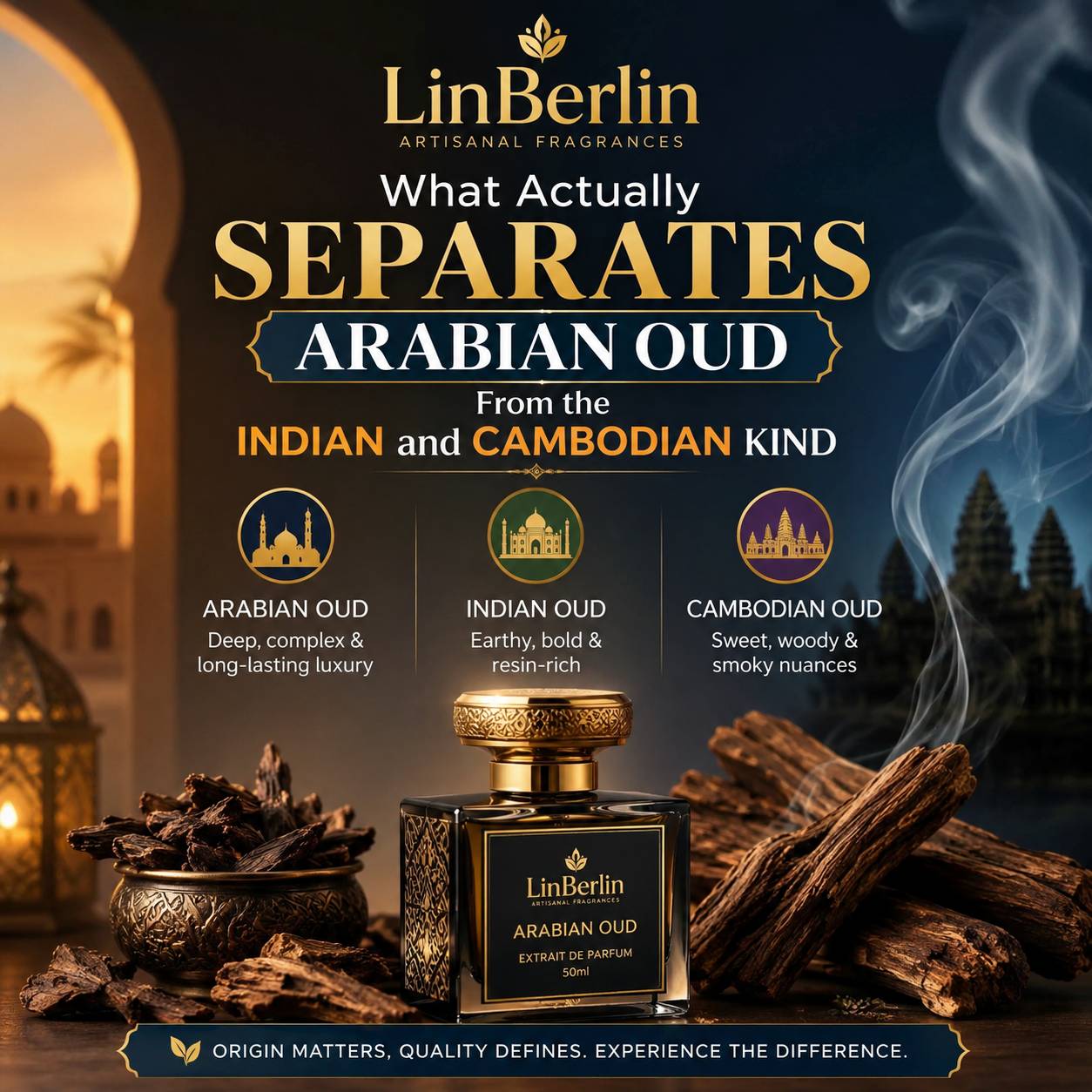
So when someone says "Arabian oud" or "Cambodian oud," they're not describing a single scent profile the way you'd describe, say, vanilla. They're describing a regional tradition of sourcing, processing, and aging that produces recognisably different results. And once you smell them side by side, the differences stop being subtle.
Indian Oud: Deep, Barnyard-Sweet, and Not for Everyone
Indian oud — particularly from Assam, historically one of the most important oud-producing regions in the world — tends to be dark, animalic, and heavy. There's often a barnyard or leathery note underneath the sweetness, something that reads as almost medicinal to unfamiliar noses. It's not a soft scent. But people who grow up around it, or who develop a taste for it, tend to describe it as the most "honest" oud — unpolished, a little rough at the edges, and completely unmistakable once you know it.
The wood itself tends to be denser and the oil yield lower, which is part of why genuine Indian oud has become harder to source at scale. A lot of what's sold as "Indian oud" today is diluted, cut with synthetic bases, or simply mislabeled — a problem worth knowing about before you spend real money on a bottle claiming Assam origin.
Cambodian Oud: The Sweeter, More Approachable Cousin
Cambodian oud shifts the profile noticeably — sweeter, with notes that read closer to caramel, dried fruit, or even a faint tobacco warmth rather than the darker animalic quality of Indian resin. It's often described as more "rounded," which is a fair description; there's less of an edge to it, and enthusiasts who find Indian oud too intense often land on Cambodian as their entry point instead.
That said, genuine Cambodian oud has become one of the rarest categories on the market. Wild Aquilaria populations in the region have been heavily depleted, and a lot of what circulates under the Cambodian label is actually farmed or grown elsewhere, then marketed on reputation alone. Worth asking about, if a seller can't tell you anything about sourcing.
Arabian Oud: Where Blending Becomes the Art Form
Here's where things get — well, it's more complicated than the India/Cambodia split, because "Arabian oud" isn't really a raw-material category the way the other two are. The Arabian Peninsula doesn't grow Aquilaria trees natively in significant quantity. What the region built instead is a centuries-old blending tradition — taking raw oud sourced from India, Cambodia, Laos, and elsewhere, and refining it through techniques like extended aging, co-distillation with rose or saffron, and careful oil-based maceration.
The result is oud that's been shaped for wearability rather than raw intensity. Arabian ouds tend to layer in supporting notes — rose, amber, sometimes a touch of spice — that soften the harder edges of the base resin without erasing what makes oud recognisable in the first place. It's less about a single terroir and more about craftsmanship applied to an imported raw material, which — depending how you look at it — is either less "authentic" or more skillfully executed. Genuinely, both readings have a point.
Where LinBerlin's Approach Fits Into This
This blending philosophy is exactly the tradition LinBerlin's Arabian oud attar is built on — sourcing quality resin and shaping it through aging and oil-based blending rather than chasing raw intensity for its own sake. The flagship expression, Oud e Sahara, leans into the warmer, rose-adjacent register that Arabian blending traditions are known for, rather than the sharper, more medicinal profile some Indian ouds carry. It's a deliberate choice, not a compromise — some noses want subtlety, and pretending otherwise would be dishonest marketing.
How Skin Type Changes What You Actually Smell
This is the part almost nobody mentions when comparing oud regions, and it matters more than most buying guides suggest. Oud attars are oil-based, and oil-based fragrance behaves completely differently depending on the skin it's applied to.
On drier skin, oud tends to fade faster and read "thinner" — the deeper, muskier base notes evaporate before they've had a chance to develop, so a genuinely rich Indian oud might come across as disappointingly mild on someone with very dry skin. Moisturised skin holds onto oil-based scent noticeably longer; applying attar right after a shower, while skin is still slightly damp, gives the oils something to bind to and slows evaporation. It sounds like a small detail. It isn't.
Oilier skin does the opposite — it amplifies depth and projection, sometimes to the point where a Cambodian oud that reads as gentle on someone else can feel almost heavy on oilier skin. And sensitive skin needs real caution here: oud resins, particularly less refined or heavily concentrated ones, can trigger contact irritation in people prone to eczema or fragrance sensitivity. A patch test on the inner wrist, left for a few hours before applying anywhere else, is not an overcautious step — it's a basic one, especially with concentrated attar rather than diluted spray perfume. Anyone pregnant or on strong skincare actives like retinol should be similarly careful, since compromised or reactive skin barriers absorb and react to concentrated oils differently than healthy skin does.
A Few Honest Buying Mistakes People Make
The biggest one: assuming region alone guarantees quality. A poorly aged, low-grade Cambodian oud can smell worse than a well-made Arabian blend, regional prestige aside. Price is a rough guide but not a reliable one — genuine wild-harvested oud from any region is expensive by nature, so anything suspiciously cheap claiming rare origin should raise a question, not excitement.
Another common mistake is buying oud based on how it smells straight from the bottle. Oud attars change substantially over the first thirty to sixty minutes on skin, as top notes fade and the base resin takes over — so judging a bottle by the first ten seconds tells you almost nothing about how it'll actually wear.
Choosing Between Them, Practically Speaking
If you're drawn to intensity and don't mind an animalic edge, Indian oud rewards patience. If you want something gentler as an entry point, Cambodian-style sweetness is more forgiving. And if you want oud that's been refined for daily wearability — layered with rose, amber, or spice rather than left raw — Arabian blending traditions, including expressions like Oud e Sahara, tend to be the more approachable route in. None of these is objectively "better." They're just different answers to what oud is supposed to do on skin, and the right one depends entirely on what you're hoping to feel when you wear it.