The cap clicked open with a sharp plastic snap, and within seconds the room filled with something oddly sweet, loud, and flat. The seller had promised pure oud attar. What arrived smelled closer to syrupy air freshener. That kind of disappointment happens more often than most buyers realise, especially when shopping for attar online where photos, poetic descriptions, and low prices can easily hide diluted oils or synthetic blends.
Buying attar online should feel exciting, not risky. Yet many people spend serious money on oils they’ve never smelled in person, relying entirely on trust. Some sellers are transparent and deeply knowledgeable. Others borrow traditional fragrance language while selling blends that have little connection to real artisanal perfumery. Knowing the right questions to ask before buying attar online changes everything. It helps you avoid fake products, misleading marketing, and expensive mistakes that don’t become obvious until the bottle finally arrives.
What most buyers get wrong
The biggest mistake buyers make isn’t choosing the wrong scent family. It’s assuming every dark oil in a decorative bottle must be authentic.
Many first-time attar buyers focus almost entirely on presentation — ornate packaging, Arabic names, dramatic colour, or claims of “royal oud” and “pure musk” often create a false sense of legitimacy. But genuine attar quality has far more to do with sourcing transparency, distillation methods, and ingredient honesty than appearance. A thick black oil may contain synthetic aroma chemicals and colourants. A pale oil in a plain bottle might contain beautifully distilled natural material.
And price alone doesn’t protect anyone either. Some fake oud blends are sold at extremely high prices because sellers know buyers associate cost with authenticity. Realistically, the online attar market sits in a difficult middle ground where genuine artisans exist beside aggressive resellers using copied descriptions and stock photographs.
A buyer also tends to trust vague wording too quickly. Terms like “inspired by,” “premium blend,” or “traditional oud” can mean almost anything. One seller may use those words honestly for a blended oil. Another may use them to disguise the absence of natural ingredients entirely. The truth is, most disappointment happens long before checkout because buyers never ask direct questions about composition, origin, or concentration.
Another overlooked problem involves expectation. Someone new to natural attar may expect every oil to project loudly for twelve hours because they’re used to alcohol-based designer perfume. Authentic oils often wear closer to the skin and evolve more slowly (especially floral and sandalwood-heavy blends). That subtle behaviour can actually signal quality rather than weakness.
The criteria that actually matter
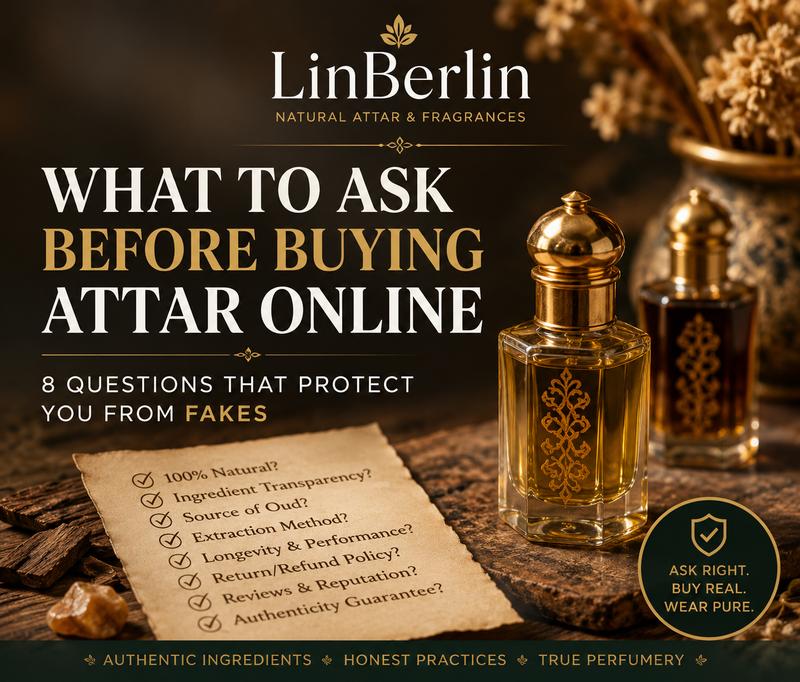
The first question worth asking is simple: what exactly is inside the bottle? Not every attar is fully natural, and there’s nothing inherently dishonest about blended compositions if the seller explains them clearly. Problems begin when brands avoid direct answers. If a seller cannot tell you whether an attar contains natural oud, synthetic oud accords, carrier oils, or aroma compounds, you’re buying blind.
Source transparency matters far more than dramatic storytelling. If someone claims to sell Cambodian oud, Hindi oud, or Ruh Gulab, ask where the material was sourced and whether the oil was traditionally distilled or commercially compounded. Serious attar sellers usually enjoy these conversations because they actually know the background of their oils. And vague replies often reveal more than buyers realise.
Pay close attention to how the scent is described. Authentic fragrance sellers describe texture, development, density, smoke level, sweetness, earthiness, and dry-down behaviour with specificity. Fake listings tend to rely on exaggerated emotional language without concrete details. You’ll notice phrases about power, attraction, or royalty repeating again and again while actual fragrance characteristics remain strangely absent.
One practical question almost nobody asks concerns maturation. Some oils improve after resting for months or years — particularly oud-based attars and natural floral distillations. Sellers who work seriously with natural perfumery often mention aging, harvesting seasons, or storage conditions because those factors genuinely affect aroma quality.
But there’s another detail experienced buyers quietly watch for: consistency across batches. Natural oils vary slightly due to harvest conditions, weather, and distillation differences. If every bottle supposedly smells identical year after year, there’s a strong possibility the fragrance depends heavily on standardised synthetic compounds.
So how can someone verify quality without smelling first? Start by checking whether the seller provides close-up bottle photos, ingredient discussions, and realistic scent descriptions rather than copied marketing text. Independent reviews also help, though they require careful reading. Reviews that describe how the scent changes over time often come from genuine wearers. Extremely generic praise posted in clusters may not tell you much.
Ask whether samples are available before committing to a large bottle. Serious fragrance houses understand how personal scent perception can be. A refusal to offer any sampling option sometimes suggests the seller expects disappointment after purchase.
The bottle itself can reveal useful information too — although not in the way many people think. Sediment, colour variation, or tiny shifts between batches are not automatically flaws in natural attar. Meanwhile perfectly uniform colour and aggressively loud projection can occasionally indicate heavy synthetic structuring. That doesn’t guarantee fakery, but it’s worth paying attention to.
And shipping conditions matter more than buyers expect. Natural oils exposed to heat for long periods may arrive altered or flattened. Responsible sellers usually package attars carefully and avoid careless storage methods during transit.
One final question deserves more attention than it gets: does the seller acknowledge limitations honestly? A trustworthy fragrance house won’t pretend every oil suits every person. Some oud oils smell medicinal. Certain florals feel animalic or earthy. Genuine sellers explain those realities openly instead of promising universal appeal.
Red flags and what they mean
An unusually low price attached to “pure oud” should immediately raise suspicion. Real oud extraction is expensive because the raw material itself is rare, slow-growing, and difficult to distill. A bargain-priced bottle marketed as fully natural oud oil usually signals dilution or synthetic reconstruction.
Another warning sign appears in exaggerated longevity claims — especially promises of twenty-four hour projection from tiny amounts of purely natural floral attar. Some natural oils last beautifully, but online sellers often confuse intensity with authenticity. Loudness alone says very little about quality.
Watch for sellers who avoid ingredient discussions entirely. If customer questions about sourcing receive copied replies or evasive answers, there’s probably a reason. Honest attar makers don’t need to reveal every formula detail, but they should comfortably explain the nature of the product being sold.
Copied imagery is another common issue. Reverse-searching bottle photos sometimes reveals identical images used across multiple unrelated stores. That usually indicates drop-shipping or generic supply chains rather than genuine small-batch perfumery.
And then there’s the language itself. Overly dramatic descriptions packed with phrases like “100% original guaranteed royal oud” or “secret ancient formula” often compensate for missing technical detail. Here’s the thing: skilled perfumers usually talk about scent in grounded, sensory terms instead of exaggerated promises.
One honest limitation remains unavoidable in this market. Even experienced fragrance buyers can occasionally misjudge an attar online because scent perception is deeply personal and natural materials vary. No checklist removes all risk completely. Good questions simply reduce the chances of buying something misleading.
How LinBerlin approaches this
LinBerlin approaches attar with a slower and more transparent mindset than many fast-moving online fragrance sellers. Rather than relying on dramatic luxury language, the brand focuses on ingredient quality, oil character, and honest scent descriptions that reflect how an attar actually behaves on skin.
The sourcing approach prioritises traditional oil-based perfumery methods and carefully selected raw materials — especially where oud, florals, resins, and natural accords require patience during blending and maturation. And instead of treating every customer like a casual impulse buyer, LinBerlin speaks to people who genuinely want to understand what they’re wearing.
That transparency matters because experienced fragrance lovers usually care less about hype and more about clarity. Knowing whether an attar is soft, smoky, earthy, resinous, aged, or blended tells a buyer far more than decorative storytelling ever could.
Closing
A beautiful attar rarely announces itself through flashy marketing. More often, quality reveals itself through patience, clarity, and the confidence of a seller willing to answer difficult questions honestly.
Before buying attar online, slow the process down a little. Ask about ingredients, sourcing, aging, concentration, and sampling. Read descriptions carefully. Compare how sellers communicate. And trust your instincts if something feels exaggerated or strangely vague.
The online fragrance market can still be rewarding for careful buyers. Once you learn how to recognise transparency and authenticity, choosing attar becomes less about avoiding scams and more about discovering oils with real character, history, and depth.