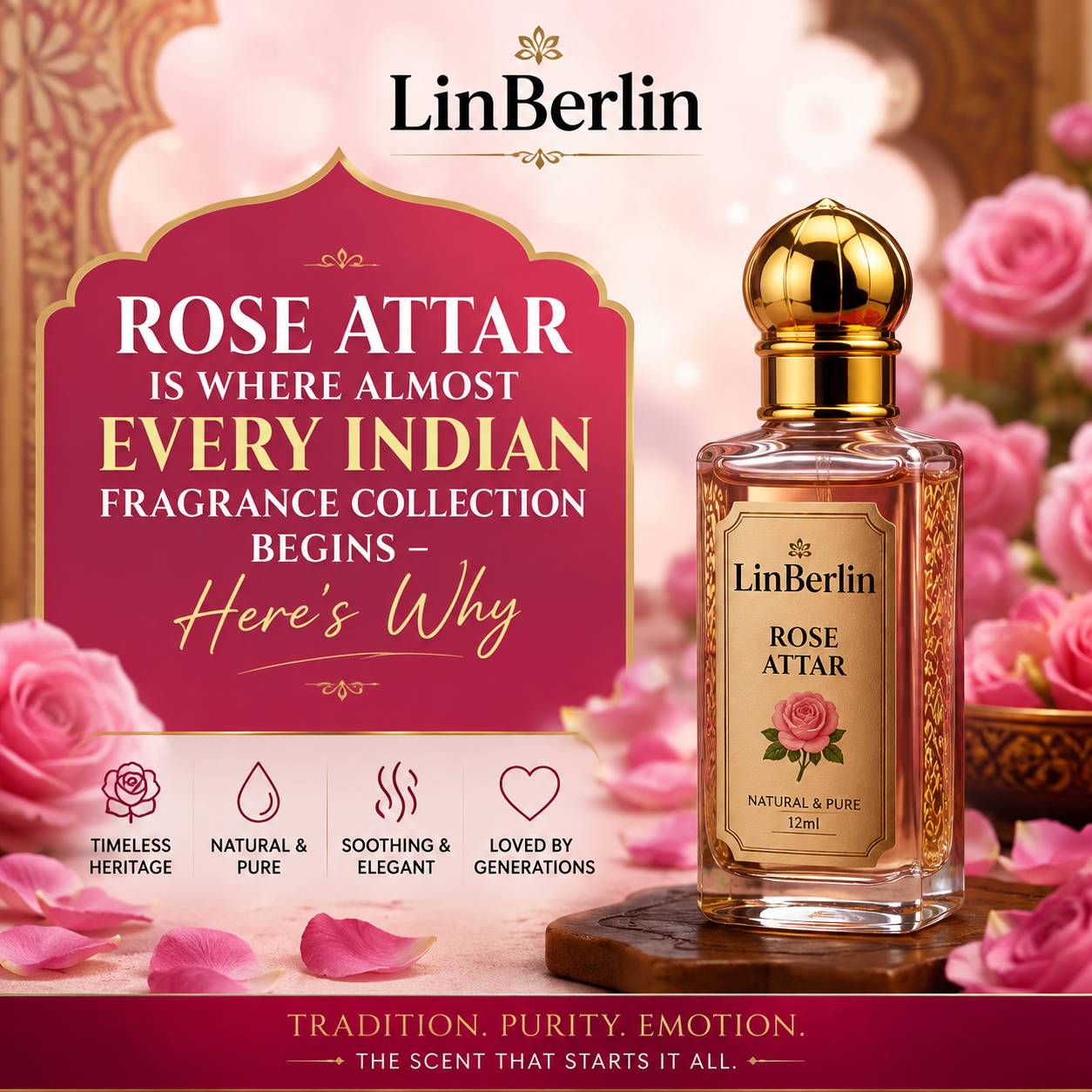
There's a particular moment in most Indian households where rose shows up before anyone asks for it — in a grandmother's cupboard, tucked behind old sarees, in a small glass bottle nobody remembers buying. Ask around and you'll find this pattern repeats itself across families that have nothing else in common. Rose gets there first. Long before someone becomes a fragrance enthusiast chasing rare ouds or niche musks, rose attar is usually the scent that quietly opens the door.
That's the angle worth sitting with, actually. Not "why is rose popular" — everyone already knows it's popular — but why it keeps being the entry point, decade after decade, across such different skin types, climates, and personal styles. So this guide isn't just about picking a bottle. It's about understanding how rose behaves on real skin, what changes it from one person to another, and how to buy it without wasting money on something that fades in an hour or clashes with your skincare routine.
Why Rose Is the First Attar Most Collections Reach For
Rose attar has a strange kind of versatility. It reads as feminine to some noses, unisex to others, and traditional to almost everyone — yet it never quite feels dated. Part of this comes from how rose oil is distilled: through slow, patient hydro-distillation methods that have barely changed in centuries. The rose attar tradition rooted in Kannauj is a big reason India's rose oil has the depth it does — thousands of rose petals reduced down over days, not hours, into something concentrated and honest.
But there's also a simpler reason rose works as a starting point: it doesn't demand much from the wearer. You don't need to understand fragrance families or top-middle-base notes to appreciate it. It just smells like something familiar, something you've probably encountered since childhood, whether from a temple, a wedding, or a jar of rose water on your mother's dressing table.
How Your Skin Actually Decides How Long Rose Lasts
Here's the thing most buying guides skip over — attar doesn't perform the same way on every skin. It reacts to what's already there. Dry skin, for instance, tends to burn through rose attar faster than people expect, because there's less natural oil on the surface to hold the fragrance molecules in place. You apply it, it smells beautiful for twenty minutes, and then it's — well, it's mostly gone by lunch.
Oily and combination skin behave differently. There's more surface lipid to bind with the attar's natural oil base, which means rose can sit for six, seven, sometimes eight hours without much reapplication. This isn't a hard rule, though. Diet, hydration, even the climate you're in that week can shift things slightly.
And this is where moisturized skin makes a real, measurable difference. Fragrance chemists have understood for a long time that scent molecules — rose otto's citronellol and geraniol among them — cling more effectively to skin that has a light barrier of moisture or oil on it. Bare, freshly washed, dry skin has almost nothing to hold onto. So the fragrance evaporates faster, sometimes within the hour.
A Quick Word on Application, Skin Prep, and Common Mistakes
Most people apply attar the way they'd apply a spray perfume — a dab on the wrist, maybe the neck, done. Realistically, that's leaving performance on the table. A few small adjustments change the outcome considerably:
- Apply attar to pulse points right after moisturizing, while skin still has a slight tack to it — not fully dry, not wet, just slightly receptive.
- Avoid rubbing wrists together after application; this breaks down the oil's molecular structure faster than it needs to, which is a habit almost everyone has and almost nobody thinks about.
- If you're layering with a fragrance-free body lotion first, wait two or three minutes before applying attar so the two don't compete or curdle on the skin's surface.
Skin that's freshly exfoliated or recently treated with strong actives — retinoids, glycolic acid, benzoyl peroxide — is more porous and more reactive than usual. Attar applied directly onto that kind of compromised barrier can sting, or in some cases cause a mild flush that has nothing to do with an allergy and everything to do with timing. Waiting a day, or applying attar to clothing instead of skin on those days, solves most of it.
Choosing Between Rose Alone and Rose in a Blend
Single-note rose attar is honest. There's nowhere to hide, no supporting cast — just rose, in its purest oil-based form, doing exactly what it does. For someone new to natural perfumery, this is often the smarter starting point, because it teaches your nose what real rose actually smells like before anything gets layered on top of it. The Attar of Roses, known as Gul Nishan, is built exactly around this idea — rose without distraction, sourced and distilled the traditional way.
But not everyone wants rose to stand entirely alone, and that's fair too. Blended attars where rose sits alongside something deeper — rose paired with white oud, for example — take the same floral base and give it more weight, more shadow. It's a different experience entirely; less garden, more evening gathering. Similarly, when rose is combined with a soft musk, the result leans quieter and more intimate — the kind of scent that reveals itself only when someone stands close, rather than announcing itself across a room. That particular pairing, where rose settles into musk, tends to suit people who want fragrance to feel personal rather than performative.
Then there's the warmer end — rose blended with vanilla, which softens the floral edge into something almost dessert-like without tipping into sweetness that feels artificial. This combination, where vanilla meets rose in the evening air, works particularly well once the weather cools and lighter florals start to feel thin on their own.
Rose Attar Across Indian Seasons
Rose doesn't behave identically in Delhi's humid August as it does in Bangalore's dry January. Heat and humidity accelerate how fast fragrance molecules move off the skin, which means rose attar can feel almost too intense in peak summer, then barely noticeable by evening. Cooler, drier months slow that evaporation down considerably, letting the same oil last twice as long with a single application. If you're building a small attar wardrobe rather than relying on one bottle year-round, it's worth reading through how fragrance shifts across Indian seasons before deciding whether rose alone will carry you through all twelve months, or whether it needs a heavier winter companion.
Skin Types and What Each One Should Watch For
Dry or mature skin usually gets the most out of rose attar when it's applied over a barrier — a plain, unscented moisturizer works fine — since bare dry skin flakes and doesn't hold scent evenly. Oily skin, meanwhile, often does better with lighter application and more frequent top-ups rather than one heavy dose, because excess sebum can shift how the top notes read within the first thirty minutes.
Sensitive or reactive skin is its own category, and this is where a little more caution is genuinely warranted. Natural rose oil is gentler than most synthetic fragrance compounds, but it's not neutral — some people do react to naturally occurring geraniol or citronellal, both present in authentic rose otto. A patch test on the inner forearm, left for twenty-four hours before applying anywhere near the neck or décolletage, isn't overkill. It's just sensible.
A Few Cautions Worth Taking Seriously
Pregnancy is one area where blanket reassurance from a brand would be dishonest. Some people prefer to avoid concentrated essential oils, rose included, during the first trimester, and while there's no strong evidence that topical rose attar in small amounts causes harm, it's a conversation worth having with a doctor rather than settling with a product description. Anyone on active acne treatments, or recovering from a chemical peel, should also hold off applying attar directly to facial or neck skin until the barrier has settled — a week is usually enough, though everyone heals differently.
Realistically, most people never run into any of this. The vast majority of skin, most of the time, handles pure rose attar without a single issue. But guides that pretend caution is never needed aren't being fully honest, and that's not the kind of thing worth glossing over just to sell a bottle faster.
What To Actually Check Before You Buy
A few practical markers separate a genuine rose attar from something diluted or synthetic. Color matters less than people assume — natural rose otto can range from pale gold to amber depending on the harvest, so a perfectly clear liquid is often more suspicious than a slightly tinted one. Scent should smell like rose, not like a rose-scented candle; there's a distinct difference between the two once you've smelled the real thing a few times. And price, while not the only signal, rarely lies completely — authentic hydro-distilled rose oil is labor-intensive to produce, and anything priced dramatically below market rate is worth questioning before buying.
So where does that leave a first-time buyer? Somewhere fairly simple, honestly. Start with a single-note rose to understand what real rose smells like on your own skin. Pay attention to how long it lasts, whether your skin runs dry or oily, and whether the season you're in is working with the fragrance or against it. Everything after that — blends, layering, seasonal rotation — becomes a lot easier once that first bottle has taught you something specific about your own skin, rather than about rose in general.