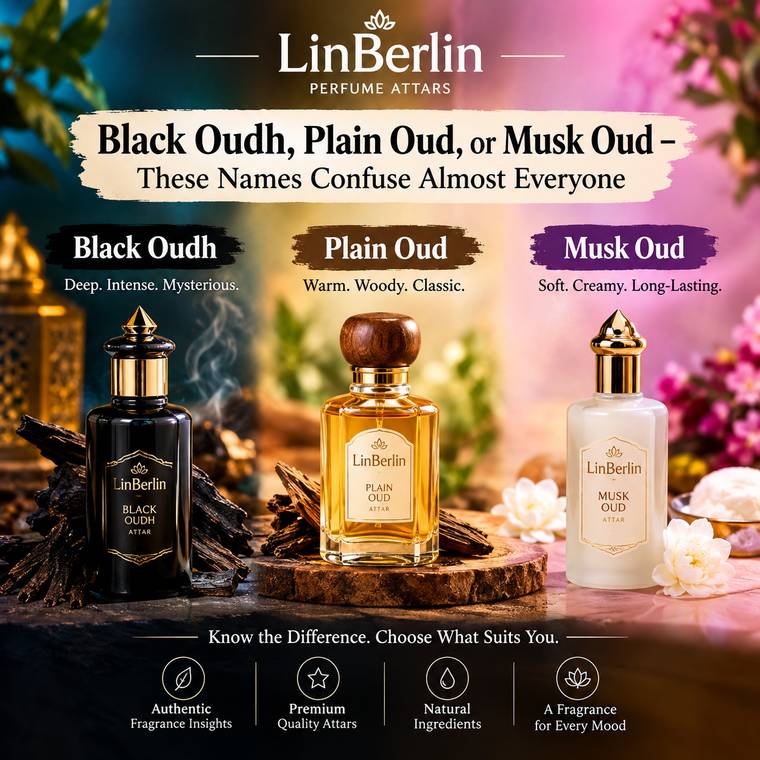
A customer once messaged us describing a scent as "black oud, but the musky one, not the plain kind" — and honestly, that sentence tells you everything about why this topic needed writing. Three words. Three completely different personalities. And almost nobody selling attar bothers to explain the difference before ringing up the sale.
So let's actually sort this out.
Where the Confusion Actually Starts
Oud is a category, not a single scent. That's the root of most of this mix-up. Real agarwood oil varies wildly depending on the tree species, the region it's harvested from, how long the resin was left to mature, and how it's distilled. Two bottles labelled simply "oud" from two different houses can smell nothing alike — one leathery and medicinal, another sweet and almost fruity underneath. Add descriptive names like "black," "plain," or "musk" on top of that natural variation, and you get a labelling system that's part tradition, part marketing, and part genuine scent description all tangled together.
Here's the thing — none of these terms are regulated. A brand can call something "black oudh" because the oil itself is dark and resinous, or because the overall composition reads dark and smoky on skin. Neither answer is wrong. But it does mean you're relying on the seller's honesty about what's actually inside the bottle, which is exactly why we try to be specific rather than poetic when we describe our own blends.
Black Oudh — Not a "Special" Oud, So Much As a Different Direction
Black oudh generally refers to a deeper, more resinous, smokier expression of agarwood — sometimes from oil that's genuinely darker in colour, sometimes from a blend built to lean into that dense, almost burnt-wood character. It's not a separate species of tree or some rare grade sitting above regular oud on a quality ladder. That's a myth worth putting to rest early, and if you want the fuller breakdown, we've written separately about whether "black oudh" and "black oud" are even describing different products, because that spelling confusion trips people up almost as often as the musk-versus-plain question does.
What black oudh actually smells like: think campfire smoke settling into old leather, a faint bitterness, sometimes a whisper of something animalic underneath. Our black oudh attar (Oud e Zulmat) was built around that exact mood — dense, a little brooding, not the kind of scent that fades quietly into the background. It works best on cooler skin and in cooler weather, honestly. On very warm, oily skin the smokiness can tip into something heavier than most people want for daytime wear.
Plain Oud — The Version With Nothing to Hide Behind
"Plain oud" is a term we'd retire if we could, but readers use it constantly, so let's define it the way most people mean it: an oud attar without added musk, amber, floral, or sweetening notes riding alongside the agarwood. Just the wood. This is, in a strange way, the harder product to get right — there's nowhere for a mediocre oil to hide when it's not softened by anything else.
A well-made oud attar in this style should still show some complexity as it dries down. Real agarwood oil moves — sharp and slightly medicinal up top, rounding into something warmer and woodier over the following hour. If a "plain oud" smells exactly the same at minute two as it does at hour two, that's usually a sign of a diluted or synthetic-heavy oil rather than the genuine article.
Musk Oud — Where the Sharp Edges Get Rounded Off
Musk oud takes that same agarwood base and folds in musk — traditionally a soft, skin-like, slightly powdery note that acts almost like a cushion under the wood's rougher edges. Realistically, this is the version most first-time attar buyers end up preferring, because it's more forgiving. The musk rounds off oud's sharper, sometimes medicinal opening and makes the whole thing feel warmer against skin rather than announced from across a room.
Our musk oud attar, which we call Oud e Mishk, was built specifically with that comfort in mind — it's the one we most often recommend to someone buying attar as a gift for a person who's never worn oil-based perfume before. Less intimidating. Still recognisably oud, just — gentler about it.
How These Three Actually Behave on Skin
This is where things get genuinely interesting, and where most buying guides stop too early. Attar doesn't just sit on top of skin the way an alcohol spray does. It's oil-based, which means it interacts with your skin's own chemistry — its natural oils, its temperature, its moisture level — far more than a spray perfume would.
Dry skin tends to "eat" fragrance faster. If you've ever noticed an attar that lasted eight hours on your friend but faded on you within three, dry or flaky skin is the usual culprit. Moisturised skin, on the other hand, holds onto oil-based scent much longer because there's a barrier of hydration for the fragrance molecules to sit within rather than sinking straight into the skin. This is why we always suggest applying attar to skin that's had a light, unscented moisturiser on it for a few minutes beforehand — not soaking wet, just not parched either.
Oily skin behaves differently again. It can actually project the smoky, resinous top notes of a black oudh more intensely at first — but the drydown, that softer musky base note, sometimes gets lost faster because oilier skin has a warmer surface that burns through the lighter volatile compounds quicker. So if you love the deep opening of a black oudh but keep missing its softer finish, that might be why.
A Small Warning Before You Layer Anything
One thing we see go wrong constantly: people layering attar directly over active skincare — retinoids, strong exfoliating acids, benzoyl peroxide — without waiting. Compromised or irritated skin barrier plus concentrated essential oils and aromatic compounds is a genuinely bad combination. It's not usually dangerous, but it can cause redness, stinging, or a patchy, uneven wear where the scent smells different on irritated patches versus calm skin. If you're using strong actives at night, we'd suggest applying attar to clothing or a pulse point that skipped the active that day, rather than directly over freshly treated skin.
And a genuine caveat, because we'd rather say this than have someone find out the hard way: anyone with a history of fragrance sensitivity, eczema, or who is pregnant should patch test any new attar — including ours — on a small area first, and ideally mention it to their dermatologist if they have one. Natural doesn't automatically mean risk-free. Essential oil components like those found in agarwood and certain musk compounds can trigger reactions in a small number of people, same as any concentrated botanical extract can.
Choosing Between the Three When You're Buying as a Gift
If the person already loves oud and wears it often, black oudh is the move — it reads as confident, a little unusual, memorable. If they're new to attar entirely, or you're not totally sure what they like, musk oud is the safer, warmer choice that almost nobody dislikes. Plain oud is really for the person who already knows exactly what they want and has strong opinions about agarwood quality — not typically a first gift, more of a "they mentioned this specifically" purchase.
There's also a middle path worth knowing about, which is blending the two directions rather than picking one. Black oudh and musk actually share more common ground than their names suggest, and some of our regular customers layer a black oudh with a lighter musk on top rather than buying a pre-blended musk oud, just to control the ratio themselves.
The Short Version, If You're Short on Time
Plain oud is the wood, unaccompanied. Black oudh is the wood turned darker and smokier, sometimes by nature, sometimes by design. Musk oud is the wood softened by musk into something rounder and easier to wear daily. None of these names are official industry standards — they're descriptive shorthand that varies slightly from one perfumer to the next, so when in doubt, ask the brand what's actually blended in rather than trusting the label alone. That's true of us, and it's true of everyone else selling attar. We'd rather you ask than guess.