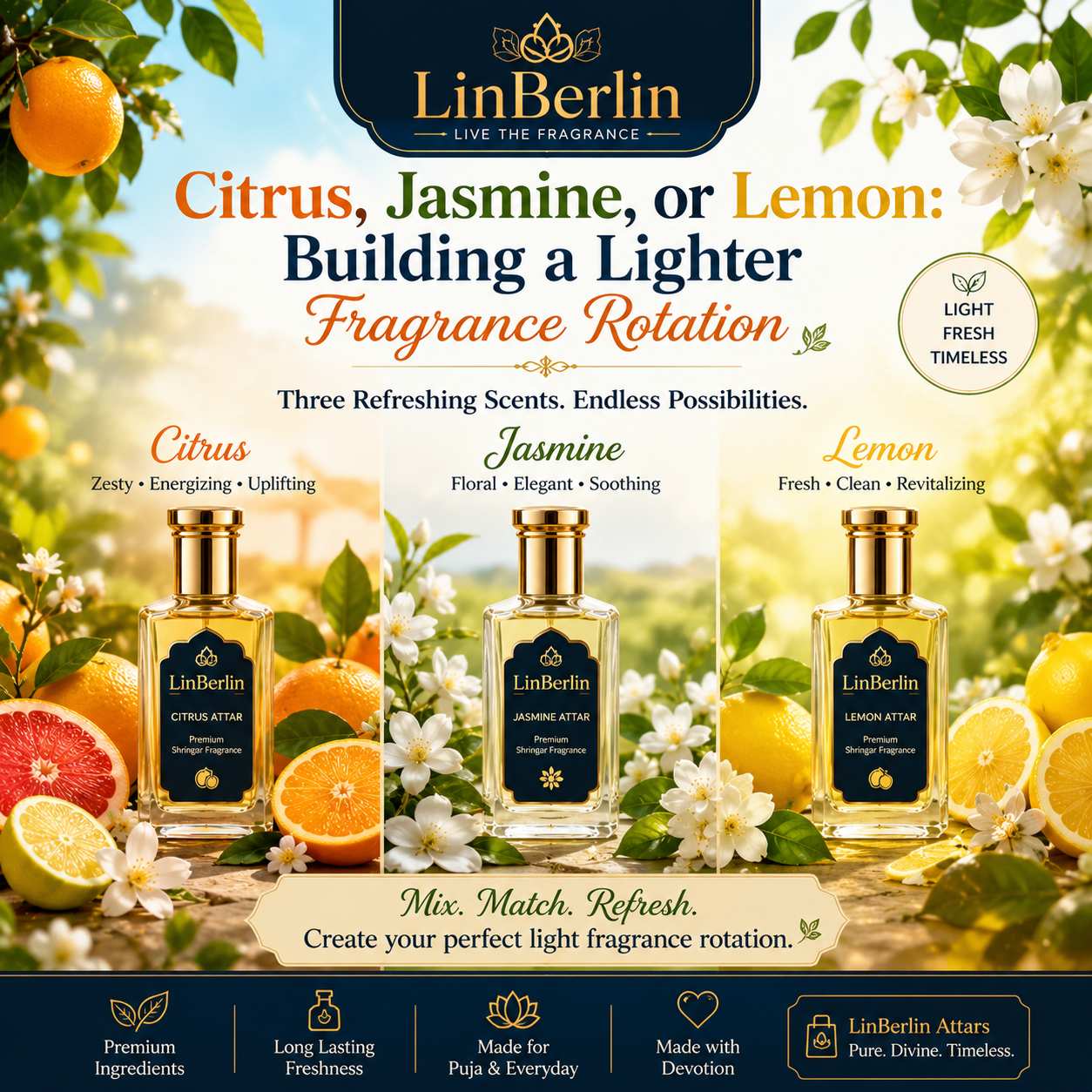
There's a particular kind of mistake people make with fragrance in warmer months, and it has nothing to do with the scent itself. It's about skin. A heavy oud that felt luxurious in December can turn sharp and almost sour by April, not because the attar changed, but because the skin wearing it did. Sweat, sebum, sun exposure — all of it rewrites how an oil behaves on your wrist by mid-morning. So before we even get to citrus, jasmine, or lemon, it helps to understand that a "lighter fragrance rotation" isn't really a style choice. It's a skin-science one.
Why Lighter Attars Read Differently on Skin
Attar oils don't sit on top of skin the way alcohol-based sprays do. They bind into the skin's natural oils, which means the condition of your skin directly shapes how the fragrance unfolds. Dry skin tends to grab a scent and hold it close, sometimes muting the top notes because there isn't enough natural oil on the surface to carry them outward. Oily skin does the opposite — it amplifies projection but can also speed up how quickly delicate notes fade, since excess sebum and heat accelerate evaporation. Combination skin, unsurprisingly, does a bit of both depending on the zone.
This matters more with lighter florals and citrus than with heavier bases like sandalwood or musk, because the molecules in citrus and jasmine are smaller and more volatile to begin with. They're built to be fleeting, almost by design — that's part of their charm, honestly. But it also means the skin's surface condition has an outsized effect on how long they last and how true they smell.
Citrus: Bright, Fast, and Honest About What It Is
Citrus attars are the most immediate of the three. There's no slow reveal, no waiting around for a base note to arrive twenty minutes later. What you smell in the first few seconds is close to what you get, and that's exactly why they work so well as a daytime layer. A well-made citrus attar, Itr e Fawakih leans into that fruit-forward brightness rather than fighting it, which is part of why it pairs so naturally with the kind of skincare routines people already have — lightweight serums, gel moisturisers, nothing too heavy underneath.
On dry skin, citrus can feel a little thin. It fades fast, sometimes within an hour, because there isn't much oil on the surface to slow it down. On well-moisturised skin, though, it holds noticeably longer — not forever, nobody's claiming that — but enough that you're not reapplying every ninety minutes.
Jasmine: The One People Underestimate
Jasmine gets filed under "floral" so often that people forget it's also, structurally, quite a light note — at least in its opening hour. It has warmth, yes, and a certain heady quality that deepens as it sits on skin. But the initial impression is soft, almost green, before the richer indolic character settles in. That's the part that surprises people who expect jasmine to smell like a candle from the first spritz.
The jasmine attar, Itr e Jashmin, works beautifully layered over freshly applied moisturiser, and here's where the skin science actually gets practical: jasmine's heavier aromatic compounds bind more effectively to skin that still has a bit of tackiness from a cream or oil. Apply it to bare, freshly cleansed skin with nothing underneath, and it can feel — well, it's more complicated than that, actually, because it still smells lovely, it just doesn't stay as long or develop the same depth.
Lemon: Underrated, and a Little Misunderstood
Lemon attar rarely gets its own moment. It's usually mentioned as a supporting note in a citrus blend, and that's a shame, because on its own it's cleaner and more precise than most people expect from an oil-based fragrance. There's none of the syrupy sweetness that alcohol-based lemon perfumes sometimes have. The lemon attar, Rooh e Shabnam, has a dewy, almost morning-air quality that makes sense once you know "shabnam" translates roughly to dew.
And it's genuinely one of the more forgiving attars for sensitive skin, though "forgiving" doesn't mean risk-free — more on that shortly.
Layering Attar With Skincare — Where People Actually Go Wrong
The most common mistake isn't the fragrance choice. It's the order of operations. People apply attar directly onto skin that's just been exfoliated, or right after a retinol application, and then wonder why their skin feels tight or looks faintly irritated an hour later. Fragrance oils, even natural ones, are concentrated aromatic compounds, and compromised or actively-treated skin barriers don't handle that well.
A few things I'd actually flag, based on what tends to go wrong:
- If you've used a chemical exfoliant (AHA, BHA) or retinoid within the last twelve hours, hold off on applying attar to that same area — the barrier is temporarily more permeable, and irritation shows up faster than people expect, sometimes as redness, sometimes just an odd tightness.
- Apply attar to pulse points after moisturiser has mostly absorbed, not while it's still wet — this isn't strict science so much as practical experience, but a slightly tacky base seems to hold scent longer without diluting or "sliding" the fragrance across skin.
- Never apply directly onto broken skin, active breakouts, or areas with eczema flare-ups, full stop.
Skin type changes the calculus too. Oily skin can generally handle a slightly more generous application since it fades faster anyway. Dry or mature skin does better with less product applied more thoughtfully — behind the ears, inner wrists, the base of the throat — because those areas retain a bit more natural moisture to anchor the scent.
Sensitive skin is its own conversation. Even natural attars contain aromatic compounds that can trigger reactions in some people, particularly those prone to fragrance allergies or contact dermatitis. Patch testing on the inner forearm, waiting twenty-four hours, checking for redness or itching before applying anywhere near the face or neck — that's not overcautious, that's just sensible. And if you're pregnant, it's worth mentioning that some people experience heightened scent sensitivity or nausea during certain trimesters, so introducing new fragrances slowly (or checking with a healthcare provider if you have specific concerns) is a reasonable approach rather than an overreaction.
Building an Actual Rotation, Not Just a Collection
The idea of a "lighter rotation" isn't about owning three bottles and switching randomly. It's about matching the attar to the skin's condition and the day's demands. Citrus for mornings when you want something that reads clean and doesn't compete with coffee or breakfast smells. Jasmine for afternoons or evenings when skin has had time to warm slightly and the deeper facets can actually show up. Lemon on days your skin feels a bit reactive or over-exfoliated, since it tends to sit lighter and clear faster.
This isn't a rigid formula, though — realistically, most people end up choosing by mood more than method, and that's fine. The science just explains why certain choices work better on certain days, not why you have to follow them like a rulebook.
Those exploring how citrus and floral notes interact rather than compete might find it useful to look at how the guide on floral-citrus pairing and skin science breaks it down, since it covers some of the layering logic in more depth than a single section here can. And for anyone building a morning ritual specifically, there's a piece on how jasmine softness and citrus brightness work together in the early hours that's worth a read.
A Small Caveat Worth Saying Out Loud
Natural attars, including the ones discussed here, don't behave identically bottle to bottle in the way a synthetic, standardised perfume might. Batch variation exists because the raw materials — actual jasmine flowers, actual citrus peels — vary slightly with harvest, climate, and extraction timing. Most of the time that variation is subtle enough not to matter. Occasionally, it's noticeable. That's not a flaw so much as a feature of working with real botanicals, but it's worth knowing going in, especially if you're someone who likes exact consistency.
If budget is part of the equation while you're building this rotation out, it's also worth glancing at options that don't require a big upfront commitment — there's a rundown of affordable attars that punch above their price if you'd rather test the waters before committing to a full rotation.
Where This Leaves You
A lighter fragrance rotation isn't a trend so much as a practical response to how skin actually behaves across a day, a season, a routine. Citrus for speed and clarity. Jasmine for depth once skin has warmed. Lemon for the days your skin needs something a little gentler. None of it requires memorising chemistry — just paying attention to what your own skin is doing before you reach for the bottle.