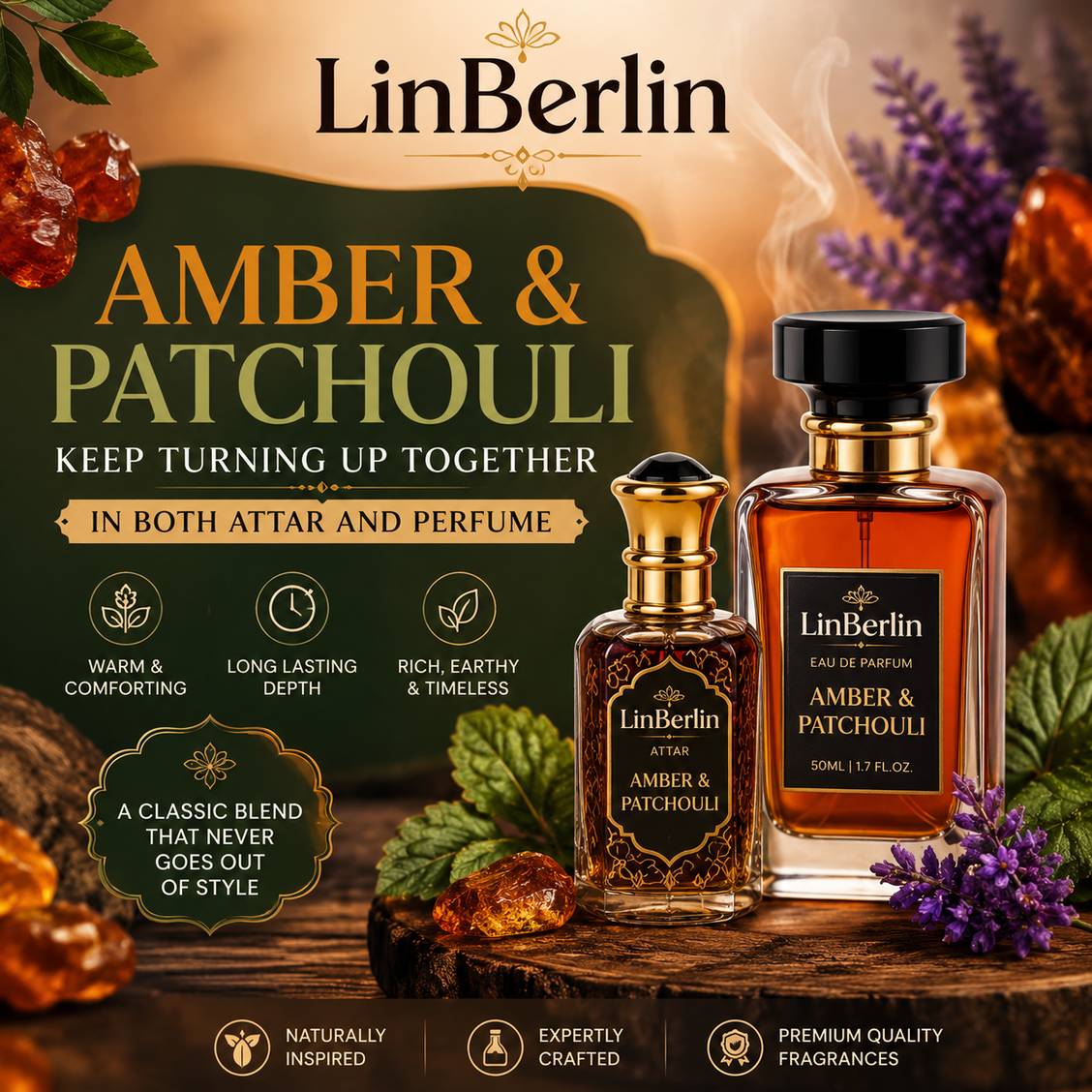
Somewhere around the third attar sample on my wrist, a pattern I'd noticed for years finally clicked into something worth writing down. Amber and patchouli kept showing up in the same blends, across different houses, different price points, different countries of origin — and nobody seemed to be talking about why. I've spent enough time on the skincare side of fragrance, watching how oils behave on different skin barriers, to know that coincidence rarely explains a pairing this consistent. There's chemistry here. And there's history. Both are worth understanding before you buy.
This isn't a note-by-note breakdown of what amber "is" or what patchouli "smells like." You've probably read that article already, somewhere else, and it likely opened with a definition. Instead, this is the buying guide I wish existed when I started building a small attar collection of my own — one that treats skin chemistry as seriously as scent profile, because realistically, the two can't be separated.
Why This Pairing Keeps Reappearing
Amber in attar and perfumery rarely refers to fossilized tree resin the way jewellery does. It's usually a resin-and-oil accord built to read warm, slightly sweet, faintly animalic depending on the formulation. Patchouli, on the other hand, is unmistakably itself — earthy, a little damp, with that cocoa-adjacent depth that either people love immediately or need a few wears to appreciate. Put them together and something interesting happens: patchouli's earthiness grounds amber's sweetness, stopping it from tipping into candy territory, while amber rounds off patchouli's rawer, more medicinal edges.
It's a partnership of correction, really. Each note softens what the other overdoes on its own.
There's also a practical, skin-level reason perfumers keep reaching for this combination. Both amber and patchouli are heavier, lower-volatility materials — meaning they evaporate slowly and tend to bond well with skin oils rather than sitting purely on the surface. That's part of why blends built around them tend to develop rather than simply fade. On my own skin, which runs slightly dry, I've noticed the patchouli-amber blends I own actually improve two or three hours in, once the initial sharper facets calm down and the base settles into something warmer and closer to the skin.
How Skin Type Changes What You'll Actually Experience
Here's the thing most fragrance content skips entirely: the same attar can smell like two different fragrances depending on who's wearing it, and that's not a flaw in the product.
Oily skin tends to hold onto heavier resinous notes longer and can sometimes amplify the sweetness in amber blends — which is great news if you love that richness, less great if you're worried about projecting too strong in a small room. Dry skin, by contrast, often lets top notes evaporate faster and can make patchouli's earthier facets more prominent early on, before the amber base has a chance to warm through. Combination skin sits somewhere in between, though people with an oilier T-zone often notice attars lasting noticeably longer near the pulse points on the neck and wrists compared to drier areas like the forearms.
None of this means one skin type is "better" for wearing amber-patchouli blends. But it does mean two people can wear the exact same attar and describe genuinely different experiences — and that's worth knowing before you assume a bottle isn't working for you.
Layering With Skincare Without Sabotaging the Scent (or Your Skin)
This is where I've seen the most avoidable mistakes, both in my own routine early on and in conversations with other enthusiasts.
Moisturised skin holds fragrance longer. That's not marketing language, it's basic chemistry — an occlusive or emollient layer slows the evaporation rate of oils applied on top, which is why attar applied after a light, unscented moisturiser tends to last visibly longer than attar applied to bare, freshly cleansed skin. The mistake people make is layering fragrance oil directly over heavily active skincare — think fresh retinol application, strong acids, or anything still absorbing when the attar goes on. That combination can genuinely irritate compromised skin, and it can also distort how the fragrance reads, since active ingredients can interact with certain aromatic compounds in unpredictable ways.
My honest recommendation, based on what's worked consistently: apply attar to pulse points after your skincare routine has fully absorbed, not during it. Give it ten to fifteen minutes if you can. Wrists, inner elbows, and the base of the neck work better than heavily product-layered areas like the face for exactly this reason.
If you're someone who reacts to synthetic fragrance in skincare or cosmetics generally, patchouli and amber-based attars are — for what it's worth — often better tolerated than alcohol-based sprays, since there's no ethanol to strip the skin's surface or heighten sensitivity. That said, essential oil components in patchouli can still trigger reactions in people with existing fragrance allergies, so a patch test on the inner arm, worn for 24 hours before committing to a pulse-point application, isn't overcautious. It's just sensible.
A Note on Pregnancy and Heightened Sensitivity
Pregnancy changes how people experience scent, sometimes dramatically, and it can also change how skin reacts to oils it previously tolerated without issue. If you're pregnant, breastfeeding, or dealing with a compromised skin barrier from eczema, recent sunburn, or dermatological treatment, it's worth checking with a doctor before introducing any concentrated fragrance oil — natural or otherwise — onto skin. This isn't a caveat I'm adding for the sake of covering myself. Patchouli in particular is a strong, concentrated essential oil, and strong doesn't always mean safe for every situation.
For readers wanting to understand where amber sits within LinBerlin's broader range before making a purchase decision, amber's role across several of our signature blends is worth a closer look — it explains why this note behaves so differently depending on what it's paired with.
Choosing Between Amber-Patchouli, Amber-Oud, and Amber-Musk
If you're new to attar and trying to figure out which amber pairing suits you, it helps to think less about "best" and more about occasion and personality.
Amber-oud blends tend to run deeper and smokier, better suited to cooler weather and evening wear — the way amber settles into oud creates something quieter and more contemplative than the patchouli version. Amber-musk, meanwhile, softens things considerably; amber folded into musk reads closer to skin, more intimate, less announced. Amber-patchouli sits in its own lane — earthier, slightly bolder, and honestly the one I reach for most often when the weather's in that in-between stage, not quite warm, not quite cold.
Our own interpretation of this pairing, The Ambline, our amber patchouli attar, was built specifically around that balance — resisting the temptation to let either note dominate, which took more than a few reformulations to get right.
What To Check Before You Buy
A few things worth confirming before committing to a full bottle, especially if you're ordering an attar you haven't smelled in person.
Ask whether the amber accord is naturally derived or synthetic-heavy — both exist under the "amber" label, and they behave differently on skin over an eight-hour wear. Check the patchouli source if it's listed; aged patchouli oil (rested for a year or more before use) tends to smell mellower and less sharp than fresh-distilled oil. And if you have known sensitivities, request a sample size first rather than going straight to full bottle, no matter how confident the reviews sound. Or, at minimum, patch test before applying anywhere near clothing that's hard to air out.
A Quick Word on Honesty
Not every amber-patchouli attar on the market is well balanced. Some lean so heavily into sweetness that the patchouli barely registers, which somewhat defeats the point of the pairing. Others go the opposite direction and smell almost medicinal in the first twenty minutes, before settling down. This is a blend that rewards patience and, frankly, a willingness to let it develop on your specific skin for a few hours before forming an opinion — a single ten-second sniff off a paper strip won't tell you much.
For readers exploring adjacent territory, LinBerlin's guides on oud attar and how it interacts with skin over a full wear and on how jasmine and sandalwood settle into Indian mornings cover pairings with a genuinely different emotional register, worth a read if amber-patchouli turns out to be a touch too grounded for your taste.
The Takeaway
Amber and patchouli keep turning up together because the pairing solves a real formulation problem — sweetness needs grounding, earthiness needs warmth — and because both notes happen to behave well on skin over long wear. Choosing the right version comes down to your skin type, your skincare routine, and a bit of patience while the blend settles in. Start with a sample, apply it after your skincare has absorbed, and give it time before deciding whether it's yours.