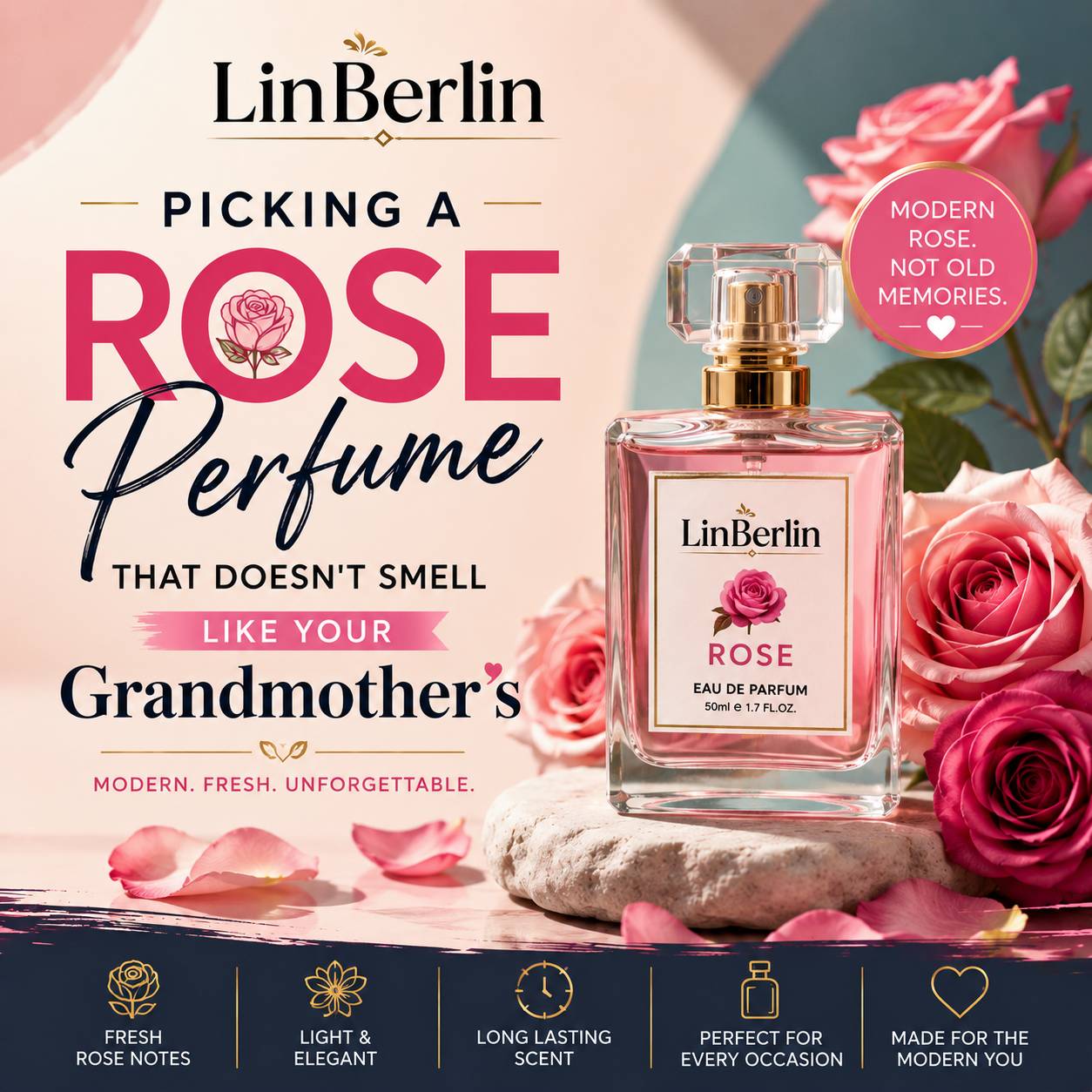
There's a specific moment at almost every Indian wedding — usually somewhere between the buffet and the second round of photographs — when someone's dupatta brushes past you and you catch it. That rose. Heavy, powdery, a little sweet in a way that sits in your throat. It's not unpleasant, exactly. It's just old. And somewhere along the way, a lot of us decided that this particular version of rose was the only version there was, which is a shame, because it's a bit like deciding you don't like tomatoes after only ever eating canned ones.
Rose has an image problem. Not a quality problem — the flower itself is one of the most complex, most studied materials in perfumery, prized by everyone from old-school French houses to attar makers in Kannauj. The problem is association. Most of us grew up around one specific interpretation of rose: soapy, aldehydic, worn by aunties who reapplied it after every temple visit. So the moment "rose perfume" comes up, that's the memory that surfaces. Not fair to the flower. But understandable.
Why rose smells "old" in the first place
The dated quality people associate with rose scents usually isn't the rose's fault at all. It's the company it's kept. Classic rose perfumes from the mid-20th century leaned hard on aldehydes — those sparkly, slightly metallic top notes that gave everything a "fresh laundry" quality — paired with heavy powder bases like iris root or violet leaf. That combination is what reads as grandmother, not rose itself. Strip the aldehydes and the powder away, pair rose with something green, or resinous, or even a little dirty, and the whole character shifts.
Here's the thing worth knowing before you go shopping: rose as a raw material actually smells different depending on where it's grown, when it's harvested, and how it's extracted. Bulgarian rose (rosa damascena) tends toward a deep, wine-like richness. Turkish rose is similar but slightly drier. Indian rose, grown around Kannauj and processed the traditional way, often carries a more honeyed, almost fruity warmth. None of these smell like your grandmother's dresser drawer. That's a formulation choice, not a flower problem.
What "modern" rose actually means when you're shopping
A lot of brands throw around "modern rose" as a marketing phrase without explaining what it actually changes. Practically, it usually means one or more of these things:
- Less powder, more green — think stems and leaves rather than talcum, which keeps the scent feeling alive instead of settled and dusty
- A cleaner base — instead of heavy musk or aldehydes, pairing rose with something like white musk, soft woods, or a touch of citrus so it doesn't sit on the skin like a blanket
- Restraint on sweetness, since old-school rose attars sometimes lean into a jammy, almost candied quality that reads mature fast — a lighter hand here makes an enormous difference in how contemporary the scent feels
Or, alternatively, some of the best modern interpretations do something a bit unexpected — they lean into rose's less obvious facets. Rose has a natural spice to it, a faint pepperiness that gets lost when perfumers stack sweetness on top. Bring that forward, and rose stops smelling like a bouquet and starts smelling like, well, an actual person wearing it.
Attar or alcohol-based perfume — does it matter for the "old lady" question?
Genuinely, yes, though maybe not in the direction people assume. Attar — being oil-based and often layered with sandalwood or other bases — has a reputation for being the heavier, more traditional format. And it can be. But it can also be the opposite, because oil bases tend to hold onto a rose's actual character instead of letting the alcohol carry it away in the first twenty minutes, which is what happens with a lot of spray perfumes. If you're curious about the actual mechanics of how format changes a rose scent's behaviour on skin, it's worth reading through this comparison of rose attar versus rose perfume before deciding which one suits your daily wear.
Realistically, the format matters less than the composition sitting inside it. A badly balanced attar can smell just as dated as a badly balanced eau de parfum. So don't let "attar equals traditional" or "perfume equals modern" become a shortcut — it isn't a reliable one.
How your skin changes what you smell
This part gets skipped in most buying guides, and it shouldn't, because it's often the actual reason a rose scent smells "off" on someone. Skin isn't a neutral surface. It has its own pH, its own oil levels, its own bacteria doing quiet work all day, and rose — being a delicate, mid-weight floral — reacts to all of it more visibly than something blunt like a strong oud or a synthetic musk. Dry skin tends to burn through top notes fast. If your skin runs dry, a rose fragrance can smell thinner and sharper within an hour, sometimes losing the roundness that made it appealing on the sample strip. Oily skin does the opposite — it holds fragrance longer and can actually deepen a rose's sweetness, occasionally tipping it toward that heavier, more "classic" territory you were trying to avoid in the first place. Combination skin, unhelpfully, does a bit of both depending on the day, humidity, and honestly what you ate for lunch (this is not a joke — diet genuinely affects how skin oils behave).
Moisturised skin, though, is the real variable most people underestimate. A well-hydrated base holds fragrance oils longer and lets them develop more evenly, because the scent has something to sit in rather than evaporating straight off dry, flaky skin. This is why a rose attar applied right after a shower on slightly damp, moisturised skin behaves so differently from the same attar dabbed onto bare, dry wrists later in the day.
Layering rose with skincare — where people go wrong
Fragrance doesn't exist in isolation on your skin. It sits on top of, and reacts with, whatever skincare you've already applied, and this is where a lot of well-intentioned people accidentally sabotage a good rose scent. A few patterns worth knowing:
Vitamin C serums and other acid-based actives can shift how a fragrance reads within the first hour, sometimes making floral top notes smell sharper or slightly sour as the actives oxidise on skin. Retinol-heavy routines tend to leave skin more reactive generally, so a rose fragrance applied on top — especially one with any citrus or aldehyde content — can cause mild stinging or redness that has nothing to do with the perfume being "bad quality" and everything to do with compromised skin barrier. And heavily fragranced body lotions layered underneath an already-fragranced rose attar is a classic mistake — not dangerous, just muddying, because you end up smelling two competing scent stories instead of one coherent one.
The safer approach: let skincare actives settle for a few minutes, apply fragrance on slightly moisturised but not wet skin, and if you're layering intentionally — say, an unscented body oil under an attar — do it in that order, oil first, fragrance last.
A caution worth flagging honestly
Rose oil, even in small concentrations, can be irritating for people with genuinely sensitive skin, eczema-prone patches, or fragrance allergies — and this applies to natural attars just as much as synthetic sprays, sometimes more, because natural rose oil contains a higher concentration of certain aromatic compounds like citronellol and geraniol, both known mild sensitisers. If you've never worn a rose fragrance before, patch test on your inner arm and wait 24 hours before applying anywhere near your neck or décolletage. Pregnant readers should also check with a doctor before regular use of concentrated florals, since some sources suggest caution around certain essential oil concentrations during pregnancy — this isn't something I can advise on with authority, so treat it as a prompt to ask a professional, not a final answer.
Pairing rose with something unexpected
If you want rose to feel less like a solo act and more like a considered composition, look at what it's blended with. Rose and jasmine together create something noticeably different from either flower alone — richer, slightly indolic, less "pretty" and more layered — and if that combination interests you, this piece on how rose and jasmine work together covers the pairing in more depth than I can here. Vanilla is another route worth considering, particularly for evening wear, softening rose's sharper edges into something warmer — there's a good breakdown of that combination in this exploration of vanilla and rose worn together. And if you're the type who likes to step further outside expected pairings entirely, it's genuinely worth reading about kewra attar, a lesser-known Indian scent that some perfumers use to add a green, almost intoxicating lift to rose-based blends.
For readers who want proof that rose can be reworked without losing what makes it rose in the first place, Bluma, our rose perfume, was built around exactly this brief — restrained sweetness, a green opening instead of a powdery one, and a base that fades honestly rather than clinging on past its welcome. It's not trying to reinvent rose. It's trying to let the flower's actual character come through instead of burying it under everything perfumery decided rose "should" smell like decades ago.
A quick word on the other end of the spectrum
Not every rose blend needs to fight its traditional image. Some readers genuinely like the classic, powdery, unmistakably rose-forward style, and there's nothing wrong with that — it's a preference, not a mistake. But if you've been avoiding rose entirely because one bad memory colours the whole category, that's the gap worth closing. There's also a separate world of fragrance entirely — chocolate attar that doesn't smell like dessert is one example — for days when you want nothing floral at all.
What to actually do before you buy
Sample it, wear it for a full day, don't judge it in the first ten minutes off a strip. Test it after a shower on hydrated skin and again on a dry, busy day, because those two versions of your skin will give you two different scents. And if you're between an attar and a spray format, think about how long you actually want the fragrance to last rather than which sounds more "traditional" or more "modern" — that's a more useful question than either label.
Rose doesn't need saving. It never smelled like your grandmother — it's just been formulated that way, over and over, until we forgot there was another option.