Somewhere in a drawer, there is a bottle of oud that nobody wears. It was a generous gift. It cost real money. And it sits there because the person who chose it picked a style the recipient found overwhelming on the first spray, and politeness did the rest.
That drawer is the reason this guide exists. Oud is not one smell. It is a family of moods, and the difference between the royal, white, and combo approaches decides whether a bottle gets worn every week or never at all.
Why oud confuses so many first-time buyers
Ask ten people what oud smells like and you will get ten answers: smoky, sweet, medicinal, woody, leathery, even barnyard. They are all partly right. Oud comes from agarwood, the resin-soaked heartwood that forms when the tree responds to injury or infection, and its character shifts with the wood's origin, its age, and how the oil was distilled and blended.
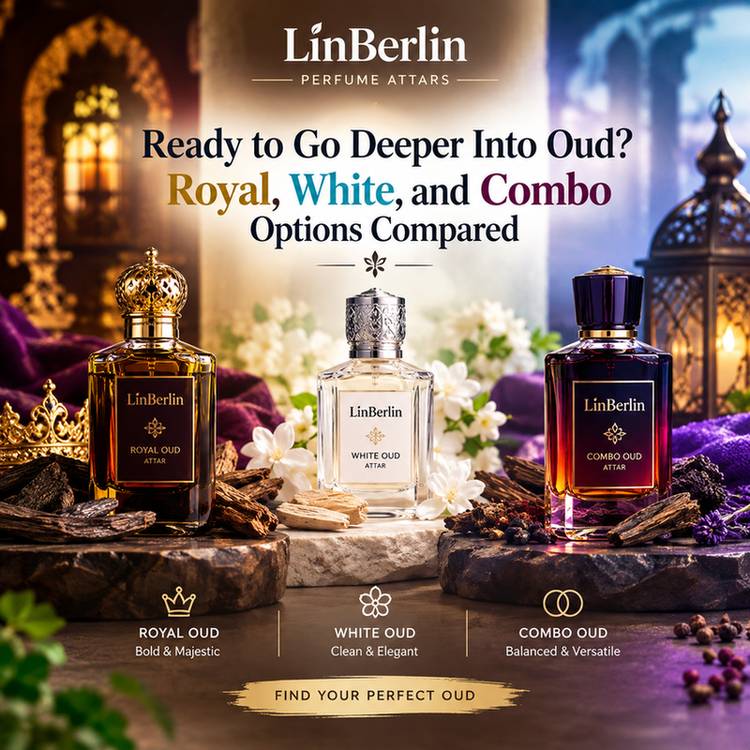
So the label matters less than the direction. "Royal" tends to signal a warm, golden, amber-leaning richness. "White" signals something lighter, cleaner, more air than smoke. A combo is a different proposition altogether — it is a way of not having to choose (and, realistically, a way of learning your own taste without gambling on one big bottle).
Royal oud: the one with presence
Royal oud is for the person who wants the room to notice, gently, a minute after they walk in. Our Golden Royal luxury oud attar sits in this camp: rich, warm, and unhurried, with the kind of depth that builds on skin over the first hour rather than announcing itself in the first ten seconds.
It suits evenings, cooler weather, formal occasions, and people who already like resinous or woody scents. It is not a shy fragrance. That is the point.
Here is the skin part nobody mentions. Heavier oils sit differently on different skin. On dry skin, a rich attar tends to fade faster because there is little for the oil to cling to; on oilier skin, it can bloom and turn sweeter and louder than you expected. Neither is wrong, but both are worth knowing before you apply three dabs and head into a small meeting.
If you are curious about how the golden style behaves next to something darker, the piece on how shadowed black oud and royal oud blend into warmth shows what layering can do.
White oud: the easier first step
White oud is the answer to the drawer problem. Softer, brighter, and far less dense, it lets someone meet oud without the full weight of it. The Saphir, our white oud perfume, is built for exactly that kind of wearer: someone who likes clarity and calm, and who would rather be remembered than announced.
It works in warm weather, in offices, at daytime events, and on people who have never worn an oil-based fragrance before. Sensitive noses tend to tolerate it better too. If that describes you or the person you are buying for, this gentle introduction to white oud explains the appeal in more detail.
One honest caveat: lighter does not mean weaker in every sense, but it can mean shorter-lived on very dry skin. If you want it to last, moisturise first. Which brings us to the next section.
Skin, skincare, and how attar actually behaves
Attar is oil-based, so it interacts with skin in a way alcohol sprays do not. Moisturised skin holds scent noticeably longer — a thin layer of fragrance-free lotion or a little unscented balm on pulse points gives the oil something to grip. Bare, dry skin absorbs and lets go quickly.
Different skin, different results:
- Dry skin: moisturise first, apply sparingly, expect to reapply once during a long day.
- Oily skin: usually the longest wear, but go lighter than you think. One dab is often enough because the scent amplifies.
- Combination skin: apply where skin is a little drier, like the inner wrists or behind the elbows, so the fragrance stays balanced.
- Sensitive or reactive skin: patch test on the inner forearm and wait a full day before wearing it properly. Or, if you are prone to fragrance reactions, apply to clothing at the collar or hem instead of skin (and keep it off any area that is already irritated).
A few cautions, plainly stated. Do not apply attar on broken, freshly exfoliated, or sunburnt skin. If you use retinoids, strong acids like glycolic or salicylic, or prescription topicals, your skin barrier may be more reactive, and fragrance can sting or trigger redness. And if you are pregnant, or have known allergies to fragrance ingredients, ask your doctor before wearing any concentrated perfume oil regularly. Natural does not automatically mean non-irritating; plenty of botanical materials are common sensitisers.
People who layer things incorrectly usually notice the same three things: a scent that turns sharp within an hour, a faint itch that appears and disappears, or oil that seems to sit on top of skin instead of settling in. Usually, the fix is simply less product and a cleaner base.
The combo: for the undecided and the gift-giver
Here is the thing about buying oud for someone else: you are guessing at a nose you cannot smell through. That is where our oud attars combo earns its place. Three attars means three moods, and the wearer discovers which one feels like theirs. Check the listing for the exact trio included, since the mix is what makes a set suit one person over another.
It is also the sensible way to learn your own preferences if you are buying for yourself. Wear one per week. Notice which one you reach for without thinking. That answer is worth more than any description.
Choosing by person and occasion
If you would rather work from a quick decision path, this is roughly how I would think about it:
- Buying for someone who loves bold, warm, evening scents, or for a formal event: royal oud.
- Buying for a first-time oud wearer, someone who works in close quarters, or anyone who prefers clean and quiet: white oud.
- Buying for someone whose taste you cannot read, or for a milestone where you want the gift to feel generous and personal: the combo, because it hands the choice back to them.
Weddings are a special case. Fragrance gets remembered at these events far longer than the flowers do, and the guides on wedding attars that stay quietly royal are worth a look if that is the occasion you are shopping for.
Still weighing two of the styles head to head? This practical royal versus white oud comparison lays out the differences side by side.
Mistakes worth avoiding
Rubbing the wrists together after applying. It feels natural, but it bruises the top notes and shortens the whole arc. Dab and leave it.
Applying too much of a rich oud on the first wear, and deciding you dislike it. Give it an hour before judging; oud is a slow fragrance, and the opening is rarely the real story.
Storing bottles in a warm bathroom or a sunny window — heat and light dull oil-based perfumes over time. A cool, dark drawer is fine (ideally not the forgotten one).
Where to go from here
Pick by mood, not by name. Royal for warmth and presence, white for softness and ease, the combo when you would rather discover than guess. Moisturise the skin first, patch test if your skin is reactive, and start with a single dab.
If you are still unsure, start with the combo. It is the one choice that is very hard to get wrong.