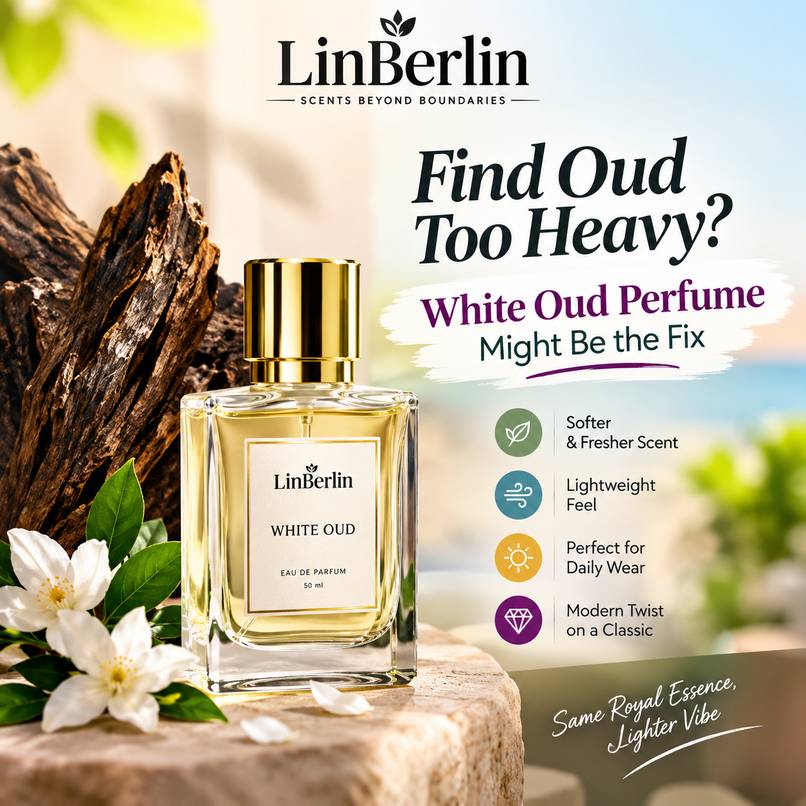
Most complaints about oud being "too heavy" aren't really complaints about oud. They're complaints about skin — dry skin, over-exfoliated skin, skin carrying six other products that are all quietly fighting the fragrance for space. I've watched people blame a bottle for smelling like a headache when the actual problem was a retinol night cream applied twenty minutes earlier. So before anyone swears off oud entirely, it's worth asking what their skin was doing right before they sprayed.
That question matters more with oud than with almost any other fragrance family. Traditional dark oud is dense, resinous, animalic in places — built from aged agarwood that's been fermenting for years before it ever reaches a bottle. On the right skin, in the right season, it's extraordinary. On the wrong skin, it can sit like a weight on the chest of a room. White oud exists partly to solve that problem, and understanding why requires a bit of skin science, not just fragrance trivia.
It's Rarely the Oud — It's the Skin Underneath
Skin isn't a neutral surface. It's alive, it's oily or dry in patches, and it reacts to fragrance differently depending on hydration, pH, and whatever skincare routine came before it. Dry skin, in particular, tends to amplify the sharper, more medicinal notes in traditional oud because there isn't enough natural oil on the surface to soften how the molecules evaporate. The result is something that smells louder and rougher than the perfumer intended.
And here's the thing most people don't realize until someone tells them: moisturized skin holds scent longer and rounds it out better. A thin layer of unscented lotion or a light body oil acts almost like a cushion — fragrance molecules bind to it and release more slowly, which means less of that initial blast that reads as "heavy." This is basic perfumery knowledge, but it rarely gets mentioned when people talk about oud specifically, probably because oud has such a strong reputation for being intense regardless of what's underneath it.
What Makes White Oud Actually Different
The difference isn't cosmetic. White oud is typically built around lighter, more refined agarwood distillates, often paired with clean musks, soft woods, or a touch of something creamy — sandalwood, sometimes a whisper of vanilla. It skips the deep barnyard-and-leather territory that dark oud leans into. For someone who's tried oud once, recoiled, and decided the whole category isn't for them, this is often the missing piece. If you want the fuller picture of how this style developed and why it's gained ground among people who found classic oud overwhelming, this gentler introduction to oud fragrance covers the ground well.
Realistically, "white oud" isn't a strictly regulated term — different houses interpret it differently, and that's worth knowing before you buy based on the name alone. Some versions are almost entirely synthetic recreations chasing the idea of lightness rather than the substance of it. Others, like the ones built from real distilled agarwood with careful blending, actually earn the description. That distinction matters more than most marketing copy admits.
Skin Type Changes Everything About How Oud Wears
Oily skin holds fragrance beautifully — the natural sebum acts like a fixative, so scent lasts longer but can also intensify faster, sometimes surprising people who aren't used to that kind of longevity. Dry skin does the opposite: attar fades quicker and can smell thinner, sharper, occasionally almost dusty by the second hour. Combination skin behaves unevenly depending on where you apply, which is honestly annoying but true.
Normal, well-hydrated skin is the easiest case. Fragrance blooms predictably, settles into a natural rhythm through its notes, and doesn't require much intervention. But most people aren't walking around with textbook-normal skin every day of the year — weather, air conditioning, and whatever cleanser someone switched to last month all shift things slightly.
- Dry or flaky skin: apply attar over a thin layer of unscented moisturizer, never onto bare, tight-feeling skin, since the oil will sit unevenly and cling to rough patches in a way that reads as harsh rather than rich.
- Oily or acne-prone skin: use less than you think you need, and give it fifteen minutes before deciding whether it's too strong, because oud develops.
- Sensitive or reactive skin: patch test on the inner forearm first, and skip application anywhere near active breakouts or irritated patches, full stop.
Layering Attar With Skincare Without Fighting Your Own Face
Fragrance layering goes wrong more often from skincare conflicts than from fragrance choices. Exfoliating acids — glycolic, salicylic, anything with "acid" in the name — thin the outermost layer of skin and make it noticeably more reactive to fragrance oils, sometimes causing a stinging sensation that has nothing to do with the attar being poorly made. So the general rule I give people is simple: fragrance goes on after skincare has fully absorbed, ideally a good ten to fifteen minutes later, not on top of wet serum. Retinol is its own case. Skin using retinol regularly tends to be more barrier-compromised than people realize, even without visible flaking, and applying strong attars directly onto that skin can trigger redness that gets wrongly blamed on the fragrance. If you're on a retinol routine, apply oud to clothing or hair instead of skin for a while, or move it to a spot further from your face and more heavily moisturized skincare zones.
White oud tends to be more forgiving here than dark oud simply because it's less concentrated in the harsher aromatic compounds. But it's still an oil-based product sitting on skin, and the same layering caution applies. Pairing it with something like a rose accord softens the profile further — there's a reason the way rose and white oud drift together has become such a popular combination among people specifically trying to avoid anything sharp.
Where to Apply, and Where Not To
Pulse points — wrists, inner elbows, base of the throat — are the standard advice, and they work because those spots run slightly warmer, which helps the oil diffuse. But warmth also means faster fading on some skin types, so a lot of enthusiasts apply a small amount to hair or a scarf as well, since fabric and hair hold attar longer than skin does. Avoid applying directly onto broken skin, fresh shaving nicks, or anywhere with active dermatitis. That sounds obvious written out, but it's a more common mistake than you'd expect, especially with wrist application right after shaving.
When Caution Actually Matters
A few situations genuinely call for more care, not just general disclaimers:
Pregnancy changes how sensitive people are to strong scent, sometimes dramatically, and it's reasonable to switch to lighter application or skip fragrance on days when nausea is already a factor. Eczema and psoriasis-prone skin can react to almost any oil-based product during a flare, attar included, so it's worth testing on unaffected skin first and avoiding active flare areas entirely. And anyone with a known sensitivity to sandalwood or musk compounds — not rare, as far as fragrance allergies go — should read ingredient notes carefully before committing to a full bottle rather than a sample.
Choosing a White Oud That Won't Overwhelm You
Not every white oud on the market is actually light. Some brands use the term loosely, layering in enough synthetic oud accord to make something that's technically pale in color but still sharp in character. What you want, if the goal is genuinely softer wear, is a formulation built around real refinement — distilled, blended with intention, not just diluted. That's the gap our white oud perfume was made to close. It leans into creamy woods and a soft musk base rather than trying to mimic dark oud at a lower volume, which is a different design goal entirely and, in my experience, the one that actually solves the "oud is too much" problem rather than just quieting it slightly.
If warmth is what you're missing from dark oud — the part that made it feel rich rather than just intense — an amber pairing brings that back without the weight. It's a combination worth exploring specifically because amber and white oud together manage to feel indulgent without tipping into the density that started this whole search in the first place. For anyone deciding between the two, The Saphir stays closer to the clean, musky end of the spectrum, which tends to suit sensitive or drier skin better than heavier amber-forward blends.
A Few Honest Limitations
White oud won't perform identically to dark oud in longevity — it's a lighter build, and lighter builds fade faster on most skin, especially dry skin, no matter how good the formulation is. Anyone expecting twelve-hour projection from a soft, refined attar is going to be disappointed, and that's not a flaw in the product so much as a tradeoff you're choosing when you pick lightness over intensity. It's also true that "less heavy" is subjective. Someone with naturally oily, warm skin might still find a mild white oud reads as noticeable, while someone with dry skin in a cold climate might reapply twice a day and still call it subtle. There's no universal answer here, only a closer fit than dark oud tends to offer.
The Takeaway
If dark oud has felt like too much on your skin, the fix usually isn't giving up on oud altogether — it's changing two things at once: the formulation and the skin you're putting it on. Moisturize first. Choose a white oud built on real refinement rather than dilution. Apply less than instinct tells you to, and give it time to open before judging it. Oud was never meant to be a fragrance you wear without thinking about it, and honestly, that's part of what makes it worth the extra attention.