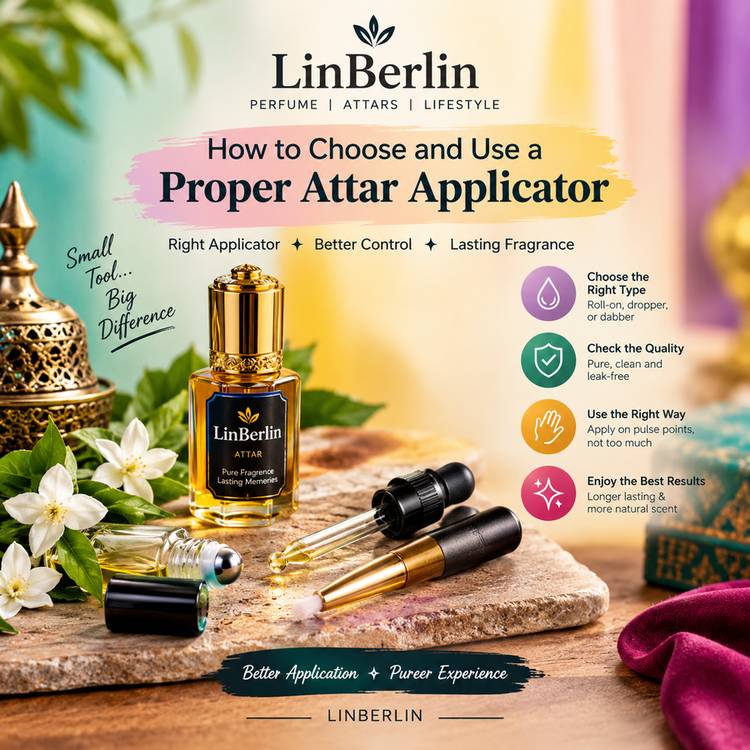
The first attar I ever wasted wasn't spilled. It was dipped. I pulled a stubby little glass rod out of a bottle, wiped it on my wrist, dipped it back in, and realised a week later that the oil had gone cloudy from the moisturiser I'd carried in on that rod. One careless habit, and half a bottle of something good was quietly spoiled.
That's the strange thing about attar. The oil gets all the attention, and the tool that touches it gets almost none.
Why the applicator matters more than people think
Attar is concentrated. A single well-placed drop can carry for hours, which means the applicator decides how much you use, where it lands, and whether the bottle stays clean for the next year of wearing. Get it wrong and you either waste oil or contaminate it (or both, if you're unlucky).
So think of the applicator as part of the perfume, not an accessory to it. Traditional attar makers have always understood this, which is why so many classic bottles come with a glass dabber built into the stopper: the tool and the oil are meant to live together.
The main types, and who they actually suit
There are a handful of common options, and each one behaves differently on skin.
- Glass dabber (the rod in the stopper). This is the classic. It holds a tiny, controlled amount of oil, roughly one drop's worth, and it's easy to clean. It suits nearly everyone, and it's the one I'd hand a beginner without thinking twice. The weakness is that it invites double-dipping if you touch skin and then go back into the bottle.
- Roll-on with a steel or glass ball. Convenient, tidy, good for a bag. But the ball touches your skin and then rolls back into the oil, so the bottle slowly picks up whatever lives on your wrist. Fine for a small bottle you'll finish in a few weeks. Less fine for a rare oil you plan to keep for years.
- Wooden or bamboo stick. Cheap, disposable, oddly lovely for thick resinous attars that a glass rod can't lift. One stick per use, then bin it.
- Cotton pad or swab. Softer and slower. It's the gentlest way to apply oil to sensitive areas, and it's how many people use attar on clothing or inside a scarf.
Honestly, if I had to pick only one, I'd take the glass dabber and add a box of wooden sticks for thick oils. Realistically, that covers ninety percent of situations.
Matching the applicator to the oil
Thin, floral, watery attars (rose, kewda, jasmine) move easily and often come with a rod or a roll-on. Dense ones like oud, amber, or aged sandalwood behave more like honey. A roll-on can clog on those, and a glass rod might only pick up a smear.
If the oil pulls slowly off the rod, warm the bottle in your palm for a minute. Don't heat it near a flame or under hot water. Gentle warmth loosens the oil; anything more than that starts changing the scent.
And if a rod comes out coated instead of dotted, tap it against the neck of the bottle first. You want a bead, not a blob.
How to apply it: the actual method
Start with clean, slightly moisturised skin. That part isn't optional if you want the scent to hold. Attar is oil, and oil clings to skin that already has some hydration. Dry skin drinks the perfume in and lets it go early. It's one of the plainest differences you'll notice between someone who moisturises and someone who doesn't.
- Touch the applicator to the oil once. Lift it out and let the excess run back inside.
- Press it to a pulse point (inner wrist, behind the ear, the base of the throat) and dab. Don't rub.
- Wipe the applicator on a clean tissue before it goes back near the bottle, or use a fresh stick.
- Recap straight away. Air and light age attar faster than most people expect.
Rubbing wrists together is a habit almost everyone has, and it isn't quite the disaster people claim. But friction warms the oil and flattens the top notes quickly, so dabbing is kinder. For a slower, wider approach, see how to apply attar without wasting a single drop, which goes deeper into placement and quantity.
Skin type changes everything
Oily skin tends to hold and project attar well, sometimes too well. One dab is usually plenty, and the scent may warm and sweeten within the hour. Dry skin is the opposite: it needs a moisturiser underneath, ideally unscented, and it may want a second dab on a different point rather than a heavier first one.
Combination skin behaves differently on different spots, so it's worth testing a couple of places. Mature skin, which is often thinner and drier, generally does better with a cotton pad on the collarbone than with a direct hit on a delicate wrist.
Sensitive skin needs a slower approach entirely. Before wearing any new oil in full, follow the steps in the 30-minute skin-test method. It takes half an hour and can save you a week of a red, itchy wrist.
Layering with skincare, and where it goes wrong
Here's what people actually notice when they layer badly: the scent turns sharp or sour within an hour, or a patch of skin goes pink and warm. Usually it's one of a few culprits.
Retinol, glycolic or salicylic acid, and vitamin C serums all thin or sensitise the skin barrier, so an essential-oil-rich attar sitting on top can sting. Skip those areas, or apply the attar to clothes or hair ends instead on the days you use them. Heavily fragranced body lotions fight with the attar and muddy it. A plain, fragrance-free moisturiser is the safest base, and honestly, it's all most people need.
Never apply attar to broken, sunburnt, or freshly waxed skin.
When to be careful
A few situations deserve real caution, not just a footnote. If you have known fragrance or essential oil allergies, patch test on the inner forearm and wait a full day before deciding. If you're pregnant, talk to your doctor before regular use, because some essential oils and absolutes are handled with more care in pregnancy. Same goes for children: keep attar off young skin unless a paediatrician says otherwise.
I'm not a dermatologist, and this isn't medical advice. For persistent reactions, see one.
Keeping the applicator (and the oil) clean
Glass dabbers can be wiped with a lint-free cloth and, every so often, a little rubbing alcohol, then dried fully before returning to the bottle. Wooden sticks go in the bin. Cotton pads too. Roll-on balls are trickier to clean, and, well, that's really why I don't love them for precious oils.
Store bottles upright, away from sunlight and bathroom steam. A cool drawer is better than a shelf by the window.
Applicators beyond skin
Not every attar goes on wrists. Many people place a single dab on a scarf, a dupatta hem, or inside a collar, and for these a cotton swab works best because it leaves a soft mark without staining. If you're weighing how far a scent should carry when you walk past someone, the art of the scent trail is the natural next read.
The same tools appear in devotional use, too. A clean wooden stick or a cotton wick is often preferred for offering fragrance during puja, and if that's what you're after, choosing attar for Ganesh Chaturthi and weekly Ganesh puja covers which oils suit the occasion.
Making one application last
A single dab won't always carry through a long day, and no applicator fixes that entirely. Moisturised skin, sensible placement, and the right oil density do most of the work. For the rest, how to make your perfume last through a 12-hour workday lays out the small habits that add hours.
Use less than you think you need. Then wait ten minutes before adding more.
What to take away
Pick a glass dabber for everyday use, keep wooden sticks for thick oils, and never let a used tip touch the bottle again. Moisturise first, dab instead of rub, and test anything new on a small patch before you commit.
Start tonight with one dab, one pulse point, and a clean tool. You'll be surprised how little it takes.