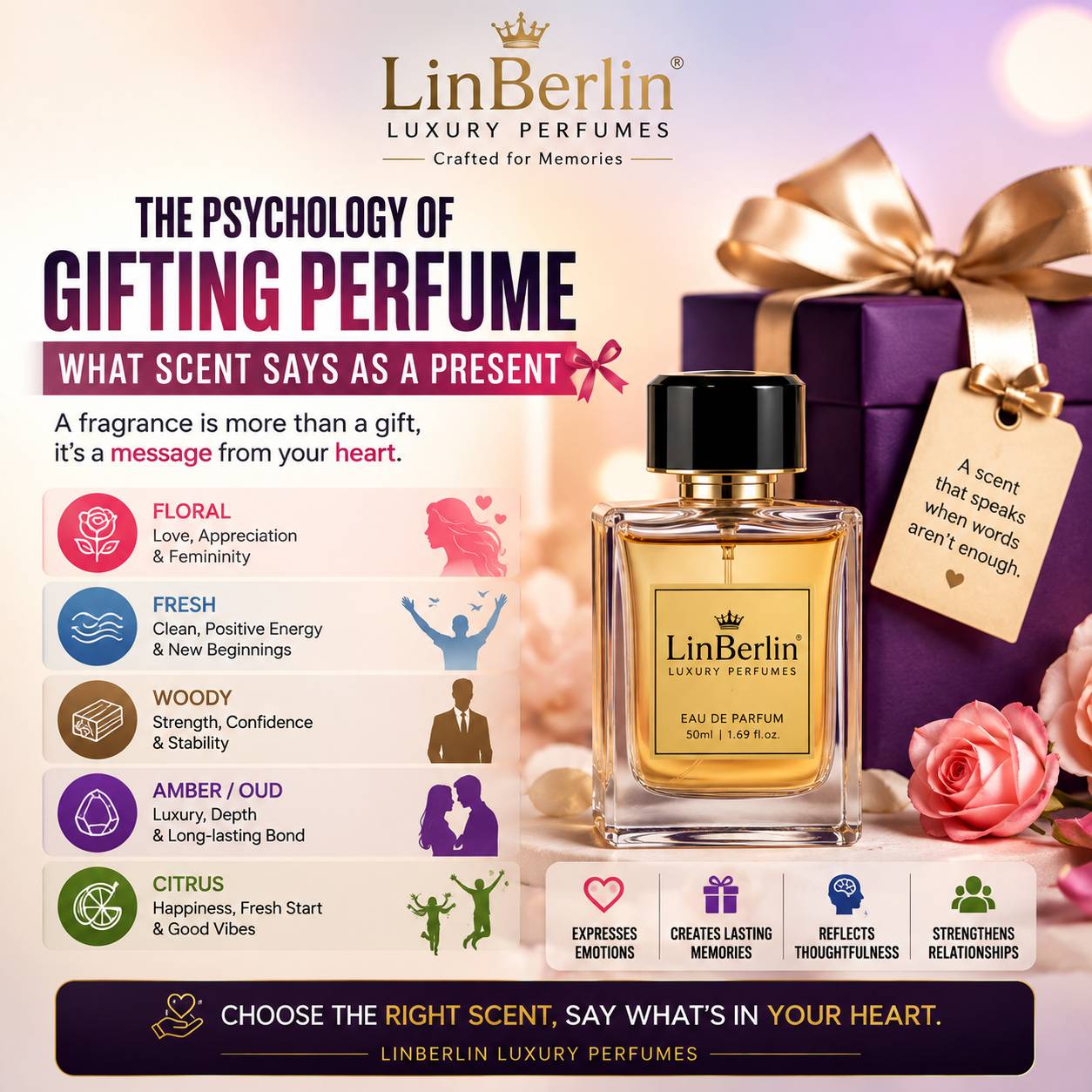
There's a particular kind of silence that happens when someone unwraps a fragrance and doesn't say anything for a second too long. Not disappointment, necessarily — more like recalibration. They're comparing the scent to what they imagine you think of them, and that comparison happens faster than either of you realizes. Long before anyone talks about top notes or longevity, a gifted perfume has already made an argument about the relationship. That's the part most gift guides skip entirely.
I've spent enough time around skin, scent, and the strange chemistry between the two to notice something most people don't think about consciously: fragrance is one of the only gifts that becomes physically part of the person wearing it. A scarf sits on top of someone. A perfume mixes with their actual skin — their body heat, their natural oils, their routine. So when you gift a scent, you're not really gifting an object. You're gifting an experience that will react differently depending on who receives it, which is exactly why the psychology of it matters more than the price tag ever will.
Why Scent Reads as More Personal Than It Should
Gift-givers tend to underestimate how much interpretation goes into a fragrance choice. A book says "I think you'd enjoy this." A perfume says something closer to "this is how I see you" — and that's a much bigger claim to make, even unintentionally. Choose something too sweet for someone who dresses in structured, minimal lines, and they'll feel slightly misread, even if they can't articulate why. Choose something sharp and smoky for someone soft-spoken and gentle, and the gift can feel like a compliment aimed at a stranger.
This is why fragrance gifting carries more emotional risk than most categories. But it's also why getting it right lands so much harder than a generic gift ever could. People remember scent gifts differently — the good ones, anyway.
What You're Actually Signaling When You Choose a Scent
Every fragrance carries a kind of unspoken vocabulary, and most people absorb it instinctively without ever studying it. A warm vanilla-forward scent tends to read as comforting, familiar, low-drama — the fragrance equivalent of a hand on the shoulder. Something built around oud or deep amber reads as intentional, a little formal, occasionally even protective. Florals split depending on which flower leads; jasmine reads confident and a touch bold, while something quieter like lavender reads calming, almost apologetic in how gently it announces itself.
None of this is fixed science. Scent perception has genuine cultural variation built into it, and what reads as "elegant" in one household might read as "too strong" in another — so treat this as a starting compass, not a rulebook. Still, understanding these general associations helps enormously when you're choosing for someone else rather than yourself, because gifting is really an exercise in translating your read of another person into a physical object they'll wear against their own skin.
If you want a fuller sense of how fragrance choice connects to personal identity — not just gifting, but everyday self-expression — there's a useful breakdown of what different fragrance personalities tend to say about someone's personal style, and it pairs naturally with the gifting logic here — once you understand style-signaling in general, reading it for someone specific becomes much easier.
The Comfort Category: Why Familiar Scents Land So Well as Gifts
Here's the thing — most people, when gifting fragrance, reach for something impressive rather than something comforting. And that instinct, while understandable, is often backwards. The scents that get worn daily, the ones people actually reach for six months after the gift-wrapping is long gone, tend to be the calm, familiar, easy-to-live-with ones rather than the loud, statement-making ones.
Lavender gets dismissed constantly in gifting conversations, usually because people assume it's "boring" or too closely tied to sleep sprays and laundry detergent. That reputation isn't fair, and it isn't accurate either — there's a genuinely well-argued case for why lavender perfume has an image problem it doesn't actually deserve, and gifting it — especially blended with something warmer like vanilla — often surprises people who expected something forgettable. The pairing of grounding and comforting notes is worth exploring specifically for gifting purposes, since the calm of lavender paired with the warmth of vanilla tends to work across a wider range of personalities than most people assume going in.
How Skin Actually Changes What You've Gifted
This is the part almost nobody explains properly, and it's genuinely important if you want a gift to be received well rather than politely tolerated. Fragrance doesn't sit on top of skin the way it does on paper or fabric strips at a counter — it interacts with it, and the interaction depends heavily on skin type, moisture level, and what's already been applied underneath.
Dry skin, in my experience, tends to let fragrance fade faster and thinner because there's less natural oil to hold the scent molecules close to the surface. Someone with naturally oily or well-moisturized skin will often notice the same fragrance developing more slowly and lasting considerably longer — sometimes dramatically longer, which is why two people wearing "the same" gifted attar can have completely different experiences of it. If the recipient has dry skin, a light, unscented moisturizer applied first — before the attar, not after — genuinely helps the scent hold and develop the way it's meant to.
Layering matters too, and this is where good intentions go slightly wrong. Applying fragrance directly over strong actives — retinoids, certain acids, fresh exfoliation — can occasionally cause more noticeable irritation than the fragrance would cause on calm, settled skin. It's not that attars are harsh by nature. It's more that compromised or freshly-treated skin barriers are simply more reactive to everything, fragrance included. So if you're gifting to someone you know uses strong skincare actives, mentioning that it's best applied on clothing or pulse points away from active treatment areas is a small, thoughtful detail that shows real care.
When Caution Is Genuinely Warranted
I'd be doing readers a disservice if I skipped this part. Fragrance gifting isn't risk-free for everyone, and pretending otherwise wouldn't be honest.
People with known fragrance allergies or a history of contact dermatitis should patch-test any new scent before regular wear — a small amount on the inner wrist, worn for a day, before committing to it as a daily fragrance. Pregnant recipients sometimes experience shifted, more sensitive scent perception, and what smelled wonderful to them before can feel overwhelming during pregnancy — so if you're gifting to someone who's expecting, a lighter, less concentrated option is the safer, more considerate choice. And anyone with very reactive or compromised skin — eczema-prone, recently treated, post-procedure — should generally check with a dermatologist before introducing a new fragrance product into their routine, attar or otherwise.
None of this means fragrance gifting should feel intimidating. It just means the good gift-givers ask a quiet question or two before choosing, rather than assuming one scent suits everyone equally.
There's Also a Genuine Wellness Angle Worth Knowing
Beyond the emotional and skin-level considerations, scent has a documented relationship with mood and stress response, which is part of why gifting fragrance can feel like gifting a small daily ritual rather than just an accessory. The research on this is more nuanced than most marketing suggests — not every claim about calming scents holds up equally well — but there's a genuinely useful, honest look at what research actually says about fragrance, anxiety, and aromatherapy worth reading if you want to gift with that wellness angle in mind rather than just guessing.
Choosing Without Overthinking It
Realistically, you don't need to solve every variable to gift fragrance well. Notice what the person already gravitates toward — do they wear soft, muted colors or bold statement pieces? Are they the type to reapply lotion religiously, or barely think about skincare at all? These small observations tell you more than any fragrance quiz could. And if budget is part of the equation, thoughtful doesn't have to mean expensive — there's a solid range of affordable gifting perfumes that still feel considered rather than cheap, and the psychology of a well-chosen inexpensive scent works exactly the same way as an expensive one — the thought behind it is what actually gets remembered.
A gifted fragrance is a small, ongoing message the person carries with them for months. Choose it the way you'd choose your words for them — with a little more care than the occasion technically demands, and it tends to show.