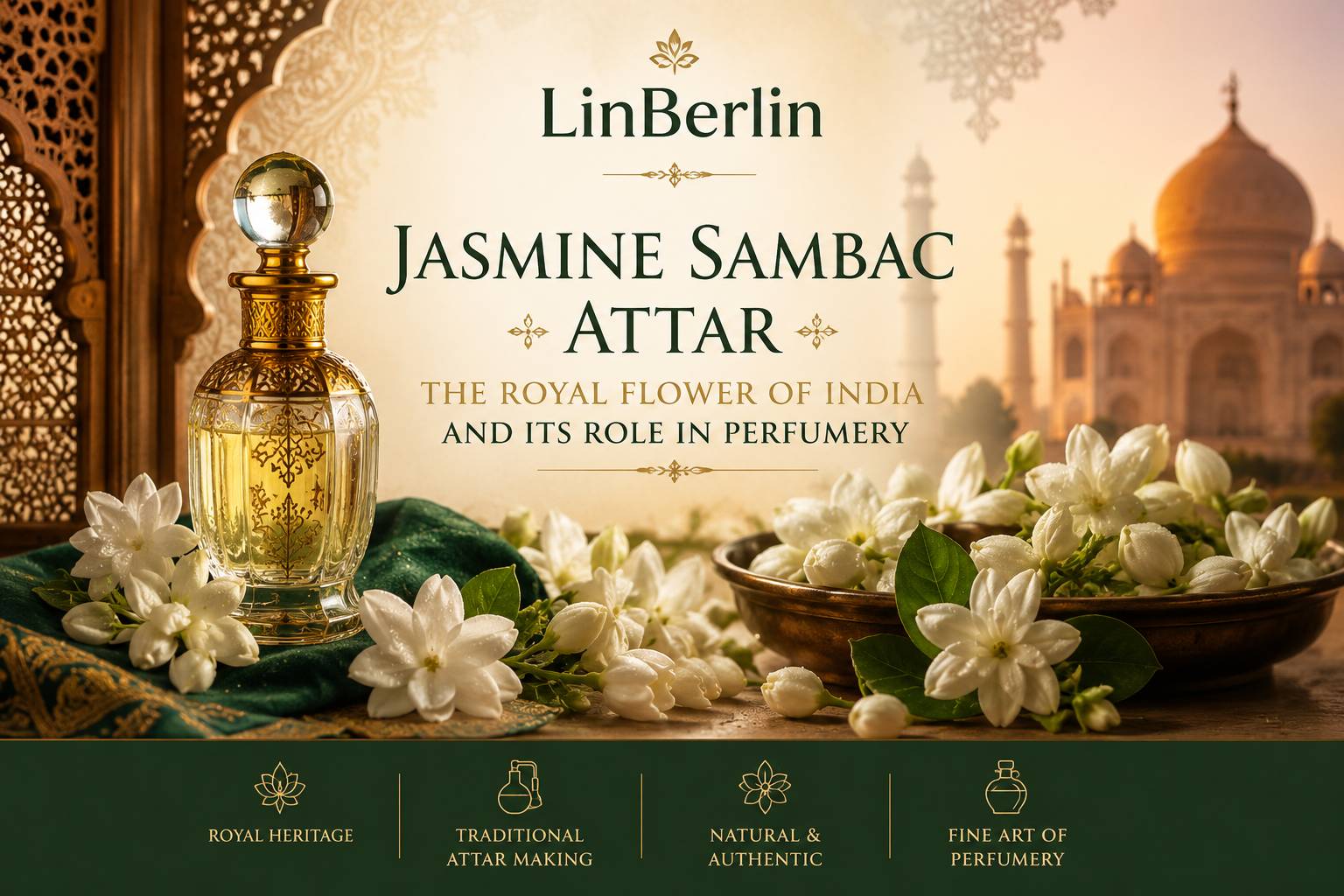
A small white flower opening after sunset can change the entire atmosphere around it, filling warm evening air with a scent that feels both delicate and powerful. Across Indian gardens, temples, and traditional perfume houses, jasmine sambac attar has carried this quiet magic for generations. Known for its rich floral depth and cultural importance, this natural essence represents far more than a pleasant aroma.
Unlike many floral notes that feel light and fleeting, jasmine sambac has a living quality. It feels creamy, slightly green, sweet, and sometimes surprisingly sensual on the skin.
Understanding this treasured flower means looking beyond the bottle. It means discovering the hands that harvest it, the traditional methods that capture it, and the reason perfumers continue to respect its complexity (even after hundreds of years of changing fragrance trends).
The origin and history
Before jasmine sambac became a celebrated ingredient in fine perfumery, it was deeply woven into everyday life across South Asia. The flower, commonly known in India as mogra or bela depending on region and variety, has been associated with beauty, devotion, and celebration for generations.
Historical references connect jasmine cultivation in India with royal gardens, temple traditions, and classical practices of personal adornment. During the Mughal period, especially between the 16th and 18th centuries, fragrant gardens became symbols of refinement. Flowers such as jasmine, rose, and champaca were admired not only for their appearance but also for their ability to create emotional experiences through scent.
And this relationship between flower and fragrance became especially meaningful through the development of Indian attar-making traditions — a craft where natural materials were slowly distilled to preserve their character.
Kannauj in Uttar Pradesh became particularly respected as a centre of traditional attar production. Often associated with India's historical perfume craft, the region developed expertise in hydro-distillation techniques using copper vessels called degs. Jasmine flowers could be processed carefully, allowing their aromatic molecules to be captured in a natural base oil.
The connection between jasmine and Indian culture wasn't limited to perfume alone. Fresh blossoms decorated hair, religious spaces, weddings, and homes. Their evening bloom created a special association with night, intimacy, and calm moments after the heat of the day.
But history also shows how precious true jasmine material has always been. Large quantities of flowers are required for small amounts of aromatic extract, which explains why genuine jasmine compositions have traditionally been valued so highly.
What makes it distinctive
The first encounter with high-quality jasmine sambac is often surprising because it doesn't smell like a simple “flower” note. Natural jasmine carries many layers: fresh petals, soft sweetness, green brightness, warm depth, and an almost tea-like richness.
Its complexity comes from natural aromatic compounds present within the flower. Molecules such as benzyl acetate contribute fruity floral qualities, while other components create the deeper, warmer character that gives jasmine its famous presence.
So why does jasmine sambac feel different from other jasmine varieties?
Compared with jasmine grandiflorum, which often feels more airy and expansive, sambac usually presents a richer and more concentrated personality. It can appear slightly more tropical, honeyed, and intense on the skin. Many perfumers value it because a small amount can influence an entire fragrance composition.
Traditional jasmine sambac attar captures more than just a floral smell — it preserves the feeling of freshly gathered blossoms before their fragile aroma disappears. This is why timing matters during production.
Flowers are usually collected during periods when their aromatic quality is strongest. Skilled producers understand that harvesting conditions, climate, soil, and handling all affect the final scent (natural materials rarely behave exactly the same every season).
A beautifully made jasmine attar develops gradually. The opening may reveal fresh white petals, but after some time the warmer aspects become clearer. On skin, it often feels softer and more personal compared with alcohol-based floral perfumes.
The truth is, part of jasmine sambac's appeal comes from its imperfections. Natural floral oils have small variations, and those differences often create the character that enthusiasts appreciate.
How to recognise, appreciate, or choose
Selecting a jasmine sambac attar requires patience because quality differences can be significant. A genuine natural floral experience should feel layered rather than flat. The scent should move, soften, and reveal different qualities as it stays on your skin.
Many people expect natural jasmine to smell exactly like a fresh flower from a garden. But a concentrated perfume material often shows hidden sides of the plant that you may not notice from smelling a single blossom.
The first thing to observe is balance. A carefully created jasmine attar should not feel aggressively sweet or artificial. There should be brightness, softness, and depth working together. If the aroma feels like only sugar or a sharp floral impression, it may lack the complexity associated with quality natural materials.
And testing on skin matters more than smelling directly from the bottle.
Natural attars interact closely with body warmth and develop slowly over hours. The opening impression may be completely different from the scent after thirty minutes. This slower transformation is part of what attracts many traditional fragrance lovers.
Understanding sourcing is equally valuable — because jasmine quality depends heavily on growing conditions, processing skill, and ingredient integrity. Reliable makers should be comfortable discussing their materials and approach.
Can every jasmine-labelled perfume oil be considered a traditional attar? Realistically, no. The term is sometimes used loosely in modern fragrance markets, and products may contain different combinations of natural extracts, aroma compounds, or blended materials.
The honest complexity is that even specialists may debate exact definitions of “pure attar” because traditions, production methods, and modern perfume practices don't always follow identical standards.
A good way to appreciate jasmine sambac is to wear it quietly rather than judge it immediately. Give the fragrance time. Notice how it feels in warm weather, cooler evenings, and different moods. Natural florals often reveal themselves slowly.
LinBerlin's approach to this
Respect for raw materials guides how LinBerlin approaches traditional floral ingredients. Jasmine sambac is treated not as a decorative note but as a material with history, personality, and cultural meaning.
The focus remains on selecting fragrance oils that honour the depth people expect from natural attar traditions. Quality evaluation involves more than checking strength alone. Texture, balance, development on skin, and the harmony between ingredients all matter.
Or sometimes the most powerful fragrance experience comes from restraint — allowing a beautiful material enough space to express itself.
LinBerlin's philosophy follows the idea that natural perfumery should feel connected to its origins while still being enjoyable for modern fragrance lovers. The aim isn't to recreate the past exactly, but to preserve the respect and patience behind traditional scent craftsmanship.
A flower that continues speaking through scent
Jasmine sambac remains treasured because it carries emotion as much as aroma. It connects gardens, rituals, artisans, and personal memories through a fragrance that feels alive.
For enthusiasts exploring natural attars, jasmine offers a valuable lesson: slow down and pay attention. Wear it through different moments, notice its changing layers, and experience why this small white flower has earned such a meaningful place in perfumery across generations.