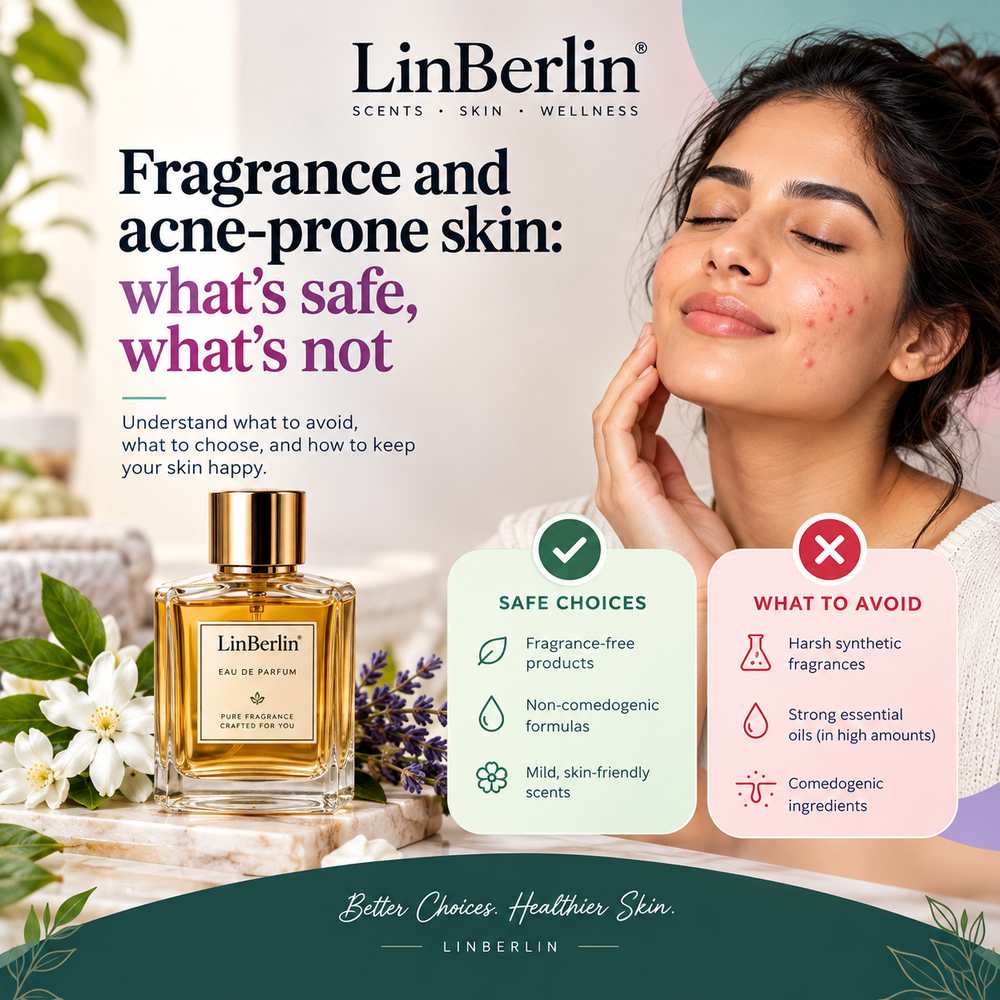
Fragrance and acne-prone skin: what's safe, what's not
A bottle of perfume never gave anyone a pimple. Skin that has been rubbed raw by a new retinol, then dabbed with something strong at the neck, is another story.
Most of the confusion about scent and breakouts starts right there, because two different things get lumped together. One is the fragrance itself. The other is the state your skin is in on the day you wear it. Nine times out of ten, the second matters more.
So let's separate them properly, from someone who spends far too much time thinking about how oils behave on skin.
Does fragrance actually cause acne?
Not directly. Acne comes from clogged pores, excess sebum, bacteria, and inflammation. Scent molecules aren't on that list.
But fragrance can irritate. And irritation is inflammation, which is exactly what an active breakout is already doing. When someone tells me a perfume "made them break out", what they usually mean is a red, itchy or stinging patch appeared where they applied it (contact irritation, or occasionally a true allergy), and the bumps that followed were the skin's reaction rather than classic acne. It looks similar. It isn't the same. The treatment isn't the same either.
There's a second route, which is less talked about: the carrier. Attars are oil-based, and the oil they sit in matters. Coconut oil, for example, is heavy and rates high for clogging pores on many people's faces. Jojoba, which is closer to skin's own sebum, tends to be far kinder. Sandalwood oil, the traditional base for many attars, is generally well tolerated, though "generally" is doing some work in that sentence.
The skin state that matters more than the scent
Here is the thing nobody says plainly: your barrier decides how a fragrance feels, far more than the fragrance does.
Healthy skin has a tight, intact outer layer. Scent oils sit on it, warm up and drift. Compromised skin, whether that's from over-exfoliating, a sunburn, a broken-open pimple or a fresh peel, lets things in that shouldn't get in. Strong aromatics on that surface sting. I've watched people wince at a single dab of attar on their wrist the morning after an acid toner, and then blame the attar.
Which actives should make you pause? Retinoids, glycolic and salicylic acids, benzoyl peroxide, and prescription topicals like tretinoin all thin or stress the barrier, at least at first. Give skin a break, a day or two, before applying any concentrated oil over the same spot. And if you're on isotretinoin, ask your dermatologist before wearing fragrance directly on skin at all. That one isn't a guess-and-see situation.
Where you apply it changes everything
Skip the face. Full stop. Not the jawline, not behind the ears where hairline breakouts happen, not the neck if you get cystic bumps there.
The classic pulse points, wrists and the inner elbow, are usually calm territory for most people. The chest and upper back are a different matter, because plenty of acne-prone people break out there and they're also the zones where sweat and friction make oils sit heavier. Consider the inside of a collar or a scarf instead (test on a hidden patch first, since some attars can mark pale fabric).
Hair is another quiet option. A tiny amount rubbed between the palms and stroked through the ends, well away from the scalp, gives a soft trail without touching skin that breaks out.
What to look for in the ingredients
Natural doesn't mean hypoallergenic. It's a lovely idea and it's simply not true. Rose, ylang-ylang, jasmine and citrus oils all contain naturally occurring compounds, such as linalool, limonene, geraniol, citral and eugenol, that are recognised fragrance allergens, especially once the oil has oxidised from age or heat. Cinnamon and clove-style notes are notorious for stinging. Bergamot and other cold-pressed citrus can also react with sunlight, causing dark marks on skin. That last one matters for anyone prone to post-acne pigmentation, because those marks linger.
Woody and resinous notes like sandalwood and oud sit lower on the risk list for many people, though not at zero. And amber-style bases, which people often reach for when they're unsure, get their own breakdown in picking the right warm note for your style, which is worth a read if you're choosing based on what your skin tolerates and not just what smells nice.
Lavender is often assumed to be the gentle option, and vanilla the cosy one. Both can be lovely, and both can still bother a sensitive person, since lavender oil is a frequent culprit in fragrance allergy. The pairing is beautifully explained in how lavender and vanilla balance calm and warmth, but do patch test before you commit.
Layering with skincare without a mess
Moisturised skin holds scent longer. That's just how oil-based fragrance works: it clings to a slightly emollient surface instead of sinking into dry, thirsty skin and vanishing by lunchtime. So for acne-prone types who worry about greasiness, a light, non-comedogenic lotion on the body (not the face) gives attar something to hold onto without adding heaviness.
Order matters, too. Skincare first, then let it absorb fully, ten minutes if you can spare them. Attar goes last, in tiny amounts. Putting it beneath sunscreen or over active treatments is where the muddle starts, since some ingredients react and the mixture stings or pills.
Some people layer a body oil underneath for a longer trail. It can work well, though acne-prone skin needs a lighter, low-clogging oil, and the suggestions in body oils that suit attar layering are a decent starting point. Read the ingredient list yourself, though. Coconut and heavy butters are the ones I'd be wary of on breakout-prone areas.
Different skin, different rules
Oily skin often carries scent well and projects it warmly, but it can also amplify a scent until it turns sharper than intended, and clogged pores from heavy carriers show up faster. Choose lighter, drier woody attars in very small amounts.
Dry skin drinks fragrance. It needs moisturiser first, or the scent fades quickly and the alcohol-free oils can feel tight. That's not a problem, only a reason to prep.
Combination skin is the tricky middle, because the T-zone and the cheeks behave like two separate people. Apply where the skin is calmest.
Sensitive and rosacea-prone skin deserves the most caution, honestly. Flushing, burning or stinging within minutes means wash it off with a gentle cleanser and stop.
The patch test nobody does properly
Everyone knows about patch testing. Almost nobody does it right, which is a shame, since reactions to fragrance can take a day or two to appear.
Put one small drop, diluted with a little jojoba if the attar is strong, on the inner forearm. Leave it. Check after 24 hours, then again at 48. Redness, itching, small bumps or heat mean that oil isn't for your skin. No reaction is encouraging, though not a guarantee; sensitivity can build up after repeated use. I'd rather tell you that than pretend a single test settles it forever.
When to be extra careful
Pregnancy first. Skin often becomes more reactive, and guidance on essential oils during pregnancy varies, so it's sensible to check with your doctor or midwife about anything you'll wear daily. Known fragrance allergies, eczema, and any open or weeping lesion also call for a hard stop. And if breakouts are painful, cystic or scarring, that's a conversation for a dermatologist, not a perfumer.
One honest limitation: no article, mine included, can predict your skin. I can tell you what tends to be gentler. I can't promise it will be for you.
A time-of-day quirk worth knowing
Skin chemistry shifts through the day, with temperature, sebum and sweat all moving, and that's why some florals turn heavier by evening. The reason behind it is laid out in why jasmine attar smells different after dark. For acne-prone skin, it's a reminder that evening warmth can make the same drop feel more intense than it did at nine a.m. Use less than you think you need.
Your simple takeaway
Keep attar off your face and off any skin that's broken, peeling or freshly treated. Patch test for two days. Pick lighter carriers, apply a tiny amount to calm areas, and stop at the first sign of stinging.
Do that, and fragrance and acne-prone skin can share a life quite peacefully. LinBerlin's attars are made in the oil-based tradition, which rewards exactly this kind of slow, careful wearing: a little goes a long way, and it's yours to enjoy.